Jean-Luc Godard is synonymous with cinema. With the release of Breathless in 1960, he established himself overnight as a cinematic rebel and symbol for the era's progressive and anti-war youth. Sixty-two years and 140 films later, Godard is among the most renowned artists of all time, taught in every film school yet still shrouded in mystery. One of the founders of the French New Wave, political agitator, revolutionary misanthrope, film theorist and critic, the list of his descriptors goes on and on. Godard Cinema offers an opportunity for film lovers to look back at his career and the subjects and themes that obsessed him, while paying tribute to the ineffable essence of the most revered French director of all time.
Related Movies
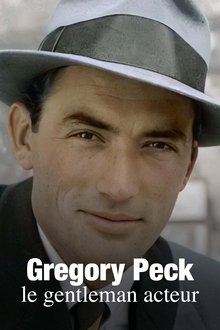
Gregory Peck, le gentleman acteur (2022)
A legend of the Hollywood Golden Age, Gregory Peck (1916-2003) had an exemplary career, working under some of the greatest directors: Alfred Hitchcock, Elia Kazan, Raoul Walsh, Vincente Minnelli... Portrait of an actor with irresistible charm and strong political commitments.
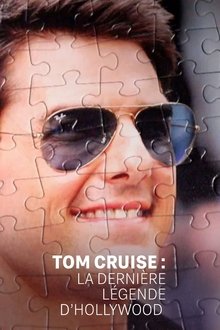
Tom Cruise : la dernière légende d'Hollywood (2025)
Tom Cruise is one of the last remaining superstars of world cinema. A portrait of one of the most powerful, but also most secretive, men in Hollywood.
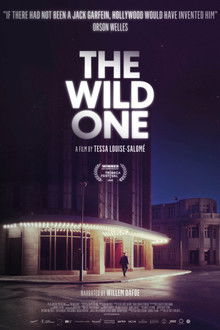
The Wild One (2023)
In the work of Jack Garfein - Holocaust survivor, theater and film director, key figure in the formation of the Actors Studio - past and and present freely intermingled to contribute to memorable stage productions and in two films, many which were ahead of their time in tackling such issues as homosexuality, race and violence. Powered by his vivid recollections and augmented with readings by Willem Dafoe, The Wild One traces Garfein’s life: his Czechoslovakian youth, his family’s fleeing the Nazis, surviving in Auschwitz and other camps, his 1946 arrival at 16 in New York and coming under the wing of Lee Strasberg, Hollywood, his marriage to actress Carroll Baker.
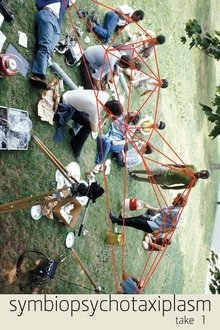
Symbiopsychotaxiplasm: Take One (1968)
In Manhattan's Central Park, a film crew directed by William Greaves is shooting a screen test with various pairs of actors. It's a confrontation between a couple: he demands to know what's wrong, she challenges his sexual orientation. Cameras shoot the exchange, and another camera records Greaves and his crew. Sometimes we watch the crew discussing this scene, its language, and the process of making a movie. Is there such a thing as natural language? Are all things related to sex? The camera records distractions - a woman rides horseback past them; a garrulous homeless vet who sleeps in the park chats them up. What's the nature of making a movie?
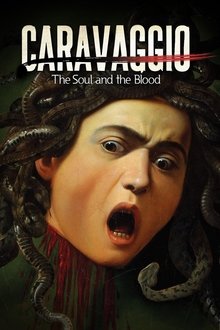
Caravaggio: The Soul and the Blood (2018)
An exciting and unsettling cinematic journey through the life, work and torments of Caravaggio.
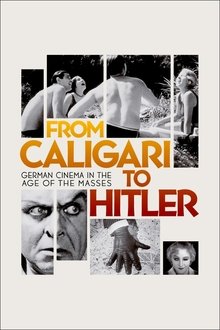
From Caligari to Hitler (2015)
Film journalist and critic Rüdiger Suchsland examines German cinema from 1919, when the Republic of Weimar is born, to 1933, when the Nazis come into power. (Followed by Hitler's Hollywood, 2017.)
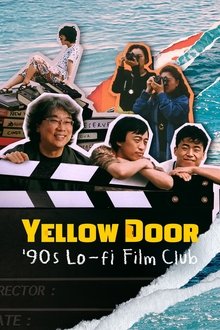
Yellow Door: '90s Lo-fi Film Club (2023)
This intimate documentary explores a bygone era of cinematic passion and the emergence of young film enthusiasts in South Korea, including Bong Joon Ho.
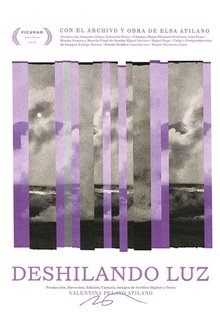
Deshilando Luz (2025)
A film essay that intertwines the director's gaze with that of her late mother. Beyond exploring mourning and absence as exclusively painful experiences, the film pays tribute to her mother through memories embodied by places and objects that evidence the traces of her existence. The filmmaker asks herself: What does she owe her mother for who she is and how she films? To what extent does her film belong to her?

Edward Hopper (2007)
Hopper, one of America’s most admired artists, captured the shared realities of American life with poignancy and enigmatic beauty. His iconic images, set in unexceptional places, reveal the poetry of quiet, private moments. Hopper’s influences, which vary from French impressionism to the gangster films of the 1930s, are explored through archival photos, footage of locations he painted in New York and along the New England coast, and interviews with artists Eric Fischl and Red Grooms.
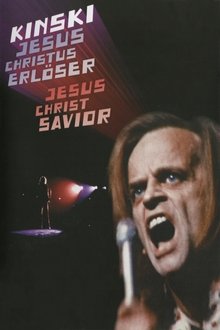
Jesus Christ Saviour (2008)
Klaus Kinski has perhaps the most ferocious reputation of all screen actors: his volatility was documented to electrifying effect in Werner Herzog’s 1999 portrait My Best Fiend. This documentary provides further fascinating insight into the talent and the tantrums of the great man. Beset by hecklers, Kinski tries to deliver an epic monologue about the life of Christ (with whom he perhaps identifies a little too closely). The performance becomes a stand-off, as Kinski fights for control of the crowd and alters the words to bait his tormentors. Indispensable for Kinski fans, and a riveting introduction for newcomers, this is a unique document, which Variety called ‘a time capsule of societal ideals and personal demons.’
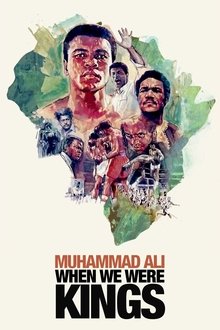
When We Were Kings (1996)
It's 1974. Muhammad Ali is 32 and thought by many to be past his prime. George Foreman is ten years younger and the heavyweight champion of the world. Promoter Don King wants to make a name for himself and offers both fighters five million dollars apiece to fight one another, and when they accept, King has only to come up with the money. He finds a willing backer in Mobutu Sese Suko, the dictator of Zaire, and the "Rumble in the Jungle" is set, including a musical festival featuring some of America's top black performers, like James Brown and B.B. King.
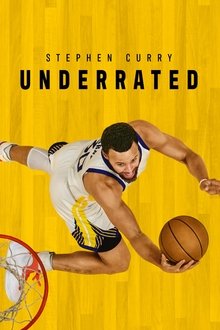
Stephen Curry: Underrated (2023)
The remarkable coming-of-age story of Stephen Curry—one of the most influential, dynamic, and unexpected players in basketball history—and his rise from an undersized college player to a four-time NBA champion.
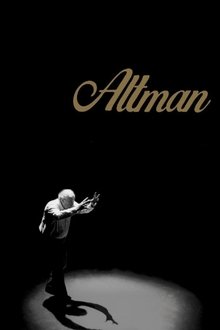
Altman (2014)
Robert Altman's life and career contained multitudes. This father of American independent cinema left an indelible mark, not merely on the evolution of his art form, but also on the western zeitgeist. With its use of rare interviews, representative film clips, archival images, and musings from his family and most recognizable collaborators, Altman is a dynamic and heartfelt mediation on an artist whose expression, passion and appetite knew few bounds.
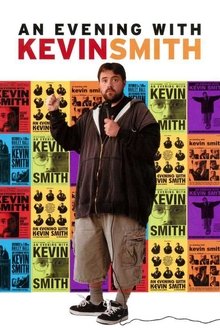
An Evening with Kevin Smith (2002)
Kevin Smith interacts in Q&A sessions throughout various college stops in the USA.

Last Room (2011)
Made in Japan, Last Room is both fiction and documentary. The occupants of the love-hotels and capsule-hotels tell their own intimate, dreamlike stories, interspersed with journeys through the archipelago's landscapes. Soon, these personal stories resonate with a collective history: that of Gunkanjima, the abandoned ghost island of Nagasaki, and then that of Japan as a whole.
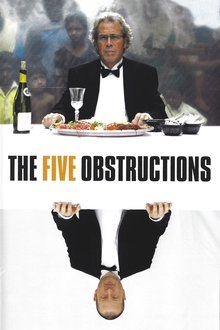
The Five Obstructions (2003)
In 1967, experimental filmmaker Jorgen Leth created a striking short film, The Perfect Human, starring a man and women sitting in a box while a narrator poses questions about their relationship and humanity. Years later, Danish director Lars von Trier made a deal with Leth to remake his film five times, each under a different set of circumstances and with von Trier's strictly prescribed rules. As Leth completes each challenge, von Trier creates increasingly further elaborate stipulations.
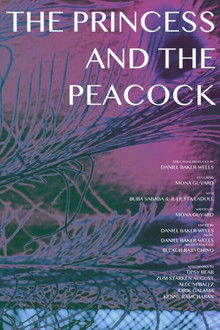
The Princess and the Peacock (2024)
Mona is a 22 year old trans girl from a small village in France. She puts needles attached to peacock feathers in her skin, under bright lights, late at night. She bleeds, half naked, in front of small crowds of people. Sometimes they faint whilst watching her. Why would she do this? How did she learn to do it? And why would someone want to watch?
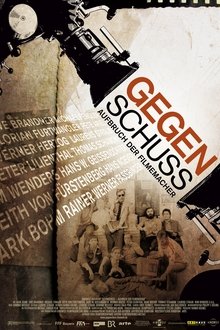
Counter Shot: Departure of the Filmmakers (2008)
Documentary about filmmakers of the New German Cinema who were members of the legendary Filmverlag für Autoren (Film Publishing House for Authors). Among them are Werner Herzog, Rainer Werner Fassbinder, and Wim Wenders.
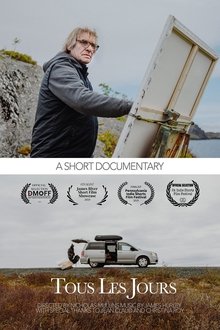
Tous Les Jours (2019)
In rocky Newfoundland, renowned French artist Jean Claude Roy gathers his paints and sets off to face the day. Whether it be freezing snow, violent wind, or pouring rain, he commits vibrant colors to canvas and conquers the day by weaving crooked beauty out of difficulties.
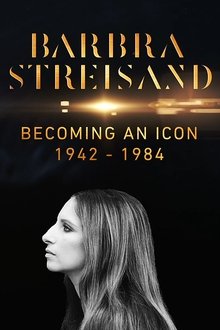
Barbra Streisand: Becoming an Icon 1942–1984 (2017)
Barbra Streisand grew up in working class Brooklyn, dreaming of escape from her tough childhood. A stellar student, she resisted the pressure to go to college as her sights were firmly set on Broadway. She was determined to become an actress and landed her first role aged 16, but it was two years later, when she started to sing, that her career took off. Subverting stereotypes and breaking glass ceilings, this programme looks at her rise to stardom and the remarkable achievements of her early career.