Kristallklar tells the tale of a hidden river holding wild brown trout near the border of Luxembourg and Germany. Find out about this magical river from the perspective of Kirill, who recently acquired the lease to the fishing rights of the river and a small tributary thereof. It captures the essence of a fly fishing adventure on the river embarked on by the incredibly passionate Kirill and two companions: Nic, a fly fishing scientist and Simon, the filmmaker. The film tries to capture the feeling of the magnificent surroundings and being at peace on the river. It also delves into topics of conservation of nature and the plans to re-stock the river with native crayfish which vanished from the river. A lot of love went into this film the hope is that it inspires those around the world to find a love for the outdoors and to preserve it for many years to come and just to get out there and fly fish.
Related Movies

In the Grip of Terror: Making Talk To Me (2023)
The cast and crew talk about making the film with some behind-the-scenes footage.
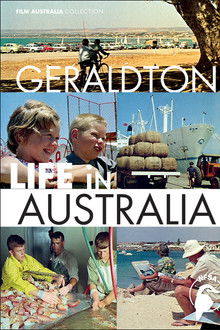
Life in Australia: Geraldton (1966)
Made by the Department of Immigration to entice immigrants from Great Britain, this film shows an idyllic picture of life in the Western Australian regional town of Geraldton in the mid 1960s.
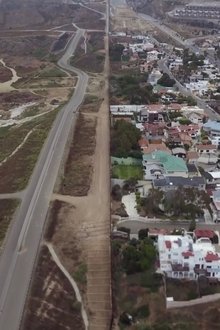
Borderlands (2019)
With shared economic, environmental, and humanitarian concerns, communities of local planners, designers, and citizens work toward cross-border collaboration. Ronald Rael, an architecture professor, takes an opportunity to use art to prove the uselessness of building borders.
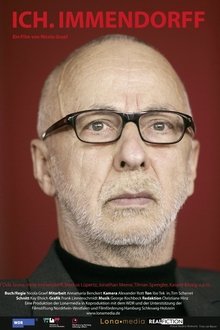
Ich. Immendorff (2007)
Documentary film about the painter and sculptor Jörg Immendorff who ranks among the most important German artists. The filmmakers accompanied Immendorff over a period of two years – until his death in May 2007. The artist had been living for nine years knowing that he was terminally ill with ALS. The film shows how Immendorff continued to work with unabated energy and how he tried not to let himself be restrained by his deteriorating health.
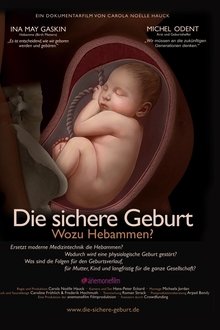
Die sichere Geburt (2017)
This movie charts the three most important questions regarding birth: 1. What makes a safe birth? 2. What disrupts a birth? 3. What do birth interventions mean for mother and baby, how the birth develops and even society at large?
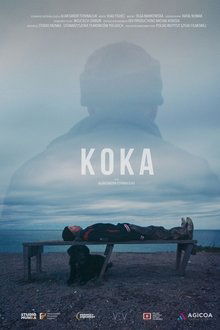
Koka (2024)
Somewhere on the coast of the Bering Sea, a father and son make a living fishing in a community that seems almost outside of time. Aliaksandr Tsymbaliuk’s camera takes us in close to the subjects, recording both the harshness of their condition and the rigour of education, softened by paternal love and the universal insouciance of childhood.
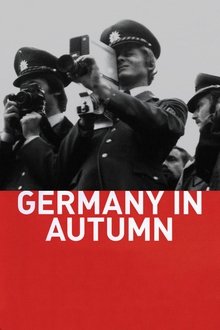
Germany in Autumn (1978)
Nine fictitious documentaries and films reflect the mood of late 1970s Germany, particularly the two-month period in 1977 when a businessman was kidnapped by the RAF (Red Army Faction). The kidnap had been made to orchestrate the release of the original leaders of the RAF, aka the Baader-Meinhof.

Violated Paradise (1963)
A modern geisha travels through Japan trying to find a job as entertainer, and ends up by finding love and a job as ama, a pearl diver.
Mr Surgeoner's Higher History Revision (2023)
Mr Surgeoner takes the viewer on an enthralling journey through the SQA Higher History course.
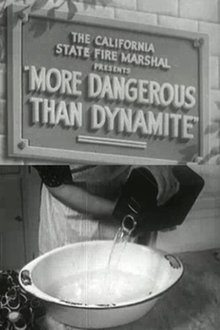
More Dangerous Than Dynamite (1941)
A short film warning the unaware housewife of the dangers of “dry cleaning” with gasoline at home.

Avatar Spirits (2010)
Bryan Konietzko and Michael Dante DiMartino, co-creators of the hit television series, Avatar: The Last Airbender, reflect on the creation of the masterful series.
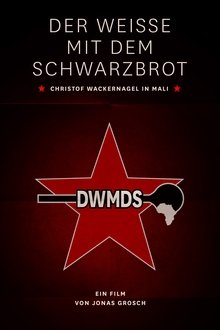
White Man with Black Bread (2007)
Christof Wackernagel, best known in Germany as an actor and former member of the Red Army Faction ("RAF") lives in Mali. In his compelling portrait, Jonas Grosch shows a man who simply cannot stand still if he senses injustice. The courage to stand up for one’s beliefs coupled with vanity? However one chooses to look at it, it is easy to imagine what made him connect with the "RAF". With his irrepressible will for freedom, Christof Wackernagel gets entangled in the horrors of day-to-day life in Africa.
Liberators Take Liberties (1992)
Helke Sander interviews multiple German women who were raped in Berlin by Soviet soldiers in May 1945. Most women never spoke of their experience to anyone, due largely to the shame attached to rape in German culture at that time.
Kenya’s marathon stars in Europe (NaN)
For African athletes making money abroad is the big goal. But Kenyan marathon runners need to be careful – the industry is ruthless and only few make it. For years, sports managers have been bringing African athletes to Europe to run in marathons with promises of potential prize money and a top career. For many it’s a means of escaping poverty. But what price do the marathon runners themselves pay? Long-distance running is among the toughest disciplines in the world. Professional marathon runners battle over seconds in a race more than 40km long - seconds that are often worth huge sums of money. Running has become a business. The prize money for a major event can be in five figures. Participants have to be world-class athletes to win these amounts.
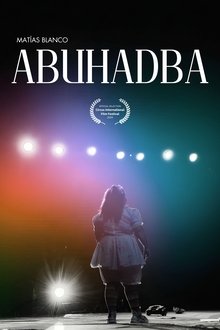
ABUHADBA (2024)
From the slow waitings for opening of the big top to the loneliness in the dressing room backstage, Abuhadba follows the life of a small circus in Chile run entirely by a traditional circus family.
Polaris (2012)
Work. Eat. Sleep. And back to work. For a long time skippers in the North East of Scotland could not find locals to work on their fishing vessels. That was until Filipino fishermen started coming to town for work. Both nationalities strive to shorten the distance between two very different worlds.
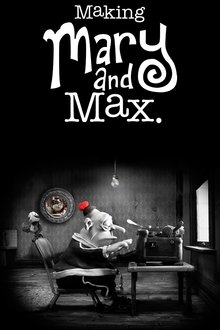
Making Mary and Max (2009)
Comedic behind-the-scenes film for the production of Mary and Max, originally released as webisodes.

A Conversation with the Masters: The Empire Strikes Back 30 Years Later (2011)
George Lucas, Irvin Kershner, Lawrence Kasdan and John Williams look back at The Empire Strikes Back 30 years later.
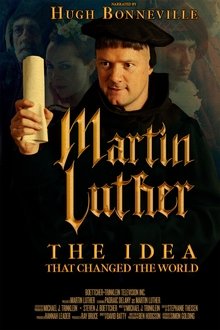
Martin Luther: The Idea that Changed the World (2017)
The year 2017 marks the 500th anniversary of one on the most important events in Western civilization: the birth of an idea that continues to shape the life of every American today. In 1517, power was in the hands of the few, thought was controlled by the chosen, and common people lived lives without hope. On October 31 of that year, a penniless monk named Martin Luther sparked the revolution that would change everything. He had no army. In fact, he preached nonviolence so powerfully that — 400 years later — Michael King would change his name to Martin Luther King to show solidarity with the original movement. This movement, the Protestant Reformation, changed Western culture at its core, sparking the drive toward individualism, freedom of religion, women's rights, separation of church and state, and even free public education. Without the Reformation, there would have been no pilgrims, no Puritans, and no America in the way we know it.