Kingdom of Granada, al-Andalus, 14th century. After recognizing that his land, always under siege, is hopelessly doomed to be conquered, Sultan Yusuf I undertakes the construction of a magnificent fortress with the purpose of turning it into the landmark of his civilization and his history, a glorious monument that will survive the oblivion of the coming centuries: the Alhambra.
Related Movies
Tudo é Projeto (2017)
Documentary about the life and work of the architect Paulo Mendes da Rocha, told by him in prominence for Joana, his daughter. With more than 80 years of age, Paulo Mendes is today one of the most important and renowned architects in the world, but, above all, he is a thinker who has controversial ideas and opinions about urbanism, nature, humanity, art and technique deserve to be heard. In a constant dialogue between interviewee / father and interviewer / daughter, Joana is the guiding thread of the film. As in all personal relationships, especially between parents and children, the thread that leads is also that which is conducted.
Bamboo Theatre (2019)
This film is a portrait of unique cultural space for Spirits, Gods and People. While permanent theatres are commonly built in most cosmopolitan modern cities, Hong Kong preserves a unique theatrical architecture, a Chinese tradition that has lasted more than a century - Bamboo Theatre.
Dark Star: H. R. Giger's World (2014)
An account of the life and work of Swiss painter, sculptor, architect and designer H. R. Giger (1940-2014), tormented father of creatures as fearsome as they are fascinating, inhabitants of nightmarish biomechanical worlds.
The Painting (2019)
For three and a half centuries, from the same day that Diego Velázquez (1599-1660) applied his last brushstroke to the canvas, the enigma of “Las meninas, o La familia de Felipe IV” (1656) has not been deciphered. The secret story of a painting unveiled as if it was the resolution of a perfect crime.
Mona Lisa Smile (2003)
Katherine Watson is a recent UCLA graduate hired to teach art history at the prestigious all-female Wellesley College, in 1953. Determined to confront the outdated mores of society and the institution that embraces them, Katherine inspires her traditional students, including Betty and Joan, to challenge the lives they are expected to lead.
Oldrich and Bozena (1985)
At the turn of the 10th and 11th centuries Boleslav's kingdom fell apart in the fratricidal war between the Přemyslovci and the other clans the main profiteer of this being the German emperor. At that time it seemed as if the Czech state and the lineage of its princes was awaiting its end..." It is with these words that the tale of this film begins, whose narrative is based upon the the play by František Hrubín of the same name.
Marqueetown (2024)
Through booms and busts, Delft Theatres and its innovative gem The Nordic endured in Marquette, Michigan for almost 100 years. Bernie Rosendahl’s crusade to restore the historic arthouse to its former glory reveals a hidden cinema empire in the Upper Peninsula.
Le Corbusier, l'architecte du bonheur (1957)
Documentary devoted to the architectural and urban planning designs of Le Corbusier. The architect supports his in-depth reflection on the city and its necessary adaptation to modern life with plans, drawings and images, particularly Paris, whose revolutionary development dreamed of by Le Corbusier is exhibited here. Its first projects will remain at the stage of a model: the modernization plan for the city of Algiers. Some will be created by other architects: Ministry of Education in Rio de Janeiro, UN Palace in New York. From the post-war period in less than 10 years, Le Corbusier created large housing units in Marseille, Nantes, a chapel in Ronchamps, a factory in Saint-Dié, a town in Chandigarh in India. Through diagrams, the architect presents his theory of the "radiant city", the mathematical key modulor of his work as well as his project for reorganizing the countryside, industrial and urban cities into a grouping around a cooperative system.

Postmodernism: The Substance of Style (2011)
This film features some of the most important living Postmodern practitioners, Charles Jencks, Robert A M Stern and Sir Terry Farrell among them, and asks them how and why Postmodernism came about, and what it means to be Postmodern. This film was originally made for the V&A exhibition 'Postmodernism: Style and Subversion 1970 - 1990'.
Frei Otto: Spanning the Future (2016)
The life and works of Frei Otto told in his own words and by those he inspired. An in-depth look at the rise of lightweight architecture, form finding, and its continued relevance for the future of architecture.
Empire City (1985)
A film essay contrasting the modern metropolis with its "golden age" from 1830-1930, with the participation of some of New York's leading political and cultural figures. Made at a time when the city was experiencing unprecedented real estate development on the one hand and unforeseen displacement of population and deterioration on the other. Empire City is the story of two New Yorks. The film explores the precarious coexistence of the service-based midtown Manhattan corporate headquarters with the peripheral New York of undereducated minorities living in increasing alienation.

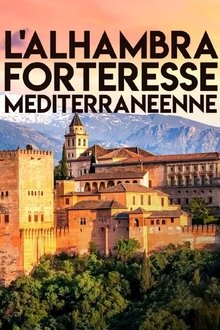
The Alhambra: Fortress of Andalusia (2021)
An examination of the artistic and construction techniques, architecture and design of this immense fortress in the south of Spain, built mainly by the Nasrid dynasty in the 13th century. Its outward austerity conceals an explosion of refinement and ornamentation, gardens and marble fountains in the grandest tradition of Moorish style and Islamic art of the period.
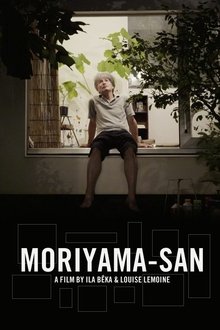
Moriyama-San (2017)
One week in the extraordinary-ordinary life of Mr. Moriyama, a Japanese art, architecture and music enlighted amateur who lives in one of the most famous contemporary Japanese architecture, the Moriyama house, built in Tokyo in 2005 by Pritzker-prize winner Ryue Nishizawa (SANAA). Introduced in the intimacy of this experimental microcosm which redefines completely the common sense of domestic life, Ila Bêka recounts in a very spontaneous and personal way the unique personality of the owner: a urban hermit living in a small archipelago of peace and contemplation in the heart of Tokyo. From noise music to experimental movies, the film let us enter into the ramification of the Mr. Moriyama's free spirit. Moriyama-San, the first film about noise music, acrobatic reading, silent movies, fireworks and Japanese architecture!
Where to with History? (2020)
Dresden is famous for its attempt to meticulously reconstruct its once bombed-out historical center and bring the colorful baroque settings of the 18th century back to life. It’s infamous for the right-wing-surge that has since 2015 swept the city and made it a center of far-right activity in Germany and Europe. This film is an exploration of where the two intersect.
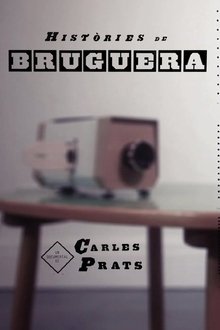
Històries de Bruguera (2012)
The history of Bruguera, the most important comic publisher in Spain between the 1940s and the 1980s. How the characters created by great writers and pencilers became Spanish archetypes and how their strips persist nowadays as a portrait of Spain and its people. The daily life of the creators and the founding family, the Brugueras. The world in which hundreds of vivid colorful paper beings lived and still live, in the memory of millions, in the smile of everyone.
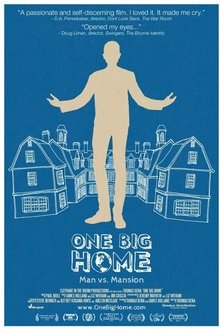
One Big Home (2017)
On the tiny island of Martha's Vineyard, where presidents and celebrities vacation, trophy homes threaten to destroy the islands unique character. Twelve years in the making, One Big Home follows one carpenters journey to understand the trend toward giant houses. When he feels complicit in wrecking the place he calls home, he takes off his tool belt and picks up a camera.