Radical West German terrorist Rita Vogt abandons the revolution and settles in East Germany with a new identity provided by the secret service. She lives in constant fear of having her cover blown, which unavoidably happens after the reunification.
Related Movies
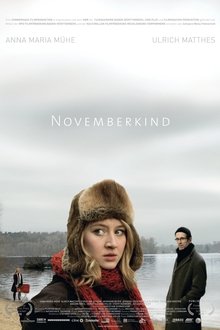
November Child (2008)
Malchow, German Democratic Republic, 1980. 20-year-old Anne is hiding Juri, a deserter of the Red Army. The two fall in love with each other. But their love is threatened: there is an arrest warrant and possibly a death sentence waiting for Juri. The two leave the country and flee to the West, leaving Anne’s six-month-old daughter Inga behind. Inga grows up with her grandparents and thinks that her mother died during a swimming accident. 25 years later she meets the literature professor Robert, who sends her on the trail of her past. He met Inga’s mother Anne during one of his seminars. At first Inga is resistant, but then she asks for Robert’s help. Together they take off on a journey through Germany, in search of Inga’s mother Anne...
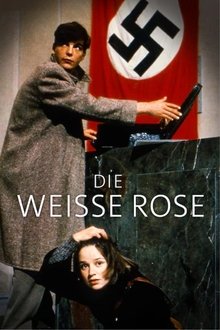
The White Rose (1982)
During the Second World War, a small group of students at Munich University begin to question the decisions and sanity of Germany's Nazi government. The students form a resistance cell which they name the "White Rose" after a newsletter that is secretly distributed to the student body. At first small in numbers and fearful of discovery, the White Rose begins to gain massive support after a Nazi Gauleiter nearly incites a student riot after a provokative speech. At this point, the matter is taken over by the German Gestapo, who pledge to hunt down and destroy the members of the White Rose.

Heroes Like Us (1999)
A young man from an early age falls in love with a girl whose family is not in good standing with the ruling Communist party. His father however is a member of the "Stasi", the secret state police. The father not only hinders his son's relationship with the girl, but he arranges for his son, after finishing school, to become a Stasi spy himself.
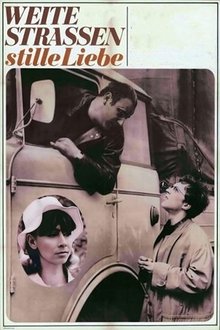
Long Roads - Secret Love (1969)
Long-haul driver Hannes (Manfred Krug) picks up a young hitchhiker, Herb (Jaecki Schwarz), who had a falling-out with his parents after dropping out of college and now travels around doing odd jobs. After a series of adventures, they are joined by Johanna (Jutta Hoffmann) and her child, who missed their bus and need a ride to Berlin. Johanna has left her husband so that he can reflect on their broken relationship and both men gradually begin to fall in love with her.
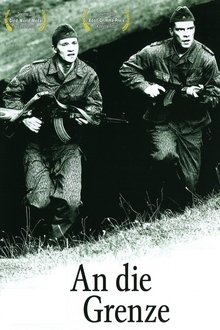
An die Grenze (2007)
19-year-old NVA soldier, Alex Karow, is sent to the West German-East German border in May 1974, shortly after Willy Brandt's resignation and during the World Cup. The army is dominated by brutal rituals, tolerated or used by the officers. Alex understands that the ideals of balance, democracy and human dignity are propaganda. The question of what happens when the other appears in the sights of the Kalashnikov occupies the soldiers day and night, interrupted almost exclusively by the games of the World Cup with the historic encounter between the GDR and the FRG. Alex draws strength from his love for Christine, a confident tractor driver who lives in the neighbouring village. Christine encourages him not to do what his father expects, but to follow his dream of becoming a photographer. But when her brother sends Alex's photo from the border fortifications to the West, everything gets out of control...
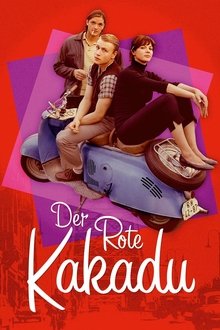
The Red Cockatoo (2006)
A coming-of-age story set in Germany in the 1960s. Siggi becomes involved in a love triangle when he falls for Luise, but the tightening political climate forces him to make a fateful decision.
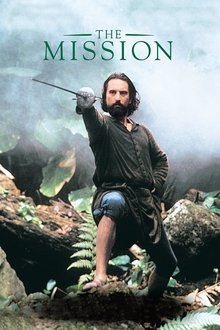
The Mission (1986)
When a Spanish Jesuit goes into the South American wilderness to build a mission in the hope of converting the Indians of the region, a slave hunter is converted and joins his mission. When Spain sells the colony to Portugal, they are forced to defend all they have built against the Portuguese aggressors.

Baya's Mountain (1997)
Set in the 1800s among the Berbers of North Africa, this 1997 Algerian feature concerns a noble widow who receives a customary purse of gold coins from the enemy tribe that murdered her husband; the gift puts her in conflict with her kinsmen, who want the money to buy back land taken by the enemy in cahoots with French colonials.
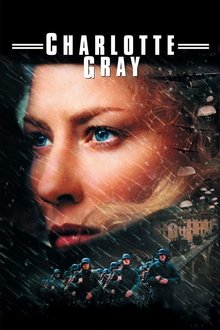
Charlotte Gray (2001)
This is a drama set in Nazi-occupied France at the height of World War II. Charlotte Gray tells the compelling story of a young Scottish woman working with the French Resistance in the hope of rescuing her lover, a missing RAF pilot. Based on the best-selling novel by Sebastian Faulks.
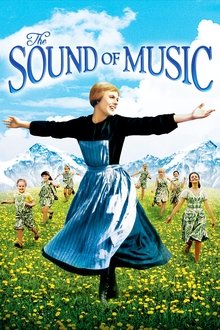
The Sound of Music (1965)
In the years before World War II, a tomboyish postulant at an Austrian abbey is hired as a governess in the home of a widowed naval captain with seven children, and brings a new love of life and music into the home.
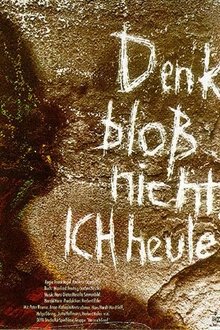
Just Don't Think I'll Cry (1965)
High-school senior Peter considers the adults around him to be hypocritical, self-congratulatory, and immersed in the past. He gets suspended for writing an essay that his teachers consider to be a challenge to the state. Just Don't Think I'll Cry became one of twelve films and film projects-almost an entire year's production-that were banned in 1965-1966 due to their alleged anti-socialist aspects. Although scenes and dialogs were altered and the end was reshot twice, officials condemned this title as "particularly harmful." In 1989, cinematographer Ost restored the original version, and this and most of the other banned films were finally screened in January 1990. Belatedly, they were acclaimed as masterpieces of critical realism.
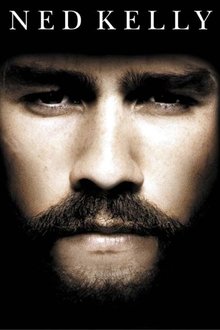
Ned Kelly (2003)
After getting threatened by Kelly's friends and family, Constable Fitzpatrick places the blame on Ned Kelly and exaggerates what happened. With the biggest ever award available, Kelly and his gang set into the wild, to remain hidden from everyone who seeks them. Even if it means having his family arrested, the members of the Kelly Gang stay hidden and plan a way to get their names cleared.
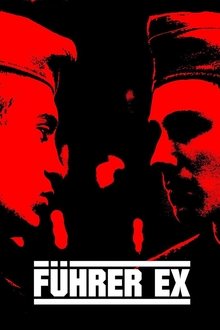
Führer Ex (2002)
Ingo Hasselbach, whose parents were Communist Party members in East Germany during his childhood, has lived at both ends of the political seesaw. The question of how people reach a change of heart is a profound one; Hasselbach describes the external forces that led to his founding Germany's first neo-Nazi political party and the internal ones that led him away from it five years later.
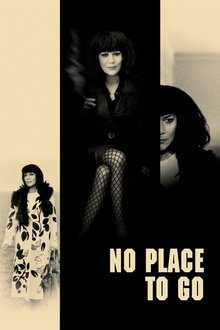
No Place to Go (2000)
Flanders, a famous female author, travels in 1989 after the fall of the Berlin wall into the German capital. She is deeply depressed by the events because she saw the communist state as a very good thing that has now ended. In the joy of these days she finds no one to understand her, so she has to travel back to Munich. After meeting several people, known and unknown, it seems as if there will be no way to go.
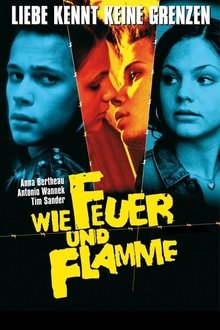
Never Mind the Wall (2001)
Germany 1982: The country is divided into two parts. Nele, coming from West-Germany, travels to East-Germany where she meets Captain, singer of a band. They fall in love with each other, but the regime "takes care" of their relationship, meaning: They can not see each other again. Germany 1990: The country is reunited. Nele starts searching their lost love...
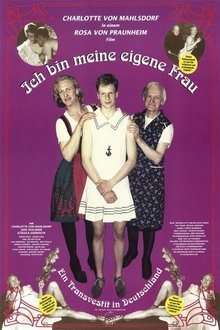
I Am My Own Woman (1992)
The life story of Charlotte von Mahlsdorf, who survived the Nazi reign as a trans woman and helped start the German gay liberation movement. Documentary with some dramatized scenes. Two actors play the young and middle aged Charlotte and she plays herself in the later years.
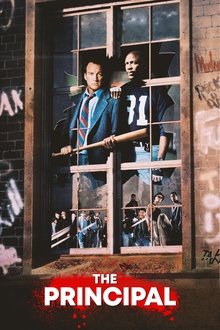
The Principal (1987)
Burglary. Drugs. Assault. Rape. The students at Brandel High are more than new Principal Rick Latimer bargained for. Gangs fight to control the school using knives - even guns - when they have to. When Latimer and the head of security try to clean up the school and stop the narcotics trade, they run up against a teenage mafia. A violent confrontation on the campus leads to a deadly showdown with the drug dealer's gang, and one last chance for Latimer to save his career... and his life.

The Wind That Shakes the Barley (2006)
In 1920s Ireland young doctor Damien O'Donovan prepares to depart for a new job in a London hospital. As he says his goodbyes at a friend's farm, British Black and Tans arrive, and a young man is killed. Damien joins his brother Teddy in the Irish Republican Army, but political events are soon set in motion that tear the brothers apart.
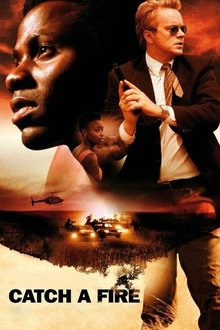
Catch a Fire (2006)
The true story of anti-apartheid activists in South Africa, and particularly the life of Patrick Chamusso, a timid foreman at Secunda CTL, the largest synthetic fuel plant in the world. Patrick is wrongly accused, imprisoned and tortured for an attempt to bomb the plant, with the injustice transforming the apolitical worker into a radicalised insurgent, who then carries out his own successful sabotage mission.