D Train Through Bensonhurst (2022)
Fragments of interesting people and things amongst a handful of D train stops in Queens, New York. Filmed on Super 8 mm.
Related Movies

The Norrtull Gang (1923)
A collective of office girls and their tribulations in the male world, female solidarity, the place of women in the labor and civil rights struggles and the conflict between love and work.
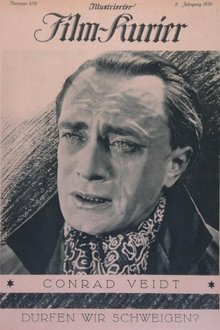
Should We Be Silent? (1926)
A melodrama about a painter who is infected with syphilis, refuses treatment, turns to the use instead of narcotics, and withers away.
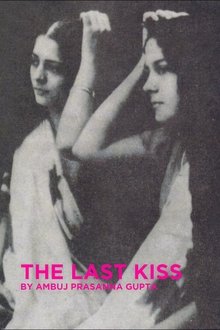
The Last Kiss (1931)
First ever Bangladeshi feature film. The film about a conflict between two family members.

The 47 Loyal Ronin (1910)
An adventure film with Benshi performers. Sometimes considered the 'first Japanese feature film', it survives today as a compilation of scenes from various different 1910s adaptations totaling nearly three hours in length. The bulk of the content comes from the 1911 adaptation by legendary Japanese filmmaker Makino Shozo.

Daughters of Today (1928)
Daughters of Today was a 1928 silent film from Lahore, in present-day Pakistan (then British India). It was produced by G.K Mehta and directed by Shankradev Arya. This was the first feature film made in Lahore, and helped to establish the city of Lahore as one of the centers of filming in India. The Lahore film industry is now known as Lollywood. Production started in 1924 and took three years to complete, mainly due to financial problems. Two participants later became prominent personalities of the South Asian film industry: A.R. Kardar was one of the most famous Bombay film directors in the 1930s, 1940s and 1950s; and actor M. Ismael's film career spanned over five decades.
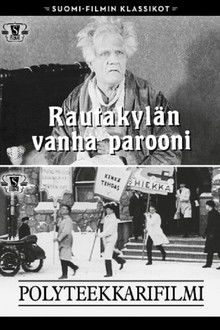
Polyteekkarifilmi (1924)
Polyteekkarifilmi (Polytekarfilmen) is a Finnish silent documentary film dating from 1924. The subtitle of the documentary is "The story of sport, polytheists and the gods of Olympia". The film aimed to raise travel funds for Finnish athletes traveling to the Paris Olympics.
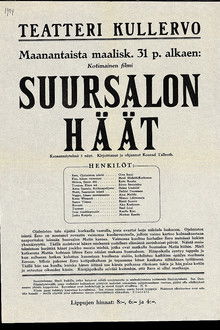
Suursalon häät (1924)
After Matti is stabbed to death at his own wedding, Eero of Ojelmiston becomes a suspect, presumed to have avenged his recently deceased wife. Eero escapes with the help of a court judge but surrenders after his mother gets into trouble. At the courthouse, the priest admits that Vieremä Jaska confessed to the crime on his deathbed. The film has survived, but without subtitles.
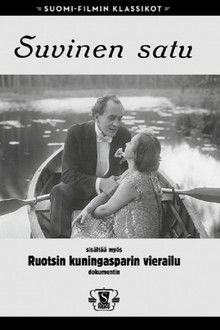
Suvinen satu (1925)
The main characters are the artist Bertel von Bjelke and Hilkka Kanno the adopted daughter of the town councilor. Bertel is in love with Hilka, who, however, behaves badly with the artist. This does not prevent the artist from asking for the girl's hand from the town councilor Kanno, who accepts his friend's request. Kanto stresses, however, that the final decision is up to his daughter.
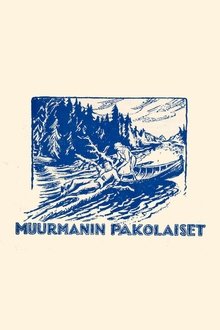
Muurmanin pakolaiset (1927)
In northern Finland in the fall of 1916, Saima Niva rescues a man drifting in the river, who turns out to be a German lieutenant Braun. Braun and his six comrades have managed to escape the prisoner of war at the Muurmann railway station, but the lieutenant has had to get rid of the lost group. While Braun is recovering, under the good care of Saima, Niva's neighbor and henchman of the gendarmes, the greedy policeman Simpura, gets a tip about the refugees camped in the desert.
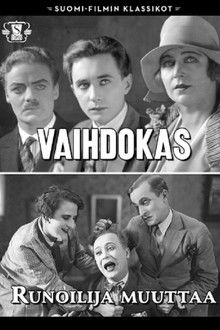
Vaihdokas (1927)
When the general manager of the factory, Lumiala returns from his travels, he learns that his wife Anna has hired a young man named Oras as an office assistant. Anna, who feels Oras is the fruit of his youthful sin, is ready to defend the boy despite his family's petitions and Ora's crimes. Ora's girlfriend Pansy also tries to keep him on the right track.
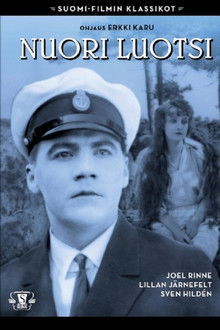
Nuori luotsi (1928)
Eero Luotola is a pilot operating in Kalliosaari, whose crush is Annikki, who lives in the same village. They have known each other since childhood and have promised to get married at some point.
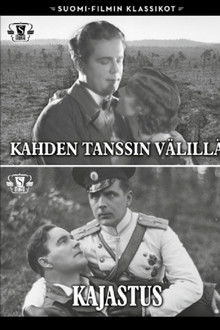
Kahden tanssin välillä (1930)
Forester Antti Kare and manager John Freyberg travel north in search of millions worth of timber sales. The manager's giddy daughter Margit also secretly joins the journey.
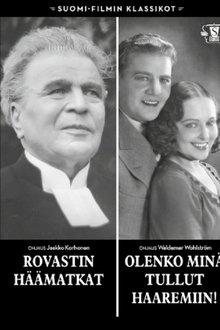
Rovastin häämatkat (1931)
Jaakkola, a priest with a bad memory, gets a prescription for a spa day from Dr. Viljo. Ruustinna plans to bring her daughter Elina and the local doctor together. Jaakkola finds the mail he forgot in his pocket, including an important wedding invitation. Rovasti and Ruustinna plan to stop at the wedding on the way to the spa, but things get complicated and there are enough misunderstandings in the knots of love.

La Dolores (1908)
A small village in Aragón, Spain, at the end of the 19th century. After being caught by her father fooling around with Melchor, an unscrupulous womanizer, being disgraced and losing everything, young Dolores is forced to take to the roads in search of work.
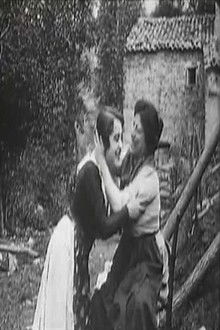

Carceleras (1922)
In a Cordovan farmhouse, Soledad arouses a passion in two men, which will be cause of misfortune for both when the boyfriend of the protagonist in a jealous attack kills the rival in his presence.
Alma de Dios (1923)
Eloisa is an orphan, the fiancée of Agustín, who meets her when she arrives in Madrid fleeing her stepmother's mistreatment. She happens to be the mother of an illegitimate child, but in reality the mother is his cousin Irene (with whom he lives, next to his aunt) married to Mr. Adrian. Her aunt Marcelina tries with this lie to save her daughter Irene. After numerous family entanglements, the truth becomes clear and the couple can live together and in peace.