An epic family saga told by the women around the famous architect Ludwig Mies van der Rohe.
Related Movies
Night and Fog (1956)
Filmmaker Alain Resnais documents the atrocities behind the walls of Hitler's concentration camps.

Soldiers in Black (2011)
From 1940, around 25,000 Dutch people served in the Waffen-SS. In spite of their large number, they did not make much public disclosure after the war. Eight Dutch former SS men tell their story in this documentary. Never before have former SS men talked so openly about their motives, their (wrong) acts, their experiences on the (Eastern) front and their struggle with the memories of the past.

Meine alles außer gewöhnliche Familie (2021)
It is normal for 15-year-old Linn to have two mothers. But when she finds out that there are still numerous siblings, she realizes that she is part of an extraordinary extended family. Her father Eike not only had an appointment with Linn's mothers to donate sperm, Petra and Anny also have three children with him. A film crew followed this rainbow family for twelve years.

Churchill: When Britain Said No (2015)
Documentary which examines the reasons why Winston Churchill and the Conservative Party lost the General Election of 1945, after Churchill had just led the country to victory in the World War II.
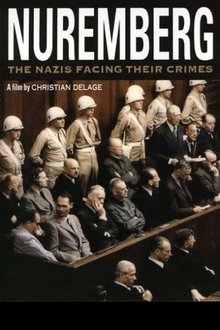
Nuremberg: The Nazis Facing their Crimes (2006)
The documentary of the Nuremberg War Trials of 21 Nazi dignitaries held after World War II.
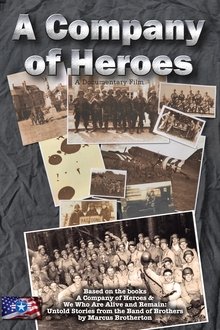
A Company of Heroes (2013)
Easy Company, the 2nd Battalion of the 506th Parachute Infantry Regiment of the 101st Airborne Division, fought their way through Europe, liberated concentration camps, and drank a victory toast in April 1945 at Hitler's hideout. Veterans from Easy Company, along with the families of three deceased others, recount their horrors and victories, bonds they made and the friends they lost.

The Ugliest Car (2017)
The youngest protagonist of the documentary is Wartburg, an automobile over 50 years of age. The car is still on the road, driven by Bogdan, a 70-year-old who is taking his mother to visit the German factory where she was forced to work during WWII. In this road movie which takes place between Majdanpek and Germany, the trip becomes a journey into the past, retracing memories from the war and revealing a unique relationship between an old son and his elderly mother.
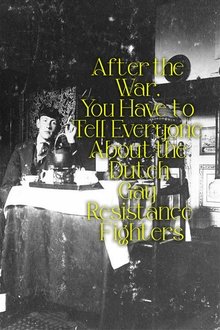
After the War, You Have to Tell Everyone About the Dutch Gay Resistance Fighters (1991)
Many members of the Dutch Underground were gay and lesbian. This film pays homage to them and recounts their story.

Thanks Girls and Goodbye (1988)
Documentary using archival footage, newsreels and contemporary interviews with women of the WW2 Australian Women's Land Army.
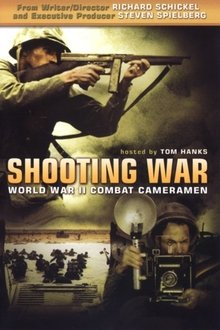
Shooting War (2000)
A remarkable film that takes a special look at the first war to be truly reported and recorded by one of the more unsung heroes of World War II: the combat photographer. Through the unflinching eye of their camera's lenses, these courageous soldiers continually risked their lives in their brave attempts to capture history.
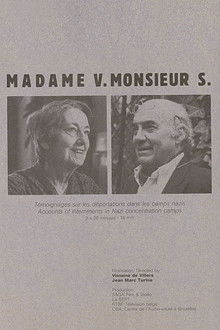
Madame V. Monsieur S. (1989)
Betty Van Sevenant, a young resistance fighter from Bruges, arrested in March 1942, was declared "Nacht und Nebel". She recounts her deportation to the Ravensbrück and Mauthausen camps until liberation. Tobias Schiff, a Polish Jew from Antwerp, was deported with his parents to Upper Silesia on August 28, 1942, on convoy No. 25. His story begins upon arrival at Auschwitz-Birkenau and concludes with the liberation of the Bergen-Belsen camp. (2 x 26 min.)
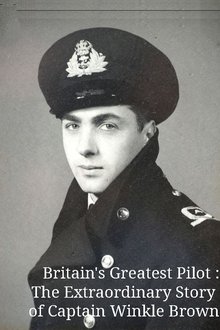
Britain's Greatest Pilot: The Extraordinary Story of Captain Winkle Brown (2014)
Captain Eric 'Winkle' Brown recounts his flying experiences, encounters with the Nazis and other adventures leading up to and during the Second World War. Illustrated with archive footage and Captain Brown's own photos.
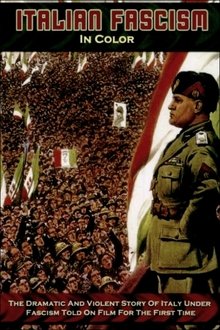
Fascism in Colour (2006)
After the World War I, Mussolini's perspective on life is severely altered; once a willful socialist reformer, now obsessed with the idea of power, he founds the National Fascist Party in 1921 and assumes political power in 1922, becoming the Duce, dictator of Italy. His success encourages Hitler to take power in Germany in 1933, opening the dark road to World War II. (Originally released as a two-part miniseries. Includes colorized archival footage.)
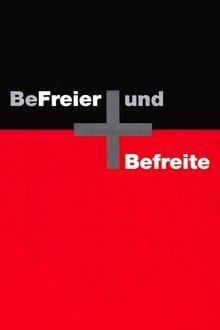
Liberators Take Liberties (1992)
Helke Sander interviews multiple German women who were raped in Berlin by Soviet soldiers in May 1945. Most women never spoke of their experience to anyone, due largely to the shame attached to rape in German culture at that time.
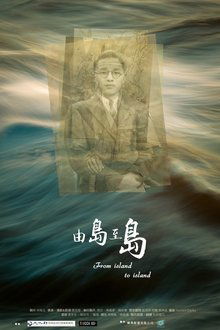
From Island to Island (2024)
During World War II, Taiwan was part of the Japanese Empire. This documentary explores the experiences of Taiwanese soldiers, doctors, and overseas residents in Southeast Asia during that time. Using cross-generational memory dialogues, family letters, diaries, and videos, the film addresses the complexities of Taiwan's historical memory and diverse identities during that period.

The Great Patriotic War (1965)
This communist history film recalls the heroism of Soviet soldiers fighting the Nazis in World War II. Forty of the 236 cameramen used for the feature were killed during their mission filming the Red Army.
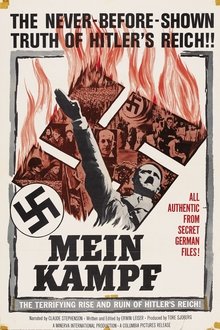
Mein Kampf (1960)
"Mein Kampf" presents the raising and fall of the Third Reich, showing mainly the destruction of Poland and the life Hitler, which is told since he was a mediocre student and frustrated aspirant of artist living in slums in Austria and Germany, until his suicide in 1945 after being the responsible for the death of million of people, and the destruction of Europe. All the footage is real and belonged to a secret file of Goebbels, inclusive with many very strong scenes filmed by Goebbels himself.
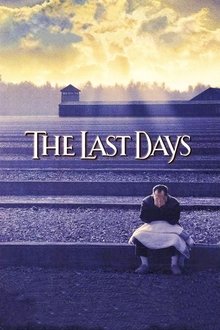
The Last Days (1998)
Five Jewish Hungarians, now US citizens, tell their stories: before March 1944, when Nazis began to exterminate Hungarian Jews, months in concentration camps, and visiting childhood homes more than 50 years later. An historian, a Sonderkommando, a doctor who experimented on Auschwitz prisoners, and US soldiers who were part of the liberation in April 1945.

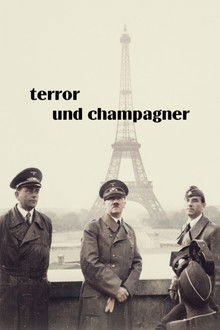
Terror und Champagner – Hitlers Stellvertreter in Paris (2025)
Between June 1940 and August 1944, Otto Abetz, German ambassador in Paris, and Fernand de Brinon, ambassador of the Vichy regime in Paris, met almost daily and developed official collaboration between the governments of Vichy and Nazi Germany.