This video traces a 30-year history of Magic's biomechanical villains — the Phyrexians — and showcases the evolution of their visual design. It also provides an introduction to the esoteric Phyrexian language.
Related Movies
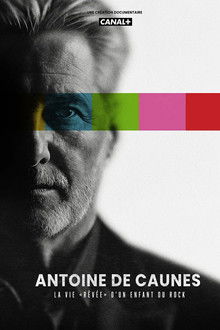
Antoine de Caunes : la vie rêvée d'un enfant du rock (2025)
Documentary on Antoine de Caunes, a French television presenter, comedian, actor, journalist, writer and film director.
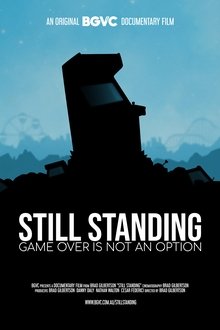
Still Standing (2023)
Discover the untold story of Pinball and Arcade in Australia in this heart-warming, and at times heart-breaking, nostalgic journey through the golden era of gaming.

Zwei Leben für Europa (2022)
In the chaotic, highly emotional period after the First World War in 1918, the foreign ministers Gustav Stresemann (1878-1929) and Aristide Briand (1862-1932) put all their energies into trying to lead their countries, Germany and France, which were at enmity with each other, into a peaceful future and a united Europe. After their deaths, Europe has to go through a second hell before the plan of these two visionaries succeeds. The cinematic mix of archive footage and re-enactments shows two statesmen, full of facts and emotion, who give each other nothing in difficult negotiations, but at the same time hold on to their shared vision. Even if these two human lives were not enough to reap the fruits of their labor, they sowed the seeds for the next generation. In 1926, Aristide Briand and Gustav Stresemann were awarded the Nobel Peace Prize. It is a sign that the peoples of the world believe in a Europe at peace.
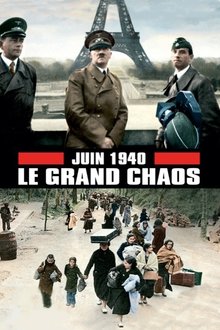
June 1940, the Great Chaos (2010)
From May 10, 1940, France is living one of the worst tragedies of it history. In a few weeks, the country folds, and then collapsed in facing the attack of the Nazi Germany. On June 1940, each day is a tragedy. For the first time, thanks to historic revelations, and to numerous never seen before images and documents and reenacted situations of the time, this film recounts the incredible stories of those men and women trapped in the torment of this great chaos.


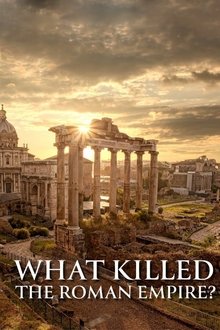
What Killed the Roman Empire? (2022)
Why did the Roman Empire, which dominated Europe and the Mediterranean for five centuries, inexorably weaken until it disappeared? Archaeologists, specialists in ancient pathologies and climate historians are now accumulating clues converging on the same factors: a powerful cooling and pandemics. A disease, whose symptoms described by the Greek physician Galen are reminiscent of those of smallpox, struck Rome in 167, soon devastating its army. At the same time, a sudden climatic disorder that was underway as far as Eurasia caused agricultural yields to plummet and led to the westward migration of the Huns. Plagued by economic and military difficulties, attacked from all sides by barbarian tribes, the Roman edifice gradually cracked.
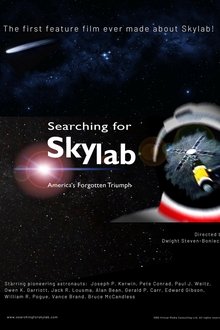
Searching for Skylab, America's Forgotten Triumph (2019)
The first American space station Skylab is found in pieces scattered in Western Australia. Putting these pieces back together and re-tracing the Skylab program back to its very conception reveals the cornerstone of human space exploration.

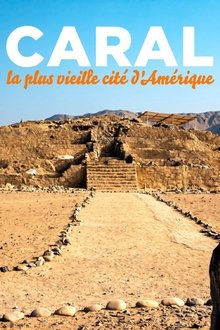
Caral: Sacred City of the Andes (2020)
The Sacred City of Caral or Caral-Supe is the capital of the Norte Chico Civilization of Supe located in the Supe Valley, 200 km (124 miles) north of Lima. The Sacred City of Caral is the earliest known civilization in the Americas, it dates to the Late Archaic period. Radiocarbon analysis performed by the Caral-Supe Special Archaeological Project (PEACS) dates its development between 3000 to 1800 B.C.. It is believed that this civilization started by the merging of small villages based on trade of agricultural and fishing products. Its importance rests on the success of techniques of domestication of cotton, beans, potatoes, chilis, squash among other products. Success in agriculture was due to the development of water canals, reservoirs and terraces. They used guano, bird excrement, and anchovies as fertilizer.
Spruce Forest (2025)
The Spruce Forest explores one of the darkest pages in Romanian history. Inspired by the drama of Fântâna Albă on April 1, 1941, the film reconstructs the fate of a Romanian community in Bessarabia, massacred in a desperate attempt to find refuge from the Soviet occupation. The testimony of a survivor of this genocide becomes the backdrop against which archival images and his wife's memories of Siberia are superimposed, in a dizzying game of mirrors that questions the notion of historical truth and reveals forgotten traumas with potentially devastating consequences in the present.
1972: Munich's Black September (2022)
Explore the tragic truth about the massacre at the 1972 Olympic Games in Germany. Through interviews with key people such as the families of slain Olympians, German investigators and an anonymous perpetrator.
Ishq e Qalandar - The Beautiful Sindh (2020)
Ishq e Qalandar - The Beautiful Sindh is a travel film that takes viewers through one of the most ancient civilizations on Earth called Sindh. Shezan Saleem Jo-G takes a journey of self-realization, the discovery of his roots, and building a connection with people and spirituality in Sindh.
Remember (NaN)
This short documentary produced by the University of Oregon Multimedia Journalism graduate program explores memories of Portland's Japantown – Nihonmachi – and the thriving Japanese American community in Oregon prior to World War II. The film features Chisao Hata, an artist, teacher and activist, and Jean Matsumoto, who was incarcerated at the Portland Assembly Center and in the Minidoka concentration camp as a child.

Personal Che (2007)
A documentary that explores the myth behind the truth. Different people around the globe reinterpret the legend of Che Guevara at will: from the rebel living in Hong Kong fighting Chinese domination, to the German neonazi preaching revolution and the Castro-hating Cuban. Their testimonies prove that the Argentinian revolutionary's historical impact reverberates still. But like with all legends, each sees what he will, in often contradictory perspectives.

Rolling at The Tower (2025)
Dating back to the 1800s, Birmingham’s roller skating scene is a flourishing, diverse community - but it lacks dedicated spaces. This community documentary explores the history of one roller venue, The Tower Ballroom, and considers what it tells us about the power of community action.