Deeply thoughtful and illuminating, DRAWING A LIFE reveals the details of artist Geoff McFetridge’s life and work while delving further into the universal questions of what makes a fulfilling life and how to live with intention in the limited time we all have.
Related Movies

A Two Hearted Tale (2023)
“A Two Hearted Tale” is a heartfelt look at the history of the iconic trout label adorning Bell’s Two Hearted Ale, the Michigan-born beer that is the most popular IPA beer in America, and the label’s eccentric artist, Ladislav Hanka.
Scrapped (2025)
A documentary exploring two student artists and their unfinished projects, discussing why certain projects are abandoned and the personal connections that the creator may have to them.
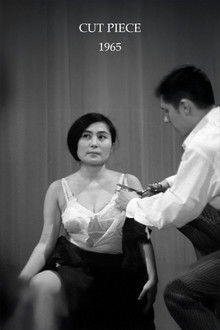
Cut Piece (1965)
Filmed at New York’s Carnegie Hall, Cut Piece documents one of Yoko Ono’s most powerful conceptual pieces. Performed by the artist herself, Ono sits motionless on the stage after inviting the audience to come up and cut away her clothing in a denouement of the reciprocity between victim and assailant.
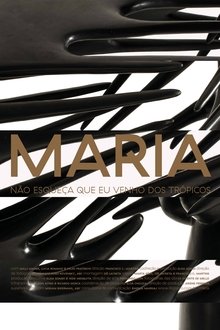
Maria: Don't Forget I Come From the Tropics (2017)
An examination of the relationship between the life and art of Maria Martins, now recognized as one of the greatest Brazilian sculptors, in addition to her engravings and texts. The film reveals the greatness of her work and her boldness when dealing directly with the feminine perspective of sexuality, a transgression that led to attacks by Brazilian critics. In parallel, her life as the wife of an important diplomat and her connection to Marcel Duchamp, in a relationship of mutual collaboration between the two artists.
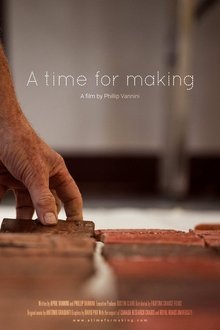
A Time for Making (2018)
Nine artisans on secluded Gabriola Island reveal the differences between mass manufactured and authentic locally handmade through intimate portraits of their work and lifestyle.
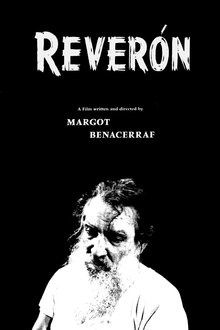
Reverón (1952)
Directed by Margot Benacerraf, Reverón is a poetic and visually striking documentary that delves into the life and artistic vision of Venezuelan painter Armando Reverón. Set in the sun-drenched coastal landscape of Macuto, where the artist lived in near isolation, the film captures his eccentric lifestyle and unique creative process. Through evocative imagery and a contemplative narrative, Reverón explores his deep connection to nature, his experiments with light and texture, and his profound artistic genius. This seminal work stands as a tribute to one of Venezuela’s most influential painters and a landmark in Latin American documentary filmmaking.
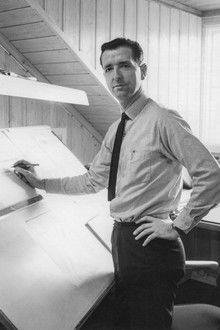

Cern and the Sense of Beauty (2017)
An exploration of the link between science and beauty through the work of scientists at CERN, in Geneva.
Portrait: Gerald Squires of Newfoundland (1980)
Newfoundland painter Gerald Squires has referred to his portraits as "confrontations," though not intending the hostility that word can convey. This film shows a meeting between the artist and Edythe Goodridge, art curator and critic. Through a combination of Squires's reflections on his life and work and the good-natured banter of these two friends, an intimate portrait evolves of the artist and his subject.
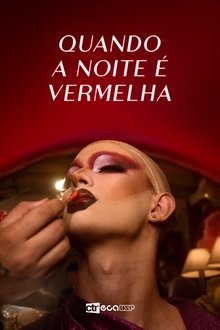
Quando A Noite É Vermelha (2025)
May 2, 2024. Amidst big names from São Paulo's drag scene, a young filmmaker dives into the experience of becoming a drag queen for one night.

Quest for Beauty: The Life and Art of William Schickel (2025)
Quest for Beauty is a film documentary on the life and prolific art career of William Schickel who was a prominent 20th century Catholic artist. Schickel had a very prolific art career spanning sixty-plus years; he produced a large body of mostly commissioned work in painting, sculpture, stained glass, and architectural design. He is most well-known for his renovation of the Abbey of Gethsemani in Kentucky, where he worked personally with Thomas Merton. His works can be found in numerous private collections and museums, including the Vatican Museum. The film explores his Quest for Beauty and the challenges he faced, and his vision for the Church and his heart for unity in the Body of Christ.
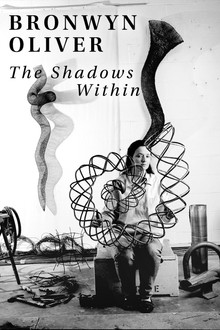
Bronwyn Oliver: The Shadows Within (2021)
This intimate documentary follows the journey of Bronwyn Oliver, a working-class girl from the country who became one of Australia's most influential contemporary sculptors.
TRAY TRAY KO (2022)
Draped in an electric blue fabric, the artist acts as a conduit between the tangile and the spiritual, blurring the boundaries between human form and natural elements.
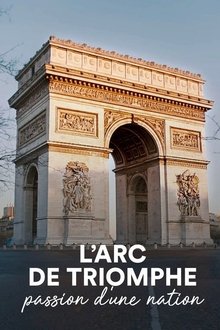
The Arc de Triomphe: A Nation's Passion (2021)
The pride of Napoleon's victories, the Arc de Triomphe, whose first stone was laid in 1806 at the top of the Champs-Élysées, is, along with the Eiffel Tower, one of the most visited monuments in the French capital. Wanted by an emperor, inaugurated under the reign of a king (Louis-Philippe) and sanctuarized by the Republic, this patriotic temple polarizes the passions of a whole nation. A historical portrait before "packaging", which teems with anecdotes and unsuspected details.
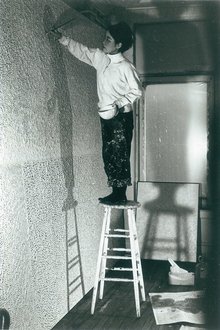
Yayoi Kusama (2016)
Yayoi Kusama born March 22, 1929 is a Japanese artist and writer. Throughout her career she has worked in a wide variety of media, including painting, collage, scat sculpture, performance art, and environmental installations, most of which exhibit her thematic interest in psychedelic colors, repetition and pattern. A precursor of the pop art, minimalist and feminist art movements, Kusama influenced contemporaries such as Andy Warhol, Claes Oldenburg and Yoko Ono.
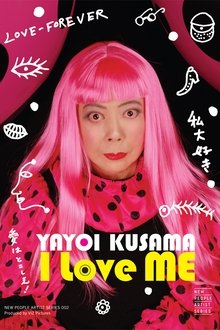
Yayoi Kusama: I Love Me (2008)
Captures the avant-garde artist Yayoi Kusamas creative process as she diligently works to complete her series of 50 large monochrome drawings. As her work comes to life, one can witness the essence of her art as it wells up in the conflict between life, death, and love.
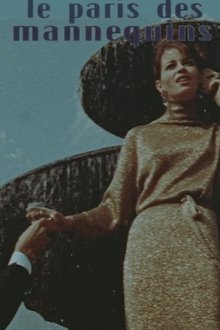
Le Paris des mannequins (1963)
A photoshoot on the roofs and in the streets of Paris, under the astonished eyes of the inhabitants.
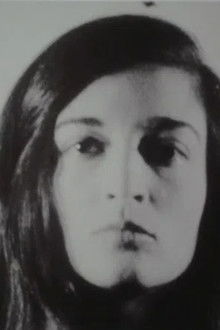
Screen Test: Marisol (1964)
Marisol has been posed against a light-coloured background and carefully lit from left and right. Her face emerges from the dark mass of her hair. The film is slightly out of focus throughout. At one point she glances off-screen, then resumes her gaze into the camera.
Bob Indiana, Etc. (1963)
Robert Indiana with a few companions sitting, smiling, and smoking as life passes idly by.
Hermitage Revealed (2014)
To celebrate its 250th anniversary, this documentary tells the story of one of the world’s greatest museums, from its foundation by Catherine the Great, though to its status today as a breathtakingly beautiful complex which includes the Winter Palace. Showcasing a vast collection of the world’s greatest artworks together with contemporary art galleries and exhibitions, it holds over 3 million treasures and world class masterpieces in stunning architectural settings. This is its journey from Imperial Palace to State Museum, encompassing a sometimes troubled past, surviving both the Revolution in 1916 and the siege of Leningrad by the Nazis in 1941-44.