Schaedler's film tells the fascinating story of Tibetan monk Gendun Choephel whose robes ultimately proved to be too constricting for his imagination and intellect. Born in 1903, Choephel left an indelible mark on Tibetan culture and became an icon for young Tibetans today. Because of his political views he was persecuted by the Tibetan government and died a broken man in 1951. The film follows in the footsteps of the rebel monk whose intellect challenged the ancient traditions of old Tibet. Journeying through Tibet and India, “Angry Monk” provides a vivid picture of Tibet that is in refreshing contrast to its often idealized and esoteric image.
Related Movies
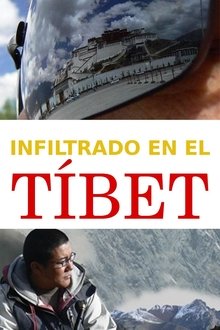
Undercover in Tibet (2008)
Undercover in Tibet reveals the regime of terror which dominates daily life and makes freedom of expression an impossibility. Tash meets victims of arbitrary arrests, detention, torture and ‘disappearances’ and uncovers evidence of enforced sterilizations on ethnic Tibetan women. He sees for himself the impact of the enormous military and police presence in the region, the hunger and hardship being endured by many Tibetans and hears warnings of the uprising taking place across the provinces now.

Ivan the Terrible (2014)
Ivan, first tsar of Russia. History will remember him as "the Terrible. Russian people love him for centuries. He liberates Russia from foreign oppressors, demands absolute obedience and loyalty in order to radically modernise Russia? Ivan IV, Grand Duke of Moscow, first Tsar of Russia by the grace of God. A madman? A sadist?

Orphans of Tibet (2010)
Each year, groups of Tibetan children secretly flee their homeland over the Himalayas to reach schools in India founded by the government in exile. Entrusted to smugglers, they are risking their lives by illegally crossing the great Himalayan range, a towering rampart between Tibet and India. The director will take us in the Mussorie school, in North India, where two thousand four hundred children have been rescued. They have left behind their family childhood and are now considered as orphans. We will discover the itineraries of Sonam, aged nine, and Dholma, the little new girl of the school. Here in India, they are taught about Tibetan culture and will find out about the history of their country and their ancestors. Sonam and Dholma's story is that of thousands of Tibetan children. Are they orphans of a lost country or bearers of hope who will save an endangered culture?

Brilliant Moon: Glimpses of Dilgo Khyentse Rinpoche (2010)
Brilliant Moon chronicles the life of the writer, poet, and meditation master Khyentse Rinpoche, one of Tibet's most revered 20th-century Buddhist teachers. Spiritual guide to His Holiness the Dalai Lama and the Royal Family of Bhutan, his life and teachings were an inspiration to all who encountered him. Richard Gere and Lou Reed provide the narration for his dangerous journey out of China, the subsequent spread of his influence and the search for his reincarnation after his death.
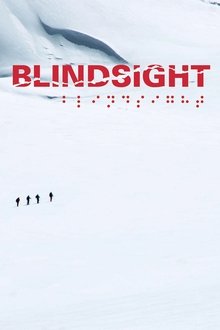
Blindsight (2006)
Six blind Tibetan teenagers climb the Lhakpa-Ri peak of Mount Everest, led by seven-summit blind mountain-climber Erik Weihenmayer.

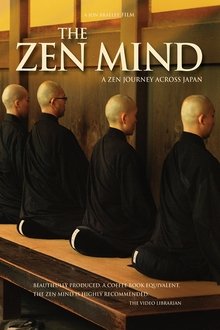
The Zen Mind (2007)
In the last fifty years the culture of Zen has spread far beyond Japan. Zen centers and zen retreats have sprung up throughout America and Europe. When Dogen, the founder of Soto Zen, brought Zen to Japan from China 800 years ago, it quickly took root and became an integral part of Japanese life. Yet what do we know about zen practice in Japan today? The Zen Mind is a fascinating journey across Japan to explore zen in its natural habitat.
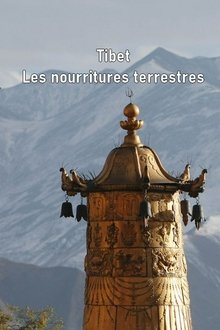
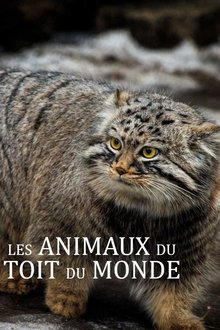
Tibet: Roof of the World (2020)
Join us as we explore life on the highest mountain plateau on Earth. This beautiful and other worldly place is also one of the harshest on the planet. We follow the lives of some of the iconic creatures that call it home. From Tibetan wolves struggling to raise pups in the rugged peaks, and rare snub nosed monkeys facing family dramas on the forest slopes to chiru antelopes that travel hundreds of miles to give birth while facing death, and hardy pika who tough out the elements all year, whilst under constant attack. Discover how these extraordinary animals manage to not only survive, but also thrive on the roof of the world.

Into Great Silence (2005)
An intimate portrayal of the everyday lives of Carthusian monks of the Grande Chartreuse, high in the French Alps (Chartreuse Mountains). The idea for the film was proposed to the monks in 1984, but the Carthusians said they wanted time to think about it. The Carthusians finally contacted Gröning 16 years later to say they were now willing to permit Gröning to shoot the movie, if he was still interested.
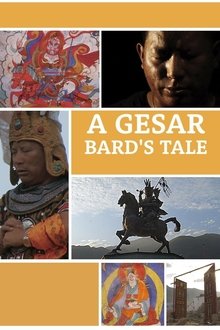
A Gesar Bard's Tale (2013)
As a boy, Dawa was an illiterate Tibetan nomad whose life revolved around herding yaks. At 13, his life changed: through a series of visions, Dawa acquired the gift of telling the epic story of Tibet’s King Gesar. Now, at 35, Dawa receives a salary from the government as a guardian of national cultural heritage and is regarded as a holy man by his community. When an earthquake reduces his hometown to rubble, redevelopment of the region takes a giant leap forward. In the midst of such seismic shifts, Dawa seeks healing from King Gesar and other divine protectors of the land.

Women 50 Minutes (2007)
A representation of queer and feminist imagery that was mainly shot in the Qinghai-Tibetan Plateau, remote and developing areas in southwest China, and metropolitan cities like Beijing from 2000 to 2004 to document the social changes in contemporary China. The director sympathetically and erotically represents a variety of women, including women as laborers, women as prayers, women in the ground, women in marriage, and women who lie on the funeral pyre with their dead husbands. Her camera juxtaposes the mountains and rivers in old times, the commercialized handicrafts as exposition, the capital exploitation of the elders’ living space, and the erotic freedom of the young people in a changing city.

Vajra Sky Over Tibet (2006)
Vajra Sky is a cinematic pilgrimage to central Tibet, bearing witness to the indomitable faith of its Buddhist community and the imminent threat to its very survival. This poignant journey bears witness to the indomitable faith of its endangered Buddhist community and the imminent threat to its very survival. The vastness of the Tibetan sky, reflecting snowy mountains, rushing rivers, and turquoise lakes, leads the journey west. Tibetans respond to the denial of the human right to practice one's religion without interference with a defiant devotion.

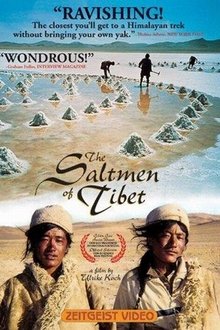
The Saltmen of Tibet (1997)
Four men from a nomadic Tibetan tribe undertake their annual, ritualistic pilgrimage to a sacred salt lake. Salt gathered in this traditional fashion will be sold to provide the economic livelihood of the tribe for the coming year. The journey, necessary for the group's survival, also incorporates a number of rituals necessary for their culture to survive in the modern world.

Tibet (2010)
A motorcycle travel documentary to Tibet. Herbert Schwarz, Heike Bogdanski and Michael Martin travel to Tibet on BMW motorcycles. These motorcycles are equipped with some Touratech parts (understatement). In German language only, no subtitles.

Drifting on the Roof of the World (2020)
Thinley and Nyima are Tibetans in exile in India. Barely able to make a living, they are now expecting a child. Is there still hope despite all these challenges?

The Light of the Golden Sun (2011)
More than 50 years ago, the Tibetan Bon Buddhist tradition was driven from its refuge deep within the Himalayas. This is the story of the long and difficult journey that followed. Told through the lens of one Bon teacher born in exile -- Tenzin Wangyal Rinpoche -- this film reveals something very precious and very old: a rich spiritual heritage, hidden for millennia, whose secret teachings are only now becoming known to the world. There may be no unbroken spiritual tradition more ancient than Bon, which traces its beginnings to a buddha who predates Shakyamuni by thousands of years. Yet this tradition today may be facing its greatest challenge thus far: to preserve its rich heritage beyond the land of its birth.