In this comedic docufiction, Javier (Javier Raphael) is a young man who has always wanted to be a football coach like his idol “El Chelís” (José Luis Sánchez Solá), but has never done anything to fulfill his dream. Now, guided by a nosy narrator (Jorge Pietrasanta), he will look for some of the most unorthodox amateur football coaches in Mexico, and for his beloved "Chelís", so that each one can give him lessons until he is fully trained to manage a match and thus become a true "Mexican football coach".
Related Movies
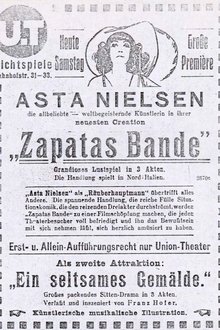
Zapata's Gang (1914)
Comedy about a film crew shooting a movie about guns and robbers, when real robbers turn up. Having to go home in robbers costume, they are mistakingly accused. In the end the real robbers are brought to justice. One of the earliest films portraying bisexual characters.

Thousand Year Sleep (2007)
Samantha, Lydia, Isabella, and Lisa. These four young women are about to learn that humanity is just an irrelevant flame burning nowhere in the vastness of space. Their dreams will be shattered and one man will marvel at the evil he has committed.

Johanne Sacreblu (2025)
Mexico's response to the French film Emilia Pérez. The real life of French people in a musical made by people in Mexico. It tells the epic tale of baguettes, croissants, stinky cheese, and the difficulties of not taking daily showers.

Land Without Bread (1933)
An exploration —manipulated and staged— of life in Las Hurdes, in the province of Cáceres, in Extremadura, Spain, as it was in 1932. Insalubrity, misery and lack of opportunities provoke the emigration of young people and the solitude of those who remain in the desolation of one of the poorest and least developed Spanish regions at that time.

Germany: A Summer's Fairytale (2006)
A documentary of the German national soccer team’s 2006 World Cup experience that changed the face of modern Germany.

Bend It Like Beckham (2002)
Jess Bhamra, the daughter of a strict Indian couple in London, is not permitted to play organized soccer, even though she is 18. When Jess is playing for fun one day, her impressive skills are seen by Jules Paxton, who then convinces Jess to play for her semi-pro team. Jess uses elaborate excuses to hide her matches from her family while also dealing with her romantic feelings for her coach, Joe.

A Grand Day Out (1990)
Wallace and Gromit have run out of cheese, and this provides an excellent excuse for the duo to take their holiday to the moon, where, as everyone knows, there is ample cheese. Preserved by the Academy Film Archive.

The Wrong Trousers (1993)
Wallace rents out Gromit's former bedroom to a penguin, who takes up an interest in the techno trousers created by Wallace. However, Gromit later learns that the penguin is a wanted criminal.
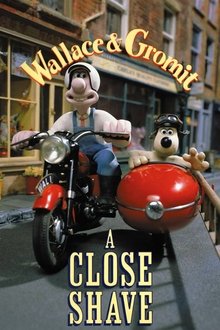
A Close Shave (1996)
Wallace's whirlwind romance with the proprietor of the local wool shop puts his head in a spin, and Gromit is framed for sheep-rustling in a fiendish criminal plot.

Distinguished Feelings (2019)
After hearing that her boyfriend lacks the courage to break up with her, plucky Elena decides she’d be less humiliated if Arturo was ensnared by a man rather than a woman.

I'm the Police (2014)
Two guys in their early twenties, a hitchhiking Dutch student and a Swedish police officer with a broken police car, meet each other on a Swedish country road. On their way to the gas station, their suspicious understanding gradually changes.

Dissolution (NaN)
This video takes a particular viewpoint, with the camera placed behind a zone of blur. Slowly, we experience the perception of an expanded time. An expectation is created and resolved in the observation of the passage of boats that dissolve into the nebulousness, disappearing from our sight like a mirage.

I'm the Most Racist Person I Know (2025)
When a romantic gesture towards a bartender backfires, Lali unexpectedly finds herself offered a pity date by another bartender, Ana. What starts as an awkward encounter turns into a genuine connection as they bond over shared experiences as women of color. As they grow closer, Lali finds herself falling for Ana. But when the conversation takes an unexpected turn, Lali must confront her prejudices towards Ana and... herself.

Olaf's Frozen Adventure (2017)
Olaf is on a mission to harness the best holiday traditions for Anna, Elsa, and Kristoff.

Just a Hero (2013)
A naive reporter discovers that it doesn't take superpowers to make a hero when she comes face-to-face with a mysterious do-gooder.

Waltz Me Around (1920)
Snub, the delivery man, and his assistant, Sunny, are returning from a delivery when they almost run over a lost woman. After she asks for directions, they accompany the woman to a dance school, where Snub is mistaken for the new professor.
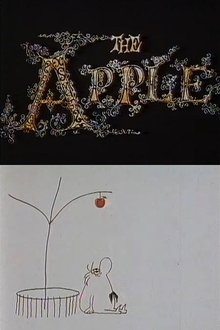
The Apple (1963)
A man's repeated attempts to retrieve an apple off a high tree branch all prove fruitless. What does he want the apple for? That would be telling.

Rollo Aller! 2 (1992)
After getting fired from his job cleaning the streets of Hamburg, Eule is fed up with big-city life, steals a moped, and sets off with his slot machine-addicted buddy Daddel on a trip to Hong Kong to visit Bruce Lee's grave. However, they only make it as far as Berlin for the time being...