An innovative documentary that illustrates how weather works by performing brave, ambitious (even unlikely) experiments that show how nature transforms simple ingredients like wind, water and temperature into something spectacular and powerful.
Related Movies
Could We Survive a Mega-Tsunami? (2013)
Starting off a kilometre high, travelling at the speed of a jet aircraft, and heading for us. It doesn't make for a good outcome. Hollywood-style graphics and real-life archive bring home an imagined near-future scenario, all based on cutting-edge science. —Trevor
Burning (2021)
Follows the deadly Australian bushfires of 2019-2020, known as ‘Black Summer’. Burning is an exploration of what happened as told from the perspective of victims of the fires, activists and scientists.
The 11th Hour (2007)
A look at the state of the global environment including visionary and practical solutions for restoring the planet's ecosystems. Featuring ongoing dialogues of experts from all over the world, including former Soviet Prime Minister Mikhail Gorbachev, renowned scientist Stephen Hawking, former head of the CIA R. James Woolse
Pompeii: Secrets of the Dead (2019)
Forensic experts scan Pompeii’s victims to investigate why they didn’t escape the eruption.
A Global Warning? (2007)
Global warming in context. What the climate of the past tells us about the climate of the future.
Stormchasers (1995)
Track monsoons, hurricanes, blizzards, and tornadoes. Take a journey around the planet to experience our most extreme storms and to witness the dramatic--and often perilous--efforts of scientists in the pursuit of understanding weather.Join meteorologists in the cockpit of a P-3 weather plane as they penetrate the eye of a hurricane; and in the tense, decisive moments on the road as they focus their radar on an approaching tornado, traveling to the heart of severe storms to learn what makes weather systems tick. Experience the bumpy ride into the sudden and spectacular calm of a hurricane’s eye, or the commando-like raid to the very brink of a killer tornado, and experience one of the elemental joys of doing science: that of confronting nature head-on to divine its awesome secrets.
Trouble the Water (2008)
"Trouble the Water" takes you inside Hurricane Katrina in a way never before seen on screen. The film opens the day before the storm makes landfall--just blocks away from the French Quarter but far from the New Orleans that most tourists knew. Kimberly Rivers Roberts, an aspiring rap artist, is turning her new video camera on herself and her Ninth Ward neighbors trapped in the city. Weaving an insider's view of Katrina with a mix of verité and in-your-face filmmaking, it is a redemptive tale of self-described street hustlers who become heroes--two unforgettable people who survive the storm and then seize a chance for a new beginning.
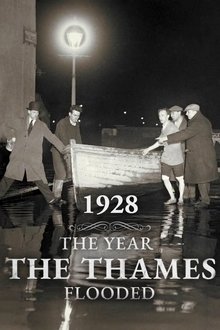
1928: The Year the Thames Flooded (2024)
Exploring one of the most devastating but little-known disasters in London's history, this documentary reveals the shocking events that unfolded during the fateful Thames Flood of 1928.

Siberian Apocalypse (2006)
This astounding documentary delves into the mysteries of the Tunguska event – one of the largest cosmic disasters in the history of civilisation. At 7.15 am, on 30th June 1908, a giant fireball, as bright the sun, exploded in the sky over Tunguska in central Siberia. Its force was equivalent to twenty million tonnes of TNT, and a thousand times greater than that of the atomic bomb dropped on Hiroshima in 1945. An estimated sixty million trees were felled over an area of over two thousand square kilometres - an area over half the size of Rhode Island. If the explosion had occurred over London or Paris, hundreds of thousands of people would have been killed.
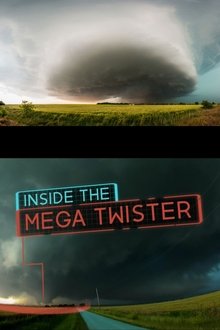
National Geographic: Inside the Mega Twister (2015)
The tornado that struck El Reno, Oklahoma, on May 31, 2013, defined superlatives. It was the largest twister ever recorded on Earth.

Forgotten on the Bayou: Rockey’s Mission to the Whitehouse (2007)
On August 29, 2005, Rockey Vaccarella rode out Hurricane Katrina on his roof by holding on to a rope for 4 hours. Rockey and his family lost everything but he refused to give up. Nearly one year after surviving the worst natural disaster in the history of America, Rockey set out on a mission to deliver a message to the President of the United States. Even when most people thought he was crazy, Rockey hooked up his FEMA trailer and journeyed from Louisiana to the White House. By the time he arrived in the nation's capitol, Rockey had captured the attention of America and much of the world. FORGOTTEN ON THE BAYOU is the true story of an unforgettable man who believes that anything is possible.

Cielo Roto (2024)
In the lush depths of the rainforest, Vilma and Andrés find themselves gripped by an eerie premonition, a haunting sense of a catastrophe looming on the horizon-a disaster they have never encountered in reality but have always feared in their imaginations. As the dense foliage and ominous whispers of the forest heighten their senses, Vilma and Andrés are propelled into a profound introspection.

The North Sea Flood of 1953 (2023)
Eyewitnesses give first hand testimony about the worst natural disaster to strike Britain in modern times. On 31 January 1953, a massive storm and its huge tidal surge flooded 250 square miles of land from the Shetlands to the Thames estuary, killing hundreds of people, sinking several ships, and destroying tens of thousands of homes. Few remember this disaster that shocked the country as it emerged from the trauma of World War II, but those who do remember it vividly.
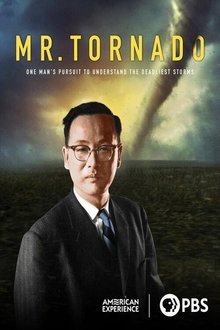
Mr. Tornado (2020)
Meteorologist Tetsuya Theodore "Ted" Fujita spent ten months studying The Super Outbreak of 1974, which was the most intense tornado outbreak on record. Mr. Tornado is the remarkable story of the man whose groundbreaking work in research and applied science saved thousands of lives and helped Americans prepare for and respond to dangerous weather phenomena.
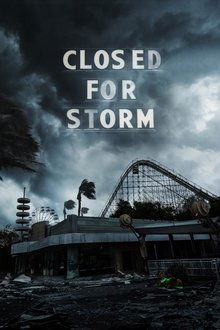
Closed for Storm (2020)
The story of Six Flags New Orleans, a theme park devastated by Hurricane Katrina that has become a holy grail of sorts for urban exploration and the efforts to restore the park to its former glory.

Sherpa (2015)
In 2013, the world's media reported on a shocking mountain-high brawl as European climbers fled a mob of angry Sherpas. Director Jennifer Peedom and her team set out to uncover the cause of this altercation, intending to film the 2014 climbing season from the Sherpa's point-of-view. Instead, they captured Everest's greatest tragedy, when a huge block of ice crashed down onto the climbing route...

Yamakoshi: The Recovery of a Tiny Japanese Village (2009)
The Great Chuetsu Earthquake which struck Niigata Prefecture on October 23, 2004 is permanently engraved in the memories of most Japanese people today. Hardest hit was the small mountain village of Yamakoshi, located right above the quake’s epicentre. What has become of the villagers who suffered through this disaster seven years ago? This film enters the hearts and minds of the people of Yamakoshi as they pull together over four hard years to rebuild their village, their community, and their lives.