Related Movies

Face to Face with the Polar Bear (2005)
Filmmaker Jerome Bouvier spent a year in Spitzberg following the incredible destiny of a polar bear family in a rapidly changing environment. Casting brother and sister twin cubs, this tale focuses on their education and reveals their individual characters.
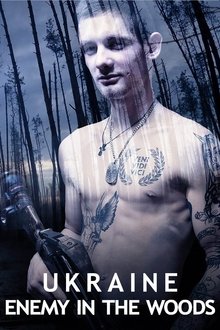
Ukraine: Enemy in the Woods (2024)
A revealing and moving portrait of lives compromised by war, filmed exclusively by Ukrainian soldiers with extraordinary access to a tightly-controlled frontline.
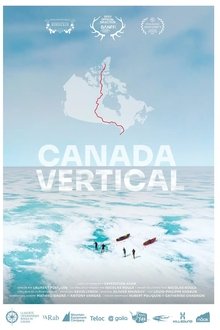
Canada Vertical (2023)
After years of preparation, a team of highly motivated Quebeckers set out on one of the longest wilderness expeditions ever documented. Stage one involves skiing in relentless polar conditions from Ellesmere Island to the Northwest Passage where the challenge was reaching the mainland. Cue canoes for a 2000km journey across Nunavut and NWT until they reach the first dirt road available where bikes are waiting to be pedalled 4000km to Point Pelee in Ontario.
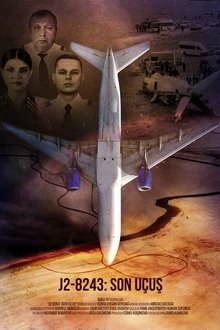

Kompromat: A John Sweeney Film (2022)
The Russians are interested in us. There is a great concern that the British State has been compromised by an operation by the Russians. In particular, Boris Johnson and two Russians: Alexander Lebedev, the former KGB spy, and his son Evgeny.

The Alaska-Siberian Expedition (1912)
Captain Kleinschmidt leads an expedition sponsored by the Carnegie Museum to the arctic regions of Alaska and Siberia to study the natives and the animal life.
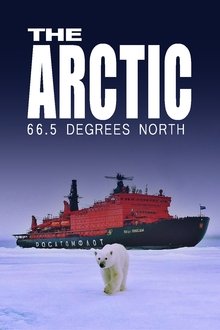
The Arctic: 66.5 Degrees North (2023)
The beauty of the Arctic is breathtaking. For as long as we can remember, the Arctic has been associated with inhospitable cold. But the climate is changing, and with it the northern polar region, which begins beyond latitude 66.5 degrees north. Climate change is now happening four times faster north of the Arctic Circle than on the rest of the planet, making the future outlook dire. At the moment it is still possible for polar bears to raise their cubs, but hunting is becoming increasingly difficult on the drastically shrinking pack ice. The disappearance of the ice also affects the marine fauna. The wintry ice bridge between Canada and Greenland is threatened with collapse. The unstoppable melting of the permafrost, which has held the tundra together for thousands of years, is worrying. But the Arctic is still one of the wildest and loveliest regions on earth. A documentary visit to the Arctic - as long as it still exists.

Odyssées blanches (2021)
1947. The rush to the poles marked the beginning of an incredible human adventure to discover the last-remaining unknown lands. In France, Paul-E?mile Victor persuaded the government to finance expeditions to explore the Arctic and Antarctic. For the pioneers the conditions were Dantean, all in the name of science.

Sailing the North Pole (2010)
This is a documentary about the expedition of Sebastien Roubinet et Rodolphe André who have decided to cross the Arctic Ocean from Alaska to the Norwegian islands of Spitsbergen, via the geographic North Pole! For this, Sébastien Roubinet has invented a strange little boat "TiBabouche" capable of sailing on sea and on ice. This boat is a prototype brimming with technology and science, made-up by Hervé Le Goff, a CNRS engineer. It will allow Hervé to calibrate the satellite “Cryosat”, the first one capable of measuring the thickness of ice.
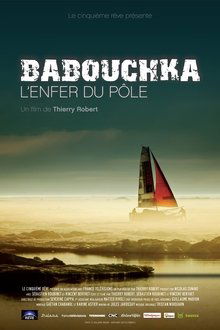
Babouchka: The North Pole - A Return to Hell (2014)
To be the first in history of mankind to take a sailing vessel to the Pole. One of the greatest maritime adventures ever undertaken: to cross the Arctic Ocean from one Land to the Other without assistance.
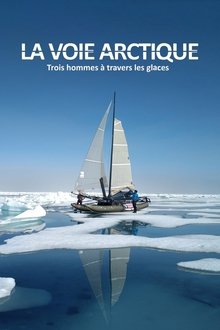
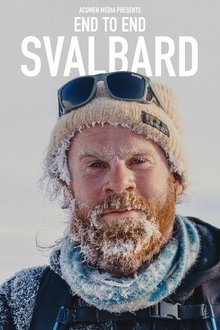
End to End: Svalbard (2023)
Seven adventurers embark on an expedition in the world's most hostile environment, The Arctic. Starting from the Southernmost peninsula of Spitsbergen Svalbard, they travel to the Northernmost part of the Island lasting for 40 days.

Russland und die Schweiz – Eine Beziehung in Zeiten des Krieges (2025)
Switzerland has long been a special partner for Russia: A non-member of the EU and NATO, a welcome investor in Russia and the world’s most important trading centre for Russian raw materials. Now things are different in both countries.
Arktis - Zwischen Licht und Dunkel (2004)
Arktis is a poetic approach to the bizarre landscape of ice, rock, and water; a journey to the arctic ocean and surroundings, with images and sounds. Seventy one-second scenes of the arctic serve as the original material, which is then transformed in its texture, time lapse, color and light qualities to create a material reminiscent of landscape painting. The sound collage uses fragments from sounds of nature and samples from a piece of music for violin and song, which are also transformed in a manner similar to that of the visual pictures. (Jürgen Reble)

The World According to Gazprom (2008)
Gazprom, an industrial and financial conglomerate created in 1992, is the key weapon in the Kremlin's geopolitical strategy. First producer of natural gas, Russia indeed holds a third of the world's total reserves. Responsible for producing, distributing and selling it, Gazprom is a company like no other, where gas market professionals work, but also ministers, deputies and advisers close to the Russian president. It was during the winter of 2005-2006 that Europe, which buys 30% of its gas from Russia, suddenly became aware of its vulnerability. Comment ? Overnight, Russia had just cut gas supplies to the pro-Western Ukraine of Viktor Lushchenko, who refused to pay tariffs multiplied by five. Since then, the continuous rise in oil prices, coupled with ever-increasing Chinese demand, has confirmed the key role that its hydrocarbons give to Russia.


PBS NewsHour: Inside Putin's Russia (2017)
Correspondent Nick Schifrin and producer Zach Fannin take us inside Vladimir Putin's Russia, with an in-depth look at the resurgent national identity, the government's propaganda machine, the risk of being a Kremlin critic and much more.

Silent Sun of Russia (2023)
Alyona, Alika and Katya dream of love and friendship, but most of all of leaving Putin’s Russia. When the war against Ukraine breaks out, it becomes harder for the three young women to leave the vast country in the East, but also even more unbearable to stay. So one has left for Georgia, another for Spain, while the third stays behind in Russia. Their generation does not believe that political engagement changes anything. Instead, they show their resistance by living a modern and more Western life, where gender, sexuality, pop music and identity issues are vital. Set at night in cars, apartments and backyards, Sybilla Tuxen’s dark and artistically uncompromising debut film tells the story of a rebellious yet resigned section of Russian youth on the fringes of established society.
In the Grip of Gazprom (2023)
The war in the Ukraine has changed the way many European countries view Russian politics. Suddenly it became clear how dependent countries had become on Russian gas imports for decades and what Vladimir Putin was up to. However, no country needs more gas than Germany. It was only after Russia's invasion of the Ukraine that the German government realized that Russia had long used gas as a weapon to impose its will on states. The instrument created for this purpose is the natural gas production company GAZPROM. So how did Germany become so dependent on Russian gas? The documentary shows how, over several decades and several changes of government, a broad alliance of politicians and business representatives did everything possible to secure Germany's energy supply with cheap Russian gas, while the Kremlin's foreign policy became increasingly aggressive and the warnings of experts went unheeded.