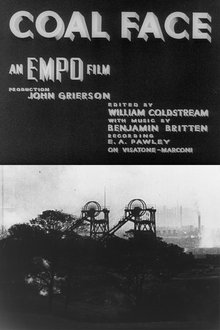
Mad, bad' poet Lord Byron and a lobster thermidor feature in a melancholy tour of Seaham with Johnny Morris.
Related Movies

The Power Behind the Nation (1947)
A Documentary on the railways and their role in supporting the United States
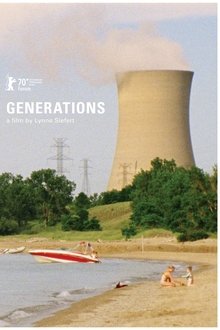
Generations (2020)
Thirteen static shots of coal-fired power stations across the United States, seen in rural landscapes, urban settings, sun or cloud and at all times of year. Whatever the location or season, there’s always at least one chimney belching out fumes.
The Land of Jacques Cartier (1963)
Did Cartier dream of making a country from this land of a million birds? In his records of his exploration he certainly marvelled at seeing the great auks that have since disappeared from Isle aux Ouaiseaulx, the razor-bills and gannets that are gone from Blanc-Sablon, and the kittiwakes from Anticosti, all the winged creatures of all the islands which he described as being "as full of birds as a meadow is of grass". And that's not even counting the countless snow geese.

The Coast of Commerce (1962)
Take a revealing tour along a coast of contrasts, from the folksy freshness of Whitby to the coaly Tyne, queen of all rivers.

Trip to Hilsea Lido (1949)
Large numbers of children and adults can be seen enjoying themselves, splashing about in the water or diving from the high-boards.

Every Day is Night (2010)
For many years, the Swiss photographer Jean-Claude Wicky captured the world of Bolivian miners in photographs. When he discovered how strongly they reacted to his pictures, he decided to make a film. Black-and-white photographs alternate with film sequences, in which the miners talk about the harsh conditions of their everyday lives, while also rendering visible their pride, dignity, culture and dynamic traditions. Every day is night is first and foremost a testimonial of profoundly sincere human encounters based on respect, generosity and gratitude.
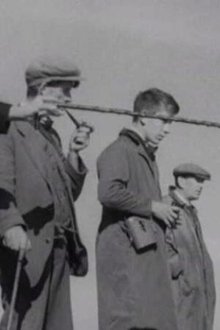
Around Snowdonia (1937)
A timeless landscape steeped in history that is little changed today, but was surely made to be filmed!
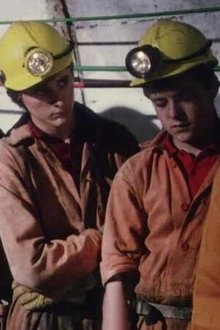
Review 35th Year No. 4 (1981)
"It's still men who win coal": a look at the past, present and future of the coal industry.

Enchanting Bournemouth (1961)
Bournemouth offers a variety of sports, pastimes, steamer trips, and fine dining for holidaymakers, competing with cheaper foreign holidays and offering a variety of transportation options.
All Out! Dancing in Dulais (1986)
Dancing in Dulias was made by members of Lesbians and Gays Support the Miners (LGSM) and Lesbians Against Pit Closures during and immediate after the 1984/85 minders strike. Like the forthcoming movie, Pride, it documents the interactions between lesbians and gay men and the miners and their families in Dulais in South Wales - only this time it's the real thing. As well as some memorable footage that includes the Blaenant Lodge banner leading the 1985 Lesbian and Gay Pride march and LGSM members struggling with bingo at the local community hall, the film documents the wider political impact of this seemingly unlikely alliance. (cont. http://www.cambridgefilmfestival.org.uk/films/2014/dancing-in-dulais#sthash.HScQCj7E.dpuf)
Coal's Deadly Dust (2019)
Coal miners are dying from the resurgence of an epidemic that could have been prevented. FRONTLINE and NPR’s joint investigation revealed the biggest disease clusters ever documented, and how the industry and the government failed to protect miners.
Behemoth (2015)
Under the sun, the heavenly beauty of grasslands will soon be covered by the raging dust of mines. Facing the ashes and noises caused by heavy mining , the herdsmen have no choice but to leave as the meadow areas dwindle. In the moonlight, iron mines are brightly lit throughout the night. Workers who operate the drilling machines must stay awake. The fight is tortuous, against the machine and against themselves. Meanwhile, coal miners are busy filling trucks with coals. Wearing a coal-dust mask, they become ghostlike creatures. An endless line of trucks will transport all the coals and iron ores to the iron works. There traps another crowd of souls, being baked in hell. In the hospital, time hangs heavy on miners' hands. After decades of breathing coal dust, death is just around the corner. They are living the reality of purgatory, but there will be no paradise.

Tie Xi Qu: West of the Tracks (2004)
A detailed look at the gradual decline of Shenyang’s industrial Tiexi district, an area that was once a vibrant example of China’s socialist economy. But industry is changing, and the factories of Tiexi are closing. Director Wang Bing introduces us to some of the workers affected by the closures, and to their families.
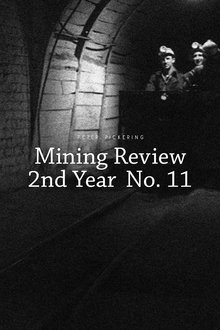
Mining Review 2nd Year No. 11 (1949)
The 23rd issue of the long running industry cinemagazine. Features the articles: 'Safety First', 'Paying For It' and ' A Star Drops In'.
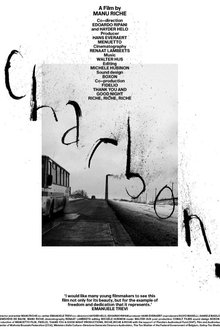
Coal (2025)
CHARBON depicts how Europe was built on fossil fuels over the past 100 years. And how it was torn apart by wars that were the result of these same fossil fuels. During 3 trips to Ukraine, Italy and Iraq, filmmaker Manu Riche explains how he and his French-German family are inseparably connected to the fate of the Iraqi filmmaker and refugee Hayder Helo.
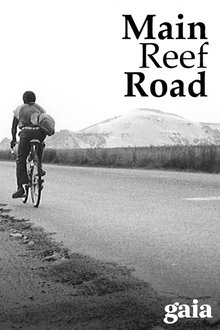
Main Reef Road (1999)
Since the days of Apartheid, Main Reef Road has linked Johannesburg, its suburbs, and the outlying villages and gold mines of the region. Now the people of means flee the more remote reaches of the Road for the suburbs. Who remains along this once heavily travelled highway? Who slaves for the mining companies today? Filmmaker Nic Hofmeyr takes to the road to meet them. South Africa's history echoes in their stories, and in the very landscape.