Pure tranquillity in rural Somerset, a world away from the war raging on the continent.
Related Movies
Rodez (2017)
An exploration of Rodez Cathedral and its stained glass windows: praying figures and scientific imagery. A study on color, repetition and flickering consisting of 292 photographs.

Portrait of Dublin (1952)
This short film was made by filmmaker (later archivist) Liam Ó Laoghaire (aka Liam O’Leary) and was commissioned by the Cultural Relations Committee of the Irish Department of External Affairs. The film was designed to promote the city of Dublin to its inhabitants and to potential visitors from abroad. Brendan J. Stafford’s crisp black and white cinematography serves the city’s elegant architecture well while the narrator tells of the city’s cultural, literary and architectural history and its many venerable inhabitants. The elegant Georgian squares, the bustling markets, the tranquil parks and the sparkling nightlife present a city that is vibrant, cultured and steeped in history.
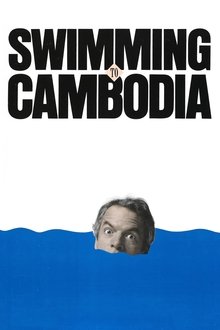
Swimming to Cambodia (1987)
Spalding Gray sits behind a desk throughout the entire film and recounts his exploits and chance encounters while playing a minor role in the film 'The Killing Fields'. At the same time, he gives a background to the events occurring in Cambodia at the time the film was set.
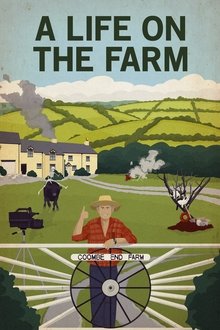
A Life on the Farm (2023)
A strange story from Somerset, England about a filmmaking farmer and the inspiring legacy of his long-lost home movies.
A Visit to Los Angeles (1916)
To popularize the idea of automobile travel, Ford Motor Company produced Ford Educational Weekly, a film magazine distributed free to theaters. One 1916 series featured "Visits to American Cities." In this episode, Los Angeles is featured at the very beginning of the boom created by oil, movies and aircraft. On the occasion of its centennial in 1953, Ford donated its film to the National Archives and Records Service; this copy derives from a fine grain master printed from the Archive's preservation negative. Music by Frederick Hodges.
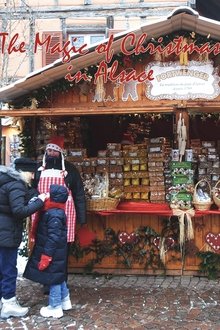
The Magic of Christmas in Alsace (2019)
This documentary visits the towns and villages of the Alsace region of France at Christmastime. See the charmingly decorated storybook towns and learn of the unique holiday traditions and celebrations. The Alsatian landscape is covered with medieval towns, castle ruins and vineyards, and the communities of the region create a season of enchantment in their celebration of Christmas.
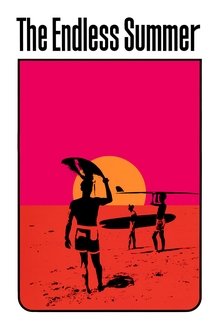
The Endless Summer (1966)
Bruce Brown's The Endless Summer is one of the first and most influential surf movies of all time. The film documents American surfers Mike Hynson and Robert August as they travel the world during California’s winter (which, back in 1965 was off-season for surfing) in search of the perfect wave and ultimately, an endless summer.
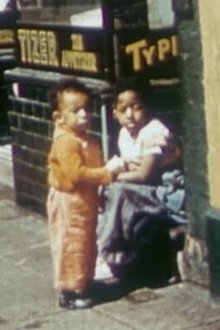
To the Four Corners (1957)
Haunting colour travelogue taking in Ulster, Lewis, Lincoln and Cardiff's Tiger Bay.
Der Kilometerfresser (1925)
Sports enthusiast Ernest is to cover 6,000 kilometers on his motorcycle in 15 days, crossing Austria, Italy, Switzerland, the Balkans and Czechoslovakia.
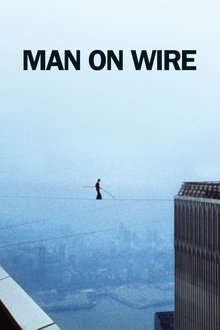
Man on Wire (2008)
On August 7th 1974, French tightrope walker Philippe Petit stepped out on a high wire, illegally rigged between New York's World Trade Center twin towers, then the world's tallest buildings. After nearly an hour of performing on the wire, 1,350 feet above the sidewalks of Manhattan, he was arrested. This fun and spellbinding documentary chronicles Philippe Petit's "highest" achievement.
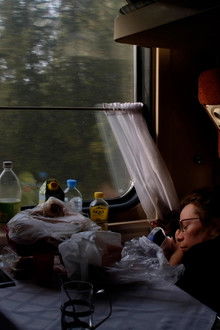
An Uncountable Number of Threads (2023)
Travel films have an established format with their own conventions, history and baggage. It is a medium that has all too often sought to control, define and dictate perceptions of ”other” places. Comprised of footage shot while travelling on group excursions across Russia in 2019, An Uncountable Number of Threads is an attempt to draw out the ethical restrictions of a travelogue, while questioning how (and why) to make one. At times there is an awkward tourist-gaze, aware of its outsider position. But as a self-reflexive work that considers its own creation, it ultimately unravels, as the artist rationalises themselves out of a particular way of working, inviting the viewer into their uncertainty.
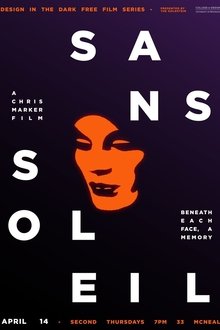
Sans Soleil (1983)
A woman narrates the thoughts of a world traveler, meditations on time and memory expressed in words and images from places as far-flung as Japan, Guinea-Bissau, Iceland, and San Francisco.
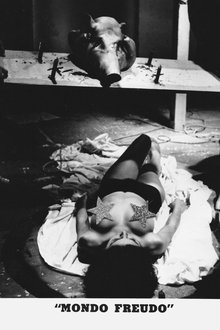
Mondo Freudo (1966)
A “hidden camera” takes the viewer on a worldwide tour of sexual practices and rituals, including Tijuana strippers, Asian sex shows, British prostitutes, New York devil worshipers and a Mexican slave market.

A Wee Bit of Scotland (1949)
In this Traveltalk series short visit to Scotland, we visit several places with familiar names, including Inverness, capital of the ancient Pictish Kingdom; Loch Ness, home of the famous elusive monster; and Saint Andrews, the birthplace of golf.
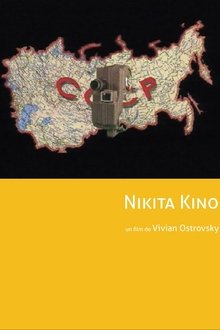
Nikita Kino (2003)
The film is a travelogue of sorts. Ostrovsky’s personal family footage meets the archives of Soviet propaganda footage. The result is a kind of Khruschev-era mix with a collage of Soviet music and a voice-over of my reminiscences of the Cold War era.

Horikita Maki: Castella (2006)
Documentary about the photo session for the photobook "Castella", filmed in Portugal.
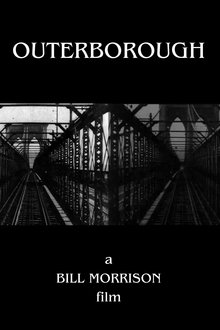
Outerborough (2005)
In 1899, a photographer at American Mutoscope & Biograph mounted his camera on the front of a trolley traveling over the Brooklyn Bridge. The three 90-foot rolls he created were edited together to complete the journey from Manhattan to Brooklyn, entitled Across the Brooklyn Bridge. As a commission by the Museum of Modern Art for the re-opening of their facility, American avant-garde filmmaker Bill Morrison took this remarkable footage and recombined it with itself to form a new split-screen extrapolation.
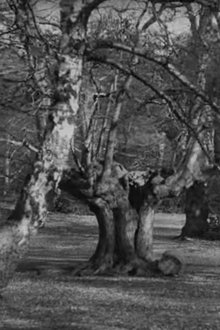
Burnham Beeches (1909)
First film of Burnham Beeches, the famous beauty spot and ultimate film location.
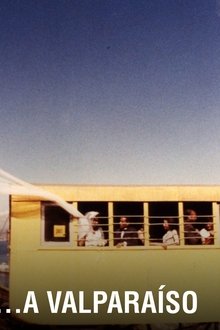
Valparaiso (1964)
In 1962 Joris Ivens was invited to Chile for teaching and filmmaking. Together with students he made …A Valparaíso, one of his most poetic films. Contrasting the prestigious history of the seaport with the present the film sketches a portrait of the city, built on 42 hills, with its wealth and poverty, its daily life on the streets, the stairs, the rack railways and in the bars. Although the port has lost its importance, the rich past is still present in the impoverished city. The film echoes this ambiguous situation in its dialectical poetic style, interweaving the daily life reality (of 1963) with the history of the city and changing from black and white to colour, finally leaving us with hopeful perspective for the children who are playing on the stairs and hills of this beautiful town.