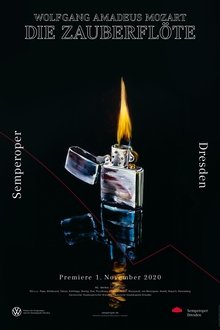
The Queen of the Night has begged Prince Tamino to free her daughter Pamina from the clutches of the High Priest Sarastro, who has abducted her. Together with the bird-catcher Papageno, Tamino enters Sarastro's realm to seek her. When he finds her, the two fall in love, but they have to have to undergo ordeals before they can be together. At the end, Papageno is also rewarded with his Papagena.
Related Movies

Snake's Daughter (2021)
The film tells the story of a girl raised by a giant snake in the jungle of No Man's Land who happens to meet Lin Cheng, a young scientist developing a scientific research project. In the mad pursuit of profit by the plutocratic group, the secrets of the giant snake and the girl are gradually revealed and an elaborate conspiracy emerges.


Wagner: Das Rheingold (2010)
In the depths of the Rhine, the three Rhinemaidens guard the Rhinegold, a treasure of immeasurable value. The Nibelung dwarf Alberich is dazzled by the sight of it. The girls explain that whoever wins the gold and forges it into a ring will gain power over the world, but must first renounce love. Frustrated by his unsuccessful attempts to catch one of the girls, Alberich curses love and steals the gold. Wotan, lord of the gods, is reproached by his wife Fricka: he has promised to give Freia, goddess of youth, to the giants Fasolt and Fafner in return for their building a fortress for the gods. When the giants demand their reward, Loge, the god of fire, suggests an alternative payment: the ring Alberich has forged from the Rhinegold, and his other treasures. The giants agree, and Wotan and Loge leave for the Nibelungs’ underground home.
Britten: Billy Budd (2011)
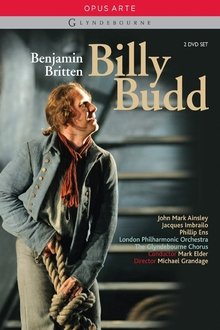
Captain Vere, an old man, is haunted by a moment in his life when he was tested and found wanting. Based on Herman Melville's novella of naval life in the late 18th Century, Benjamin Britten's 'Billy Budd' is a gripping reflection on good and evil, innocence and corruption.
let me come in (2021)
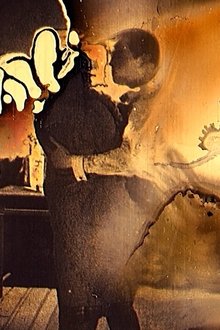
Bill Morrison’s experimental short features decayed film reels from the lost, German silent film Pawns of Passion (1928).

Let's Sing Again (1936)
An orphan (Eight-year-old boy soprano Bobby Breen) gets a chance to sing opera in New York.

Good Stock On The Dimension Floor: An Opera (2014)
A collectively made filmic opera in 35 parts. The Black and predominantly queer art collective, an evolving line up of poets and artists from across the world, abstracts and reimagines opera in any traditional conception. Set to hip-hop, blues, noise, R&B and electronica, the piece uses the voice (chanting, singing, screaming; written by poet and activist Dawn Lundy Martin) as its primary tool, verbalising centuries of alienation, vulnerability and protest in the global African diaspora through its disruptive libretto.
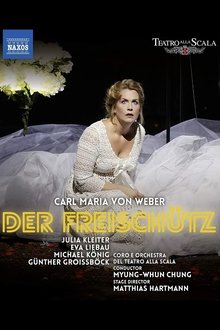
Der Freischütz (2019)
Weber was at the forefront of the rise of German Romantic opera and sought to dethrone Rossini from his position as the leading operatic composer in Europe. In his breakthrough and most popular opera Der Freischütz (The Marksman) composed in 1821, he succeeded in his aim of establishing a truly German form. Turning to the folklore and folk songs of his native land he took a story of a marksman who makes a pact with the Devil, vesting it with powerful intensity not least in the famous Wolfs Glen scene and an astonishing control of orchestral color and atmosphere.
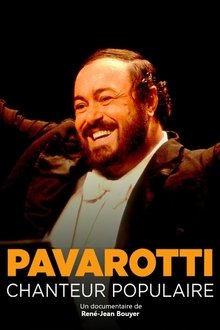
Pavarotti, Birth of a Pop Star (2017)
Although he is unanimously credited with having democratised opera, making it accessible to the greatest number, focus is rarely put on the strategy he devised and implemented in order to carry out his actions, nor what his actions reveal of the man and artist, and of the resulting metamorphosis from opera singer to pop artist. Through this angle, this film sets out to pay tribute to the man who summed up his credo, obsession and life’s work, in the following way: “They led the public to believe that classical music belonged to a restricted elite. I was the way to prove to the world that was wrong.

Tosca by Giacomo Puccini (2019)
As part of the 2019 Aix-en-Provence Opera Festival, filmmaker Christophe Honoré delivers an innovative staging of Giacomo Puccini's famous drama. His cleverly staged "opera within the opera" is a melancholy homage to the fascinating figure of the diva, who thrives on art and love and upsets the laws of time and death.

Swan Lake (2019)
Tchaikovsky's Swan Lake, a ballet in three acts, is present by the Ballet Company of the National Opera of Ukraine, with music provided by the Orchestra of the National Opera of Ukraine, conducted by Mykola Dyadura
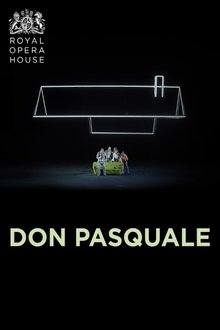
Royal Opera House: Don Pasquale (2019)
Royal Opera favourite Bryn Terfel heads the cast for this new production of Donizetti’s comedy of domestic drama across two generations. The witty story of a middle-aged man whose supposed young wife runs rings around him – with her own ulterior romantic purpose in mind – has long delighted and surprised audiences, not least as presented with the sparkle of its music and the virtuoso skill of its performers. Damiano Michieletto’s exhilarating production shows how contemporary the characters still are and how immediate and touching the story remains.
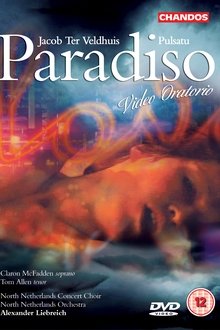
Paradiso, oratorio (2003)
The moon landing is juxtaposed to Dante and Beatrice's journey through paradise in this visual oratorio composed by Jacob ter Veldhuis.

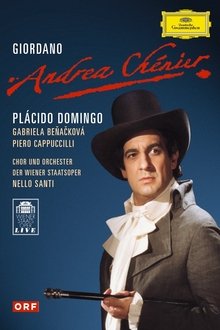
Andrea Chenier (1981)
Although Domingo was younger and Banackova looked more like the sweet and innocent young Madalena than the one played by Tomowa-Sintow in the ROH production, this production was not as good. It was not as tight and neat. The tempo set was far too slow for the time-period of the story. The stage setting was distracting. The lighting was too dark. Except Domingo, a natural actor who was always into his role and sings and acts with passion, none of the other performers came up with a convincing portrayal of the role he/she played.
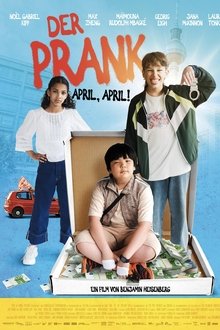
The Prank (2025)
When 12-year-old Chinese exchange student Xi Zhou's April Fools' prank goes disastrously wrong, it drags his host family, their son Lucas, and his crush Charlotte (Charly) into a tumultuous adventure full of gangsters, cash and chaos. With the mafia, a crew of rapper-thugs, and a bumbling police duo in pursuit, Lucas and Xi must team up to fix the mess they’ve created. Their only hope? Pulling off one final, genius prank.
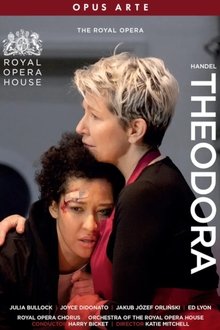
Theodora (2023)
Julia Bullock, Joyce DiDonato and Jakub Jozef Orlinski star in Katie Mitchell’s thrilling new production of Handel’s Theodora in an alternative modern-day reality, Theodora, a religious fundamentalist, plots for the resistance against the Roman occupation. But when her secret plan to destroy the Roman embassy is discovered, she learns the true brutality of her oppressors. Harry Bicket conducts the Orchestra of the Royal Opera House

Der Schatzgräber (2023)
Franz Schreker’s career was cut short by the events of 1933 in Germany but he achieved real fame with his operas, and the huge success of Der Schatzgräber (‘The Treasure Hunter’) in the 1920s was the high point of his career. In a complex and ultimately tragic tale of destructive greed, desire and toxic social hierarchy, the innkeeper’s daughter Els is forced to confront the consequences of her murderous intent in what conductor Marc Albrecht considers ‘a work of exceptional quality, concentration and significance’. Following the huge success of Korngold’s Das Wunder der Heliane (Naxos DVD 2.110584–85 / Blu-ray NBD0083V), director Christof Loy continues his exploration of strong female characters and neglected 20th-century masterpieces with this highly acclaimed Deutsche Oper Berlin production.