As a winter storm approaches the shallow water crystallizes, ice builds up along the edges of a stream, and the first snowflakes of the storm layer over the newly formed ice. The following morning a soft light approaches through the snow covered forest.
Related Movies

Under an Arctic Sky (2017)
Six fearless surfers travel to the north coast of Iceland to ride waves unlike anything they've ever experienced, captured with high-tech cameras.

Nature's fairy - always connected (2017)
A poetic film about a young woman's life and dreams. A woman who had the courage to change her life and realize her dreams. A movie about Jonna Jinton. Blogger, photographer and artist and nature lover.
Moving Ice (2024)
Ice has always moved. When glaciation took hold some 34 million years ago, interconnected rivers of ice combined to produce the Earth's vast ice sheets. As temperatures slowly warmed glaciers developed a unique balancing act; advancing and retreating to calibrate their annual winter accumulation against summer melt. Sometimes calving colossal icebergs into the sea. A positive feedback loop that has regulated the movement of ice for millions of years.
Snow Animals (2019)
Liz Bonnin introduces a cast of charismatic animals to reveal the remarkable strategies they use to survive, and even thrive, through the winter.
Steep (2007)
Steep traces the legacy of extreme skiing from its early pioneers to the daredevils of today.

Mandá in lunga (2025)
the film „mandà in lunga“ follows a journey from Val Poschiavo, a valley in the Italian-speaking part of the Swiss canton of Grisons, up to the highest point of the Morteratsch Glacier, the largest glacier in the Bernina Range. Shot entirely on 16mm film and edited in-camera, the film captures the changing landscapes and atmospheric shifts along the way. The journey is musically accompanied by the organ drones and violin sounds of Laura and Luzius Schuler.
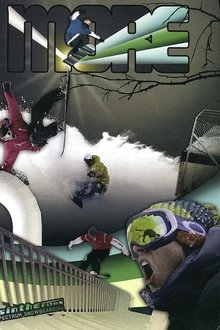
More (2006)
Once again Absinthe Films raises the bar to bring you 'More'. This title marks the beginning of a new era for Absinthe Films as they have broadened their scope to include and properly represent urban riding while still keeping the overall blend fresh and un-repetitive.
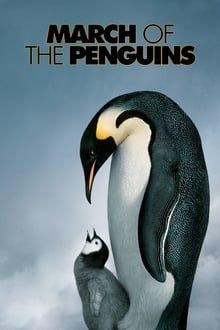
March of the Penguins (2005)
Every year, thousands of Antarctica's emperor penguins make an astonishing journey to breed their young. They walk, marching day and night in single file 70 miles into the darkest, driest and coldest continent on Earth. This amazing, true-life tale is touched with humour and alive with thrills. Breathtaking photography captures the transcendent beauty and staggering drama of devoted parent penguins who, in the fierce polar winter, take turns guarding their egg and trekking to the ocean in search of food. Predators hunt them, storms lash them. But the safety of their adorable chicks makes it all worthwhile. So follow the leader... to adventure!!
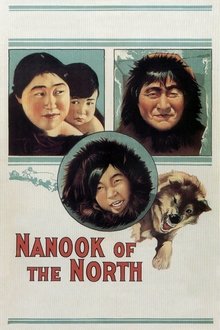
Nanook of the North (1922)
This pioneering documentary film depicts the lives of the indigenous Inuit people of Canada's northern Quebec region. Although the production contains some fictional elements, it vividly shows how its resourceful subjects survive in such a harsh climate, revealing how they construct their igloo homes and find food by hunting and fishing. The film also captures the beautiful, if unforgiving, frozen landscape of the Great White North, far removed from conventional civilization.
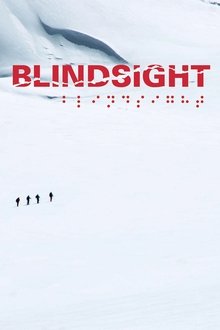
Blindsight (2006)
Six blind Tibetan teenagers climb the Lhakpa-Ri peak of Mount Everest, led by seven-summit blind mountain-climber Erik Weihenmayer.
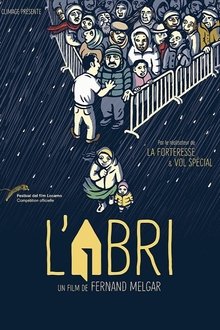
The Shelter (2014)
It is winter at an emergency shelter for the homeless in Lausanne. Every night at the door of this little-known basement facility the same entry ritual takes place, resulting in confrontations which can sometimes turn violent. Those on duty at the shelter have the difficult task of “triaging the poor”: the women and children first, then the men. Although the total capacity at the shelter is 100, only 50 “chosen ones” will be admitted inside and granted a warm meal and a bed. The others know it will be a long night.


Black Ice (1980)
Black Ice is a short film about a group of sailing enthusiasts who have adapted the principles of the sport to winter conditions. The sight of a fragile craft whisking across a frozen lake at one hundred km/h, leaving a shower of powdered ice in its wake, is breathtaking. Iceboat racing is exciting; a sport like no other in the world.

The Red Gate: Magellan at the Gates of Death, Part I (1976)
"In the final format for MAGELLAN, Frampton had planned to disassemble these two films into twenty-four 'encounters with death' that were to be shown in five-minute segments twice a month. In their present state, seen together and roughly the length of an average feature film, the two parts of MAGELLAN: AT THE GATES OF DEATH constitute perhaps the most gripping, monumental, and wrenching work ever executed on film...Frampton in 1971 began his filming of cedavers at the Gross Anatomy Lab at the University of Pittsburgh. He returned to the lab four times over the course of the next two years and then spent nine months assembling his 'forbidden imagery' into an extraordinary meditation upon death."–Bruce Jenkins
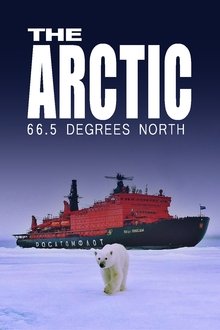
The Arctic: 66.5 Degrees North (2023)
The beauty of the Arctic is breathtaking. For as long as we can remember, the Arctic has been associated with inhospitable cold. But the climate is changing, and with it the northern polar region, which begins beyond latitude 66.5 degrees north. Climate change is now happening four times faster north of the Arctic Circle than on the rest of the planet, making the future outlook dire. At the moment it is still possible for polar bears to raise their cubs, but hunting is becoming increasingly difficult on the drastically shrinking pack ice. The disappearance of the ice also affects the marine fauna. The wintry ice bridge between Canada and Greenland is threatened with collapse. The unstoppable melting of the permafrost, which has held the tundra together for thousands of years, is worrying. But the Arctic is still one of the wildest and loveliest regions on earth. A documentary visit to the Arctic - as long as it still exists.
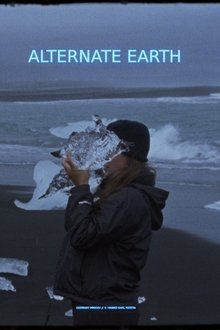
Alternate Earth (2025)
A scientific expedition travels to an alternative Earth in hope of finding a new home for humanity, which has destroyed its own planet. But is it even possible to escape old patterns?

When Night Falls in Late December, Everything That Was is Left Behind (NaN)
A series of vignettes captured in Brevard, North Carolina at the end of December.

White Winter (2022)
In southern Germany, winter can still be admired in all its glory every year. With its white coat of snow and icicles and myriads of small crystals that look like geometric works of art. In the valleys and on the slopes the snow is still so thick every year that the alpine huts are snowed in up to the windows. Cows and dairymen are safe in their farms at lower altitudes. But not the wild creatures of the mountains! They need strategies to survive the cold season and to defy snow masses, cold and ice. And some seem to do it so easily that they even raise their young in the middle of winter. But how do animals, plants and fungi cope with the annually recurring ice age, which from our perspective is a time of need? The many adaptations in nature prove that winter is an integral part of the natural cycle of the year and the living environment of species. They are adapted to cold and frost. That is why the animals and plants at the edge of the Alps suffer particularly from climate change!