Radical Islam poses a significant threat to our freedom. The rise of anti-American rhetoric and violence in cities and universities is a direct result of the indoctrination led by those perpetrating a religious war against the West. PragerU's short documentary features first-hand accounts from those who escaped Islamic rule and have come to warn America.
Related Movies
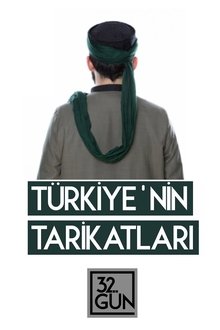
Sects of Turkey (1997)
We feel as if we are discovering Turkey for the first time. All of a sudden, we came across a Türkiye with imam marriage and congregations. Actually, that Türkiye has always existed, but we seem to be ignoring it. Especially the iftar dinner given by Prime Minister Erbakan to the leaders of the sect suddenly increased the discussions even more. Sects are a danger to the Republic for some of us, and star people for peace in the country according to others. Regardless, the truth of sects is now a part of our lives. Tonight we will open a 2-part sects file. How many sects are there in Turkey? Who participates, how and why? How do they enter and what do they do? What are the advantages of being a cult member? How many members do sects have? Is Türkiye about to surrender to the sects? Here you will find answers to hundreds of more questions like these. Rıdvan Akar joined various sects. He studied the positive and negative aspects of the sects world. A beautiful file has emerged...

Children of Islam (2006)
Three boys and three girls. All born in the Middle East now living in Sweden. All with different views of Islam, integration, the World and Sweden. Some follow Sharia. Others fight Islamic roles. One is a hip hopper. The other thinks music is a sin. One thinks that the woman must obey her husband. One fights for women’s liberation. One girl is a boxer. The other is an ordinary worker. Some are closely followed by the Security Police. Children of Islam is a documentary about religion, culture, conflicts and looking for an identity in a changing Sweden.
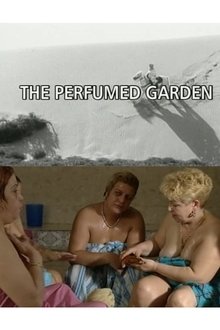
The Perfumed Garden (2000)
THE PERFUMED GARDEN is an exploration of the myths and realities of sensuality and sexuality in Arab society, a world of taboos and of erotic literature. Through interviews with men and women of all ages, classes, and sexual orientation, the film lifts a corner of the veil that usually shrouds discussion of this subject in the Arab world. Made by an Algerian-French woman director, the film begins by looking at the record of a more permissive history, and ends with the experiences of contemporary lovers from mixed backgrounds. It examines the personal issues raised by the desire for pleasure, amidst societal pressures for chastity and virginity. The film discusses pre-marital sex, courtship and marriage, familial pressures, private vs. public spaces, social taboos (and the desire to break them), and issues of language.
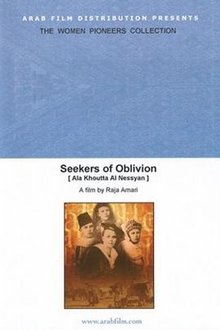
Seekers of Oblivion (2004)
Seekers of Oblivion explores the exciting life and adventures of Isabelle Eberhardt. Born in Geneva, Switzerland in 1877, Isabelle left Europe for North Africa at a young age. While there, she consorted with tramps, prostitutes, soldiers, murderers and thieves, at times masquerading as a man in orde.
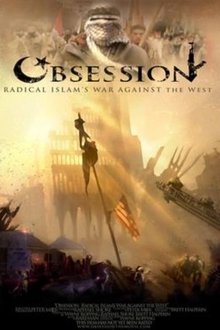
Obsession: Radical Islam's War Against the West (2005)
Obsession is a film about the threat of Radical Islam to Western civilization. Using unique footage from Arab television, it reveals an 'insider's view' of the hatred the Radicals are teaching, their incitement of global jihad, and their goal of world domination.
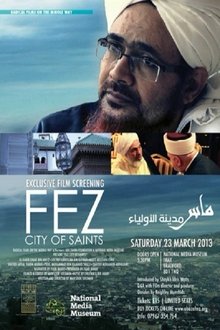
Fez: City of Saints (2011)
This exclusive documentary follows the journey of some of the worlds leading Muslim thinkers in a gathering that took place at the heart of an ancient Islamic city It was Habib Umar's first trip to the Maghreb and the film captures his travels and responses as he journeys through a land brimming with spirituality, knowledge and vast history. From the serene courtyards of the University of Qarawiyyin to busling souk streets, from walled city of Fez to the mountainous sanctuary of Moulay Idris, the film shares the spiritual secrets of the places and their stories. The beauty of the great city of Fez, founded by descendants of the Noble Prophet (May Allah swt shower blessings upon him), is shared by a visitor who is himself a direct descendant of that great household. The result is a moving meeting of two traditions that form the very core of great Islamic narrative.
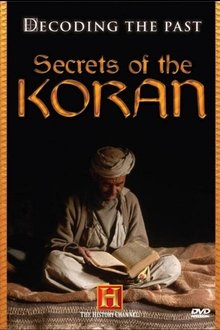
Decoding the Past: Secrets of the Koran (2006)
The Koran is one of the most important works ever written. For almost one billion people worldwide, it is the Holy Scripture, the word of God and his prophet. For others, it is a historical artifact that has left an indelible imprint on the world. DECODING THE PAST: SECRETS OF THE KORAN probes the heart of the work that many outside Islam find mysterious. This feature-length program examines the history of the verses and their implications for modern times, as well as the striking similarities and differences between the Koran and the Bible. Trace the influence of the Koran from the Golden Age of Islam to the modern rise of jihadism, and hear from top Islamic scholars and holy men as they share their insights into the work that lies at the foundation of one of the world's great religions. THE HISTORY CHANNEL provides the perfect guide to understanding the fundamental work that has shaped the Muslim faith for over 1,400 years, and will long continue to influence modern history.
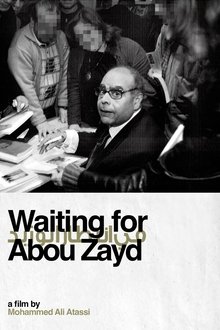
Waiting for Abou Zayd (2010)
"Nasr Hamed Abou Zayd is not Godot, and the expectation promised by the title is misleading: this great gentleman is present in almost every shot. Who is he? An Egyptian Muslim theologian of international reputation, he has published exegeses of the Koran which led to his being condemned for apostasy. Exile, forced divorce from his wife Ibtihal Younes since his marriage was subject to annulment, separation from his son, such are the consequences of his writings. But Abou Zayd has not given up, residing in Leiden in the Netherlands, he continues, always on the road, to give conferences, to explain with great serenity his positions in public debates, on television, etc. C It is this particularly impressive dedication that Mohammad Ali Atassi's camera recorded over a period of six years.
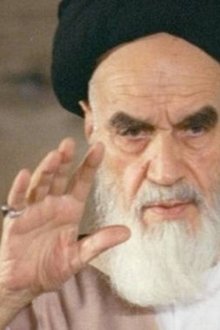
Oriana Fallaci intervista Ayatollah Khomeini (1979)
Oriana Fallaci, the Italian journalist who is noted for her provocative interviews, interviews the leader of the Islamic Revolution, the Ayatollah Ruhollah Khomeini, on Sept 12, 1979. For 10 days Oriana Fallaci waited in the holy city of Qum for her interview with the 79 year old Ayatollah, who is the de facto ruler of Iran. On Sept. 12, she was led into the Faizeyah religious school, where Khomeini holds his audiences. She was accompanied by two Iranians Nyho and Iran prime minster Banisadr who had helped set up the interview and who served as translators. Oriana Fallaci, barefoot, enveloped in a chador, the head to toe veil of the Moslem woman, was seated on a carpet, when the Ayatollah entered, and the recorded interview could begin.
Islam Unveiled (2004)
Challenging the Western view that Islam inherently represses women’s rights, journalist Samira Ahmed travels across the world examining Islamic customs as they relate to women. In this two-part series, Ahmed explores whether current Islamic customs such as polygamy, honor killings, and requiring women to wear the hijāb (veil) are actually rooted in the Quran.

The Koran: Journey to the Book's Origin (2009)
The Quran is the Holy Book of Islam, a religion shared by more than a billion followers worldwide. For the Muslim tradition, since its revelation to the Prophet Muhammad between the year 610 and 632 of the Christian era in Mecca and Medina, the Koran is immutable, and has remained maintained. However, recent discoveries of Koranic manuscripts analyzed by scientists, dated around the year 680 - the oldest known in the world - revealed that the Koran has a history. During the first century of Islam, and before the canonical version of the Caliph Uthman imposed itself, the holy book of Islam would have known competing versions, a different organization of the suras, variable readings due to a writing, in its beginnings, very rudimentary… It is to this meeting of knowledge, at the crossroads between the Muslim tradition and scientific research, that this journey to the origins of the Koran invites.
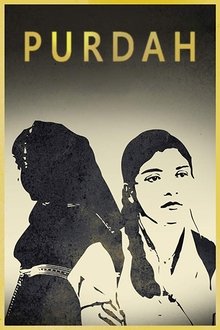
Purdah (2018)
The inspiring story of a young Indian Muslim woman who trades her burka for dreams of playing on the Mumbai Senior Women's Cricket Team and how the harsh realities for women in her country creates an unexpected outcome for her own family, ultimately shattering and fueling aspirations.

Malcolm X and the Sudanese (2020)
A poignant documentary exploring the unexpected bond between Malcolm X and Ahmed Osman, a young Sudanese student. Through personal reflections and rare footage, the film traces their friendship, culminating in Osman's emotional return to Harlem, where he revisits the legacy of Malcolm X and his meaningful connection to the Sudanese people.
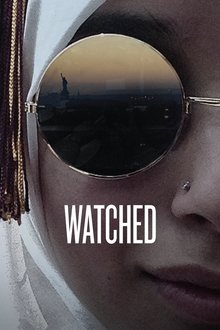
Watched (2017)
This short 19-minute documentary is an intimate and moving exploration of the profound and far-reaching impact of surveillance on Muslim American individuals and communities. Premiering at the 2017 Tribeca Film Festival, WATCHED is told through the personal experience of two women, both coming of age in New York. The film charts the devastating toll of surveillance and reveals the scars it leaves behind.
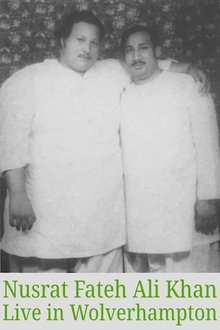
Nusrat Fateh Ali Khan: Live in Wolverhampton (1983)
Taken from DVD Volume 9, this documentary features the legendary Ustad Nusrat Fateh Ali Khan live in concert during his 1985 UK tour. Recorded at Wolverhampton’s Wulfrun Civic Hall on October 25, 1983, the film captures his mesmerizing performance. Known as the "Shahenshah of Qawwali," Nusrat revolutionized the Sufi devotional music tradition with his powerful vocals, intricate improvisations, and deep spiritual expression. Originally produced by Oriental Star Agencies Ltd. in 2004.
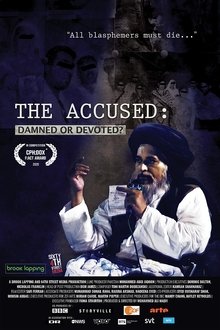
The Accused: Damned or Devoted? (2020)
Against the backdrop of Pakistan's elections, this film follows the rise of powerful cleric Khadim Hussain Rizvi, on a mission to preserve the country's blasphemy laws, which prescribe a mandatory death sentence for disrespecting The Prophet Muhammad (P.B.U.H) and life imprisonment for desecrating the Holy Quran. With millions sympathetic to his goal, Rizvi silences anyone attempting to change the law by condemning them to death. As he pushes for more power, Rizvi decides to run for office in the upcoming general elections, and those accused of blasphemy or those who oppose the blasphemy laws- whether targeted minorities, liberals, and opposing Muslim voices - become the pawns of his ambition.
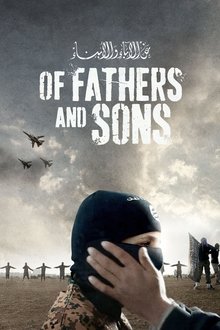
Of Fathers and Sons (2017)
Talal Derki returns to his homeland where he gains the trust of a radical Islamist family, sharing their daily life for over two years. His camera focuses on Osama and his younger brother Ayman, providing an extremely rare insight into what it means to grow up in an Islamic Caliphate.
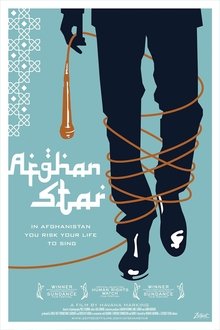
Afghan Star (2008)
This documentary on the effect the talent competition "Afghan Star" has on the incredibly diverse inhabitants of Afghanistan affords a glimpse into a country rarely seen. Contestants risk their lives to appear on the television show that is a raging success with the public and also monitored closely by the government.