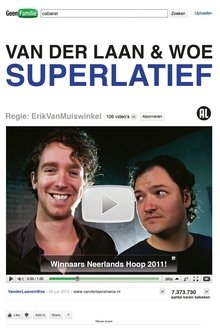
Registration of the fourth solo program by the Dutch comedian Hans Sibbel, in which the comedian takes a look at the evolution.
Related Movies
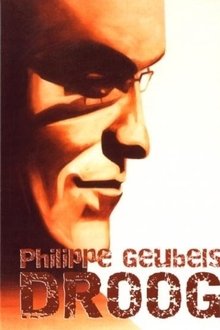
Philippe Geubels: Droog (2009)
The perfect way to get acquainted with Philippe Geubels' infectious humor or to relive a wonderful evening of live stand-up comedy.
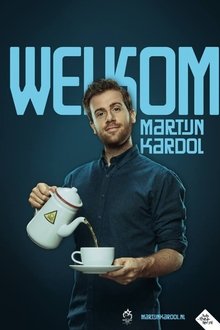
Martijn Kardol: Welkom (2021)
Video registration of the second comedy special by the Dutch comedian Martijn Kardol. A show about social distancing, the online life and individualism.
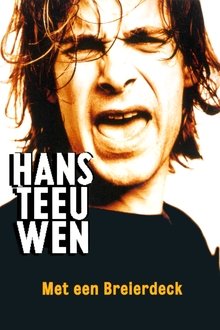
Hans Teeuwen: Met een Breierdeck (1997)
The second show of Dutch comedian Hans Teeuwen: sex, violence and foul language in a string of songs, abrupt transitions and evocative characterizations.
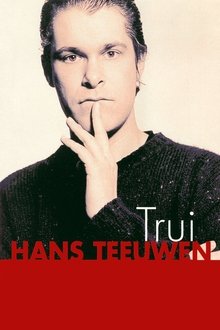
Hans Teeuwen: Trui (2000)
In his third theatre program the Dutch comedian Hans Teeuwen plays with empty wine bottles, little girls and himself. Poetic, absurd, false and genuine.

Urbanus: Genoeg Gelachen, Nu Humor! (1995)
The surrealist adventures of Urbanus interacting with the world around him.
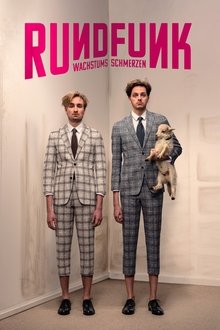
Rundfunk: Wachstumsschmerzen (2019)
An absurdist theatre piece by Dutch comedy duo Rundfunk. A collection of original sketches and songs.

Micha Wertheim: Voor Je Het Weet (2014)
Stage registration of the fifth comedy special by the Dutch comedian Micha Wertheim. At the start of the performance, the performance appears to be unfinished: Micha Wertheim is still writing and the comedian has a writer's block.
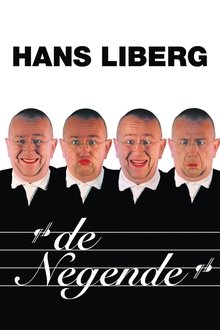


Johan Goossens: Daglicht (2017)
Stage registration of the fourth comedy special by the Dutch comedian Johan Goossens. Goossens tells about his life as a parttime teacher, and comedian, a gay man, surrounded by heterosexual friends with childeren.
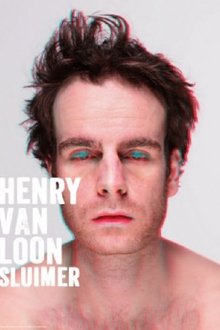
Henry van Loon: Sluimer (2016)
TV registration of the third theatre program by the Dutch comedian Henry van Loon. The show is about insomnia.
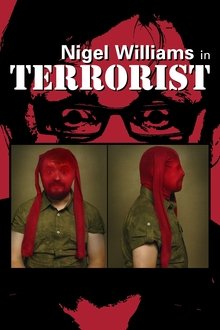



Youp van 't Hek: Scherven (1997)
Registration of the theatre program by the Dutch comedian Youp van 't Hek.

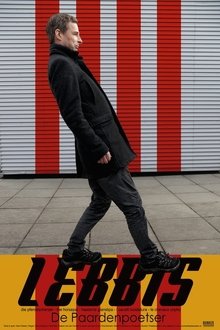
Lebbis: De Paardenpoetser (2017)
Registration of the ninth solo show by the Dutch comedian Hans Sibbel.
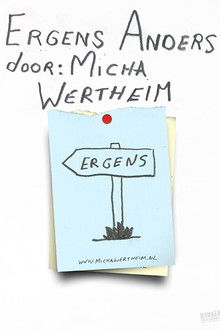
Micha Wertheim: Somewhere Else (2017)
The bigger the audiences for Dutch comedian Micha Wertheim’s shows became, the less he had to do to make them laugh. In one early show, he suggested that the audience would be better off without him. So in 2016, he acted upon this suggestion with an experiment that made theater history: he wasn't physically present onstage but somewhere else. The audience wasn't aware of this in advance, though they did get a hint in the form of a pre-recorded "live" radio interview from a remote studio. "I see my audience as my children," Wertheim says in this interview. "You have to educate them, and that’s what I’ve been doing for the past 15 years. At first you have to constantly be there watching them, but there comes a time when you have to trust them to get on with it without you." With some help from a robot, a printer, a stereo and a set of headphones, the members of his audience were able to make their own performance.