The Tlingit and Haida people of Alaska were confused by the idea of America “buying” the land they lived on from the Russians. They would be among the first native people to make a successful claim on their homeland and rights.
Related Movies
The Russia We Lost (1992)
The sequel of feature-publicistic film «You Can’t Live Like That». Showing the countrymen charmless and sometimes scaring life picture of once great power with pain and anger, the author tries to uncover the reason of the country’s and nation’s tragedy.
The Buffalo War (2001)
Native Americans, ranchers, government officials, and environmental activists battle over the yearly slaughter of America's last wild bison, based on fear that migrating animals will transmit the disease brucellosis to cattle. Join a 500-mile spiritual march across Montana led by Lakota elder Rosalie Little Thunder expressing her people's cultural connection to bison, an environmental group engaging in civil disobedience and video activism, and a ranching family caught in the crossfire.
The Four Corners: A National Sacrifice Area? (1983)
Documents the cultural and ecological impacts of coal stripmining, uranium mining, and oil shale development in Utah, Colorado, New Mexico, and Arizona – homeland of the Hopi and Navajo.
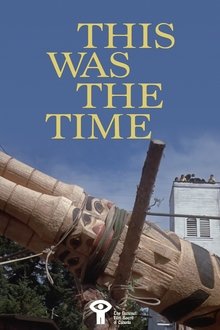
This Was the Time (1970)
When Masset, a Haida village in Haida Gwaii (formerly known as the Queen Charlotte Islands), held a potlatch, it seemed as if the past grandeur of the people had returned. This is a colourful recreation of Indigenous life that faded more than two generations ago when the great totems were toppled by the missionaries and the costly potlatch was forbidden by law. The film shows how one village lived again the old glory, with singing, dancing, feasting, and the raising of a towering totem as a lasting reminder of what once was.
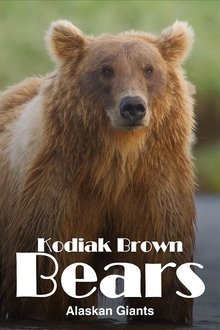
Alaska's Giant Bears (2023)
In Canada and Alaska, the consequences of global warming are being keenly felt by brown bears - but in different ways by different populations. Their survival depends mainly on the quantity of wild salmon available in the region, as it is the fruit of their catch that enables the bears to accumulate fat reserves for the winter. While salmon populations off Canada's Pacific coast continue to decline year after year, in the immense Bristol Bay in western Alaska, as well as on Kodiak Island, they are increasing considerably. The water temperature in the North Pacific is now ideal for salmon development. From Canada to Alaska, the documentary follows different bear populations over a two-year period.
Dislocation Blues (2017)
Filmed during the 2016 Standing Rock protests in South Dakota, Sky Hopinka's Dislocation Blues offers a portrait of the movement and its water protectors, refuting grand narratives and myth-making in favour of individual testimonials.
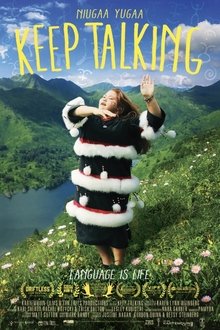
Keep Talking (2017)
Three Alaska Native women work to save their endangered language, Kodiak Alutiiq, and ensure the future of their culture while confronting their personal demons. With just 41 fluent Native speakers remaining, mostly Elders, some estimate their language could die out within ten years. The small community travels to a remote Island, where a language immersion experiment unfolds with the remaining fluent Elders. Young camper Sadie, an at-risk 13 year old learner and budding Alutiiq dancer, is inspired and gains strength through her work with the teachers. Yet PTSD and politics loom large as the elders, teachers, and students try to continue the difficult task of language revitalization over the next five years.
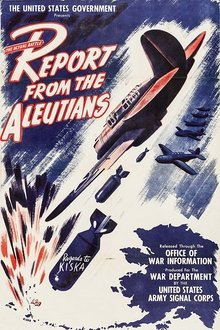
Report from the Aleutians (1943)
A documentary propaganda film produced by the U.S. Army Signal Corps about the Aleutian Islands Campaign during World War II. The film opens with a map showing the strategic importance of the island, and the thrust of the 1942 Japanese offensive into Midway and Dutch Harbor. Nominated for the Academy Award for Best Documentary Feature.
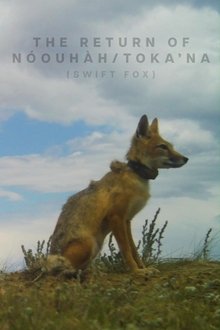
The Return of Nóouhàh-Toka’na (2024)
Nóouhàh-Toka’na, known as swift fox in English, once roamed the North American Great Plains from Canada to Texas. Like bison, pronghorn and other plains animals, Nóouhàh-Toka’na held cultural significance for the Native Americans who lived alongside them. But predator control programs in the mid-1900s reduced the foxes to just 10 percent of their native range. At the Fort Belknap Indian Community in Montana, members of the Aaniiih and Nakoda tribes are working with the Smithsonian’s National Zoo and Conservation Biology Institute and other conservation partners to restore biodiversity and return Nóouhàh-Toka’na to the land.

Essence of Healing: The Journey of American Indian Nurses (2017)
Essence of Healing is a documentary exploring the life journeys of 14 American Indian nurses - their experiences growing up, their experiences in nursing school, and their experiences on the job. They are part of a larger story - a historical line of care and compassion that has run through hundreds of indigenous tribes for thousands of years.
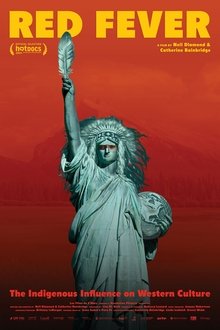
Red Fever (2024)
Red Fever is a witty and entertaining feature documentary about the profound -- yet hidden -- Indigenous influence on Western culture and identity. The film follows Cree co-director Neil Diamond as he asks, “Why do they love us so much?!” and sets out on a journey to find out why the world is so fascinated with the stereotypical imagery of Native people that is all over pop culture. Why have Indigenous cultures been revered, romanticized, and appropriated for so long, and to this day? Red Fever uncovers the surprising truths behind the imagery -- so buried in history that even most Native people don't know about them.
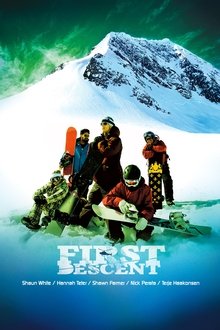
First Descent (2005)
First Descent is a 2005 documentary film about snowboarding and its beginning in the 1980s. The snowboarders featured in this movie (Shawn Farmer, Nick Perata, Terje Haakonsen, Hannah Teter and Shaun White with guest appearances from Travis Rice) represent three generations of snowboarders and the progress this young sport has made over the past two decades. Most of the movie was shot in Alaska.
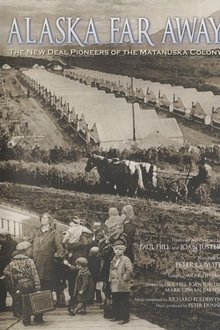
Alaska Far Away (2008)
'Alaska Far Away' tells the story of the Matanuska Colonization Project of 1935, a creative and controversial New Deal program that relocated 202 families devastated by the Great Depression, taking them from the upper Midwest to the Matanuska Valley in Alaska to start an experimental farming colony. It generated a whirlwind of publicity and controversy at the time, not only as a federally-funded social experiment, but also as one of the last pioneer movements in America. The Matanuska Colony isn't just a fascinating footnote to the history of Alaska. It encompasses the despair of the Depression, the creative energy of the New Deal, the adventure of pioneering in Alaska, and the best and worst of our government and ordinary citizens in facing those extraordinary challenges.
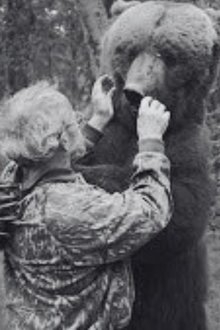
The Man Who Lives with Bears (2008)
A man shows the gentle and agressive side of Brown and Black Bears living with and around them. After "Grizzly Man" died in Alaska trying to do the same thing, it's truly amazing to watch this documentary.
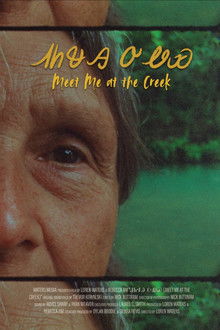
Meet Me at the Creek (2024)
Waters’ LIFT project, ᏗᏂᏠᎯ ᎤᏪᏯ (Meet Me at the Creek), is the fourth of a quartet of films, and focuses on interconnectedness and Cherokee values through the lifelong fight of Rebecca Jim, a Cherokee Nation citizen and waterkeeper warrior, as she leads the effort to restore Tar Creek in Miami, Oklahoma.
Anti-Objects, or Space Without Path or Boundary (2017)
The title of this video, taken from the texts of the architect Kengo Kuma, suggests a way of looking at everything as “interconnected and intertwined” - such as the historical and the present and the tool and the artifact. Images and representations of two structures in the Portland Metropolitan Area that have direct and complicated connections to the Chinookan people who inhabit(ed) the land are woven with audio tapes of one of the last speakers of chinuk wawa, the Chinookan creole. These localities of matter resist their reduction into objects, and call anew for space and time given to wandering as a deliberate act, and the empowerment of shared utility.
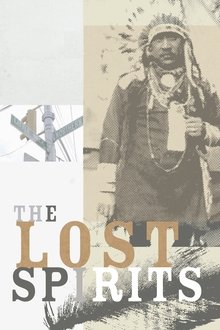
The Lost Spirits (2009)
The last surviving Native Americans on Long Island are the focus of The Lost Spirits. The film chronicles their struggles as an indigenous people to maintain their identity amidst relentless modernization and a heartless bureaucracy.
LaDonna Harris: Indian 101 (2014)
A documentary film about Comanche activist LaDonna Harris, who led an extensive life of Native political and social activism, and is now passing on her traditional cultural and leadership values to a new generation of emerging Indigenous leaders.