"letters to eleanore" is a poignant feature-length documentary that explores the intertwined journeys of two remarkable girls, Keith from Canto Grande in Lima, Peru, who bravely navigates life with cerebral palsy alongside her devoted mother, and Olivia from Litchfield, Minnesota, whose experiences highlight the stark contrasts in societal attitudes towards disability in their respective countries. As their narratives unfold, they are beautifully interwoven with the legacy of Eleanore and her family, whose life, untimely death, and the impact of her wheelchair ignited a powerful movement of hope for countless children and their families facing similar challenges. This film is not just a story of perseverance and love; it is a testament to the strength of community, brought to life through the collaborative efforts of volunteers, students, and communities across Peru and the United States, embodying a true grassroots style of storytelling that resonates with authenticity and compassion.
Related Movies
Not Even in a Wildest Dream (2017)
The challenges of the present, expectations for the future, and the dreams of those who experience the reality of public high school in Brazil. Through the voices of students, principals, teachers and experts, "Not Even In a Wildest Dream" offers a reflection on the value of education.
The Prostitutes of Lyon Speak (1975)
Documentary about the Lyon sex workers who occupied the church of St. Nizier on June 3, 1975.
Caos de tránsito (2018)
Through testimonies and images, the crude reality of human rights in Argentina in democracy is portrayed and the role of the hegemonic means of communication to make causes and protests invisible ...
Big Brother: A World Under Surveillance (2020)
Under the pretext of fighting terrorism or crime, the major powers have embarked on a dangerous race for surveillance technologies. Facial recognition cameras, emotion detectors, citizen rating systems, autonomous drones… A security obsession that in some countries is giving rise to a new form of political regime: numerical totalitarianism. Orwell's nightmare.
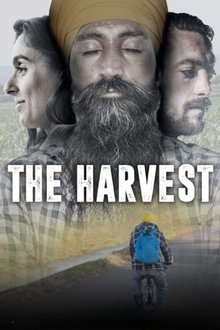
The Harvest (2017)
Gurwinder comes from Punjab, he’s been working for years as a farm hand in Agro Pontino, not far from Rome. Since he first came in Italy, he’s been living with the rest of the Sikh community in Latina province. Hardeep is also Indian, but her stress is Roman, and she works as a cultural mediator. She, born and raised in Italy, is trying to free herself from the memories of a family that emigrated in another age, while he is forced, against his faith, to take methamphetamine and doping to bear the heavy work pace, to be able to send money in India.
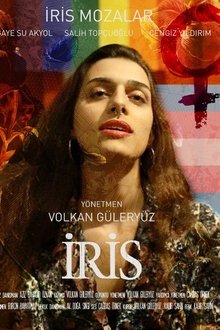
İris (2020)
Biographical trans documentary film in which Iris Mozalar, a young artist, shares her diversity of being a bisexual transgender woman, the process of creating herself and her reflections against society.
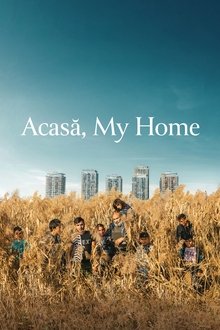
Acasă, My Home (2020)
In the wilderness of the Bucharest Delta, nine children and their parents lived in perfect harmony with nature for 20 years – until they are chased out and forced to adapt to life in the big city.
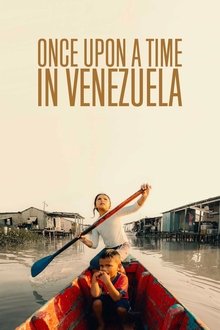
Once Upon a Time in Venezuela (2020)
Once upon a time, the Venezuelan village of Congo Mirador was prosperous, alive with fisherman and poets. Now it is decaying and disintegrating—a small but prophetic reflection of Venezuela itself.

Watershed (NaN)
This is the face of someone the world assumes was stripped of her potential at the age of 18. But tragedy is not Mallory Weggemann's reality. Suddenly paralyzed from the waist down, she was turned loose to become a Paralympic Champion and activist. As Mallory's story unfolds, we come to understand that it was because of, not in spite of, that moment that she discovered who she really is.
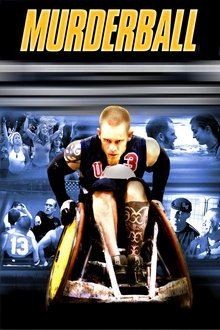
Murderball (2005)
Quadriplegics, who play full-contact rugby in wheelchairs, overcome unimaginable obstacles to compete in the Paralympic Games in Athens, Greece.
Xondaros - Guarani Resistance (2023)
The 6 Guarani villages of Jaraguá, in São Paulo, fight for land rights, for human rights and for the preservation of nature. They suffer from the proximity to the city, which brings lack of resources, pollution of rivers and springs, racism, police violence, fires, lack of infrastructure and sanitation, among others. Unable to live like their ancestors, their millenary culture is lost as it merges with the urban culture.

Víctor Jara in Live in Lima (1973)
Concert by Víctor Jara at Panamericana Televisión in Lima, Peru, on July 17, 1973. This is one of the last audiovisual records of Víctor Jara. Two months later he would be assassinated by the Chilean military dictatorship.
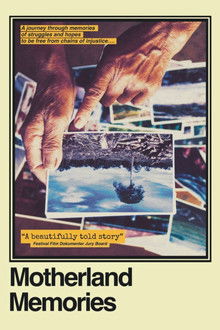
Motherland Memories (2022)
Ompung Putra Boru, a sixties indigenous Batak woman from Humbang Hasundutan, North Sumatra, retraces her life stories through photographs that interweave her past and present as a wife, mother, healer and indigenous land defender in two neighboring villages. Her multi-layered stories are juxtaposed with visual records of everyday life in the two villages, where people’s living space is still increasingly threatened by a giant pulp expansion.
Stunned, I Remain Alert (2020)
Journalist Dermi Azevedo has never stopped fighting for human rights and now, three decades after the end of the military dictatorship in Brazil, he's witnessing the return of those same practices.
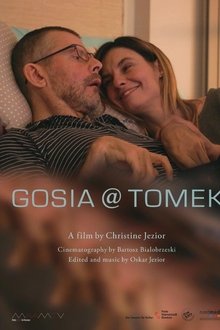
Gosia@Tomek (2021)
What happens to a relationship if a partner suddenly becomes severely disabled after an accident? For Gosia it is clear that she will stand by her boyfriend Tomek no matter what in order to let him live as normal and fulfilled a live as possible. But time and again she becomes painfully aware of her own limits, as well as of those of a society that talks a lot about inclusion but often does not seem to be ready for it. GOSIA@TOMEK is based on more than 3000 emails that Gosia has been writing to Tomek daily since his accident.
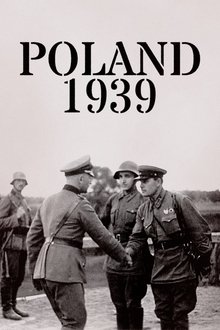
Poland 1939: When German Soldiers Became War Criminals (2019)
September 1st, 1939. Nazi Germany invades Poland. The campaign is fast, cruel and ruthless. In these circumstances, how is it that ordinary German soldiers suddenly became vicious killers, terrorizing the local population? Did everyone turn into something worse than wild animals? The true story of the first World War II offensive that marks in the history of infamy the beginning of a carnage and a historical tragedy.
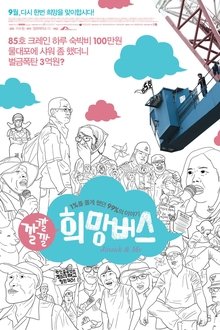
Jinsuk & Me (2012)
I have been pretty satisfied with my life before I got on the bus. When I do in June 2011, my whole life turns upside down. I am just a regular passenger at first. Like other people I was sorry, and felt obliged to help and care for other passengers. Then I begin to film these common heroes with my camera. Those who speak about hope, who provide it and get on the bus, Ms. Kim Jin-suk, and other crane laborers who risk their safety while demonstrating for their rights on high. She, while stationed insecurely on high, begins interacting with the world through Twitter and makes friends. Then I realize I really love her. Will we have her back safely?