In Mea Culpa, Christoph Schlingensief blurs a delicate line: he ignores the threshold that separates the healthy from the sick. By making his cancer the subject of an opera, premiering on the largest German-speaking theater, he is putting the art district under pressure: a wonderful institution like the Burgtheater must use its artistic resources lavishly to reveal the entire "truth" about us humans. At the end of the day, when the scenery on Janina Audick's revolving stage has finally come to rest, when Isolde's last Liebestad has been sung enchantingly beautifully by Elfriede Rezabek and indescribable jubilation breaks out, then Schlingensief is completely alone with his illness.
Related Movies
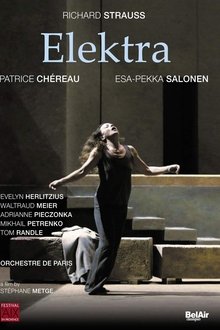
Elektra (2013)
Last production staged by Patrice Chéreau, this Elektra will remain as the main and most striking lyrical event of these last years in Aix-en-Provence. This production is leaded by three amazing singers: the German soprano Evelyn Herlitzius gave a tremendous, never-to-be-forgotten account of the title role, Waltraud Meier portrays a human and chilling Clytemnestra and Adrianne Pieczonka is a fantastic Chrysothemis. Everyone's loneliness and intimate struggles are Patrice Chéreau's favorites theatrical themes. With Esa-Pekka Salonen conducting the Orchestre de Paris, this production of Elektra becomes an unforgettable experience.

Easter (2018)
Easter is a five story-arc opera about the coming-of-age of juking. The first of its tales aptly deals with contemporary civil unrest with foci on the interrelationships between law enforcement in communities it serves, and corruption within the justice system as a whole. It unfolds from the perspective of an African-American male who feels circumstantially slighted by society, and because of that, takes the law into his own hands and goes on a rampage which erupts into a war in the process.
The Marriage of Figaro - Aix-en-Provence Festival (2021)
co-production with the Teatro Real (Madrid).
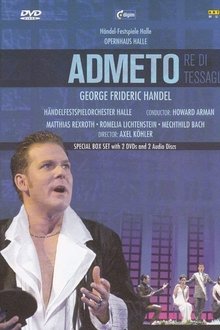
Handel: Admeto (2006)
Axel Kohler, the internationally renowned countertenor has brought Admeto into the modern era in timeless style by the skillful application of imaginative theatrical digressions. Köhler's production at the Halle Opernhaus revisits a work that encompasses comedy, tragedy and almost absurd grotesqueness, couching it in the convincing metaphor of a modern hospital.
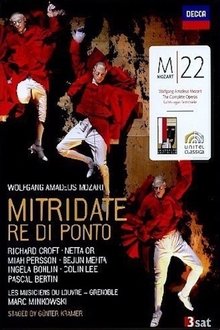
Mitridate Re Di Ponto (2006)
The definitive version of this rare opera by Wolfgang Amadeus Mozart. The costume and set design is truly visionary and other worldly and gives a convincing insight into what staged operas must have looked like during the Baroque and Rococo period. Singers are all excellent and well cast in their respective roles. One of the most thrilling things I have seen, just wish I could see this live.
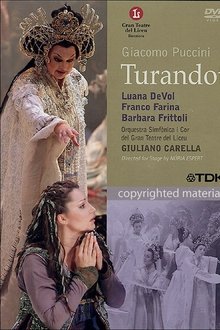
Giacomo Puccini: Turandot (2005)
Lovely but lethal, the evil Princess Turandot comes to life through the performance of Luana De Vol in this visually stunning production of Giacomo Puccini's Peking-set opera directed by Nuria Espert and conducted by Giuliano Carella. In this 2004 performance at the Gran Teatre del Liceu in Barcelona, Spain, all the subtleties of Puccini's unique tonality and unconventional instrumentation are in ample evidence.
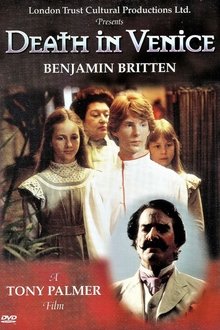
Death in Venice (1981)
Gustav Von Aschenbach, a passionate composer, arrives in Venice as a result of wanderlust and there meets a young man by whose beauty he becomes obsessed.
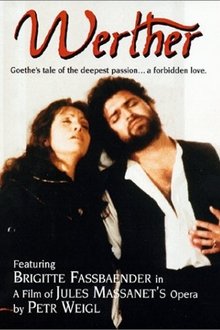
Werther (1985)
Jules Massanet's lyrical opera is transformed into a superb film production by Petr Weigl, shot on location in Prague, with music conducted by Libor Pesek. First produced by the Vienna Opera in February 1892, "Werther" rapidly confirmed Massanet's position on the French opera scene and achieved enormous popularity outside France, notably in Italy, America and England. The tragic story tells of Werther's intense passion for Charlotte, who has married his best friend, Albert, fulfilling a pledge to her now deceased mother. But Werther's letters of love bring Charlotte to his side when he promises to take his own life.
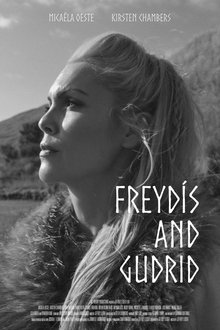
Freydís and Gudrid (2024)
A group of merchants and vikings navigate dramatic events both within and without in this epic musical based on the Icelandic Vinland sagas. As secrets are exposed, two women (Freydís and Gudrid) have a reckoning.
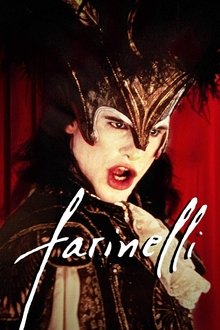
Farinelli (1994)
The life and career of Italian opera singer Farinelli, considered one of the greatest castrato singers of all time.

Cosi Fan Tutte (2006)
There are elements of Eurotrash in this outdoor Aix-en-Provence summer opera production. Nevertheless, the splendid singing and acting transform the story, normally treated as farce, into something considerably more serious. As many other critics have noted, the young lovers have not yet sorted everything out as this performance ends. Act One begins with the principal characters running around in the outdoor theater -- while the audience takes it in as if they had been advised to sit back and enjoy the novelty. Very likely they were also asked to refrain from applauding at the end of arias and ensemble pieces, in which the three-hour opera abounds.
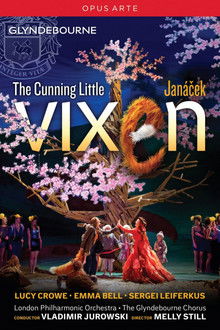
Janáček: The Cunning Little Vixen (2012)
The tale of a quick-witted fox and her escape from confinement for a life in the forest.
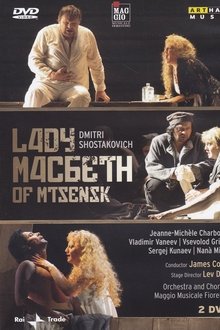
Shostakovich: Lady Macbeth of Mtsensk (2009)
At first glance, the title of Shostakovich’s opera seems to speak for itself: Katherina, neglected and unhappy in her marriage, commits the most heinous crime just like the Shakespearian Lady Macbeth. But Nikolai Leskov’s short novel, which portrays Katherina as a monster, was only the starting point for Shostakovich to elicit understanding for an oppressed woman whose pursuit for self-determination is suppressed by society. Through combining satiric, grotesque and tragic elements in his music, Shostakovich succeeds in striking the balance between repulsion at Katherina’s immoral acts and sympathy for her. Violence, eroticism and the paralysing boredom of Russian society in the 19th century are the founding elements of this composition. The choir and orchestra of the Maggio Musicale Fiorentino conducted by James Conlon accompany tremendous soloists such as Jeanne-Michèle Charbonnet, Vladimir Vaneev and Vsevolod Grivnov in the original language in this live recording.
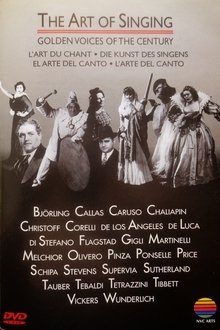
The Art of Singing: Golden Voices of the Century (1998)
Imagine a window into the past. Imagine finally connecting singers' bodies to the voices you have always treasured on record, watching footage of performances from another era. All of singers featured here have something in common (with one exception, Sutherland): they sang and performed on stage before the advent of filmed opera. . And it shows, for the first time, a few tantalizing minutes of recently recovered footage from Callas' legendary Lisbon Traviata, featuring Addio dal Passato and Parigi oh cara with Alfredo Kraus. This DVD will leave you asking for more.