Because of the big housing problem in the US many people move into cheap, run down hotels, the so-called Flophouse hotels. Twelve-year-old Mikal was born and raised in a hotel room he shares with his parents, who struggle with substance abuse. Driven by love and a desire for a better life, his greatest wish is for his mother to stop drinking. Mikal is bright and articulate, but his parents’ struggles prevent them from giving him the stability he needs. Through Mikal’s perspective, the film paints an intimate portrait of resilience, hope, and the harsh realities of life on society’s margins.
Related Movies

What You’ll Remember (2021)
Homelessness in the United States takes many forms. For Elizabeth Herrera, David Lima and their four children, housing instability has meant moving between unsafe apartments, motels, relatives’ couches, shelters, the streets and their car. After 15 years of this uncertainty, the family moved into their first stable housing — an apartment in the San Francisco Bay Area — in the midst of the coronavirus pandemic.

Exergo (2024)
Departing from peripheral details of some paintings of the Bilbao Fine Arts Museum, a female narrator unravels several stories related to the economic, social and psychological conditions of past and current artists.

The Salt Mines (1990)
Explores the lives of Sara, Gigi and Giovanna, three Latino transvestites who for years have lived on the streets of Manhattan supporting their drug addictions through prostitution. They made their temporary home inside broken garbage trucks that the Sanitation Department keeps next to the salt deposits used in the winter to melt the snow. The three friends share the place known as "The Salt Mines".

The Changing Face Of Salford Collection (1970)
Between 1968 and 1970, J M Goodger, a lecturer at the University of Salford, made a film record of the living conditions in the slums of Ordsall, Salford, which were then in the process of being demolished. Under the title 'The Changing face of Salford', the film was in two parts: 'Life in the slums' and 'Bloody slums'.

Losing Your Home (2024)
Too many stories can tell the horrible consequences of the housing crisis. Those of Jeannette and Frances make us feel the difficult experience of eviction. During long months of anguish, brief hopes and uprooting, Jeannette and Frances struggle, alone and surrounded, against a phenomenon that is becoming more and more pronounced: losing your home.
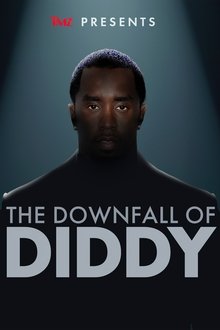
TMZ Presents: The Downfall of Diddy (2024)
A series of lawsuits and allegations have legendary rap mogul P. Diddy on the ropes. TMZ has the troubling inside story from people who were there.

Dear Little Haiti (2024)
A love letter to a place that will forever be home, a visual ode, and a farewell to a neighborhood that is rapidly changing due to the forces of gentrification and Miami’s housing crisis.
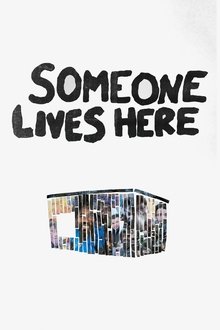
Someone Lives Here (2023)
Chronicles the modern-day David and Goliath tale amidst North America's housing crisis. During the pandemic, Khaleel Seivwright, a young Toronto carpenter, builds life-saving shelters for unhoused people facing the winter outside. His actions attracted international acclaim but also staunch opposition from the city government, portraying a compelling narrative set against the backdrop of societal challenges and governmental resistance.

Appartement proche Paris, charme atypique (2025)
Five floors. Forty apartments. Rats, leaks and debts. In Pantin, I live in a building with a danger order. Under court order, we have to renovate it. Between Dantesque arguments, missing money and humor as a fire extinguisher, I film our collective rescue.
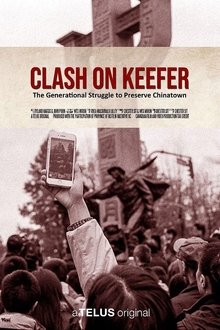
Clash on Keefer (2021)
Chronicling the events surrounding the protests generated by the proposed redevelopment of an empty lot at 105 Keefer St., located at the heart of Vancouver's Chinatown.

Bobby Fischer Against the World (2011)
The first documentary feature to explore the tragic and bizarre life of the late chess master Bobby Fischer.

There Is a Beautiful Birth Place, But... (2023)
An abstract film consists of static shots of a small house-like being demolished through temporal ellipsis.

Love in the Walls (2025)
Residents of a Melbourne social housing community strive to reclaim their own hope and identity in the face of recent deaths and a larger societal question – can we meaningfully coexist?

Dreams (2021)
These are the future leaders of their communities. Ever wonder what it’s like to walk a day in their shoes? How the world looks through their eyes? We were curious. So, we asked them.
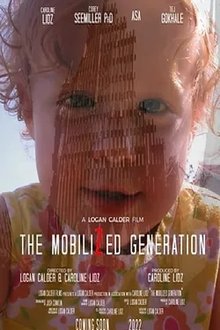
The Mobilized Generation (2021)
A short documentary chronicling the coming-of-age story of generation z punctuated by numerous culturally significant moments, known as period effects, that have bred a generation of young activists.
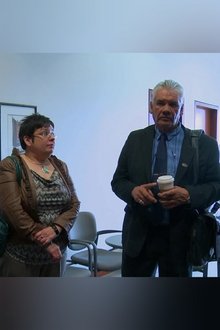
The Federal Court Hearing (2012)
Amid a severe housing crisis that made international headlines in 2011, the federal government imposed third-party management on the Attawapiskat First Nation. In response, the First Nation’s leadership filed a challenge in federal court, claiming the appointment was unreasonable, contrary to law and harmful to community members. Alanis Obomsawin documents the remarkable judicial review that ensued in April 2012 in this companion work to her feature documentary The People of the Kattawapiskak River.

Co-op Housing: The Best Move We Ever Made (1975)
Canada is facing a housing crisis, and cooperative housing might be a part of the solution.
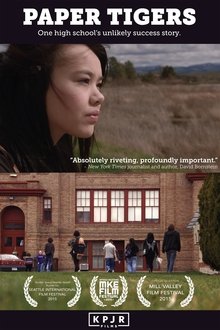
Paper Tigers (2015)
Follows a year in the life of an alternative high school that has radically changed its approach to disciplining its students, becoming a promising model for how to break the cycles of poverty, violence and disease that affect families.
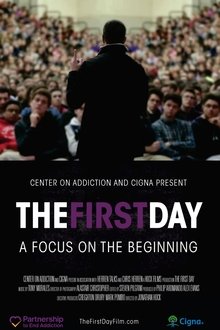
The First Day (2019)
Chris Herren, former professional basketball player, author and wellness advocate, has shared his story of recovery with over 1 million people nationwide. The First Day film chronicles this journey revealing Herren’s vulnerability and his profound connections with high school students who, in turn, have shared their stories of struggle and strength. Through the power of storytelling, The First Day addresses issues that school systems, communities and people across the country are impacted by, directly or indirectly, each day including substance use, other harmful behaviors and mental wellness.