When the United States entered World War I, its Army Air Service lacked a combat-ready aircraft – a liability that prompted a search to find an aircraft suitable for production at home and combat operations abroad. This documentary from Bowling Green filmmakers tells the story behind the single-engine DH-4 plane dubbed The Liberty Plane.
Related Movies

Asunder (2016)
Esther Johnson’s film uses local archive footage to convey the story of Sunderland's involvement in the First World War, from the men who fought in the fields to those who stayed behind to work in the region’s shipyards and munitions factories.

The Zeppelin Raids on London and the Siege of Verdun (1916)
This lost WWI documentary appears to be about the German zeppelin attacks on Londonon September 2nd, 1916.
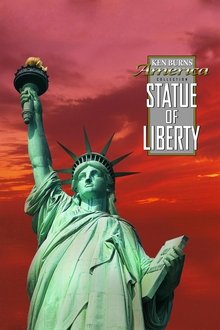
The Statue of Liberty (1985)
For more than 100 years, the Statue of Liberty has been a symbol of hope and refuge for generations of immigrants. In this lyrical, compelling and provocative portrait of the statue, Ken Burns explores both the history of America’s premier symbol and the meaning of liberty itself. Featuring rare archival photographs, paintings and drawings, readings from actual diaries, letters and newspapers of the day, the fascinating story of this universally admired monument is told. In interviews with Americans from all walks of life, including former New York governor Mario Cuomo, the late congresswoman Barbara Jordan and the late writers James Baldwin and Jerzy Kosinski, The Statue of Liberty examines the nature of liberty and the significance of the statue to American life. Nominated for both the Academy Award ® and the Emmy Award ®, The Statue of Liberty received the prestigious CINE Golden Eagle, the Christopher Award and the Blue Ribbon at the American Film Festival.
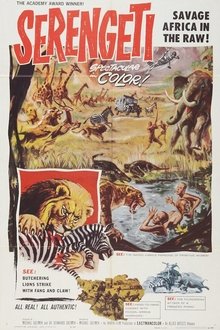
Serengeti Shall Not Die (1959)
The film tells of the beginnings of the Serengeti National Park in Tanzania. At the end of the 1950s, the Tanzanian National Park Administration wanted to fence in the protected area around the Ngorongoro Crater. Bernhard and Michael Grzimek were invited by the national park administration in 1957 to get a precise picture of the animal migrations and to provide the national park administration with the values they needed for their project. Using a new counting method with two airplanes, the Grzimeks found out that the migration of the herds was different than assumed.
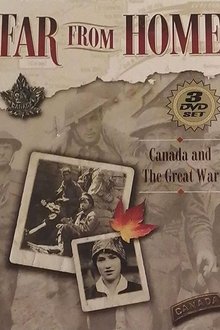
Sam's Army (1999)
Canada was led to war by a bigoted, ignorant, self-obsessed Minister of Militia, who may well have been clinically insane, but the importance of Canada's contribution in that war owes a great deal to him. The man of course, was Colonel - later made Lieutenant General by his own hand - Sam Hughes. Sam's Army is a compelling portrait of a complex man and the formidable military he built. Sam Hughes was not your standard-issue military leader. Canada's World War I Minister of Militia and Defence concentrated power in his own hands, insisted that the Canadian military use the ill-conceived Ross rifle and liberally promoted his cronies. But there was no denying Hughes was a visionary. He assembled the world's largest-ever volunteer army and bucked superiors to keep his ferocious fighting force together in one Canadian Corps.
The Battle of Vimy Ridge (1999)
A two-hour documentary which recreates for the viewer one of the greatest battles in Canadian military history. The film was made to show that Canadian character at its best, forging an identity for a country that before the First World War had been seen only as a British colony - an identity and a character that became recognized and respected throughout Europe.
The Last 100 Days (1999)
Canadian military accomplishments in the last hundred days of World War I, when the German Army was destroyed, surpassed those of any other army. The Canadian success was, in no small measure, due to Arthur Currie, whom a recent British historian describes as "the most successful Allied General and one of the least well known."

Saludos Amigos (1942)
A whimsical blend of live action and animation, "Saludos Amigos" is a colorful kaleidoscope of art, adventure and music set to a toe-tapping samba beat. From high Andes peaks and Argentina's pampas to the sights and sounds of Rio de Janeiro, your international traveling companions are none other than those famous funny friends, Donald Duck and Goofy. They keep things lively as Donald encounters a stubborn llama and "El Gaucho" Goofy tries on the cowboy way of life....South American-style.
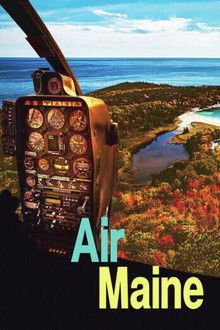
Air Maine (1997)
Host Jack Perkins (of the A&E "Biography" series) takes to the skies to show us an aerial view of the state of Maine. From rocky coastlines to northern forests and everything in between, this breathtaking documentary presents a truly unique picture of one of the most wild and beautiful regions of the United States.
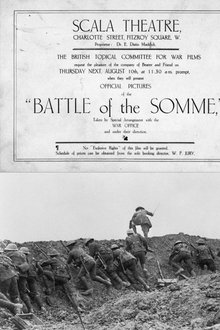
The Battle of the Somme (1916)
A documentary and propaganda film which shows the British Army's preparations for, and the early stages of, the battle of the Somme.

Classic Fighter (NaN)
Classic Fighter – the story of the great piston-engined fighters of World War Two. A tribute to the men who flew them, and to the men and women who guided them and kept them in the air. Made in conjunction with the Imperial War Museum, Duxford, this programme tells the story of these great war planes. Stunning air-to-air flying sequences are intercut with interviews with pilots and aircrew of the British and American air forces. Some of the fighter aircraft featured are the Supermarine Spitfire, the Hawker Hurricane, the Messerschmitt Bf109, the P-47 Thunderbolt and the P-51 Mustang.
Forgotten Men (1933)
Producer Samuel Cummins, along with five participants in World War I, discuss the key events of the war as illustrated by an assemblage of battlefield and other documentary footage. This film is not the same as, but seems likely to have either inspired or been inspired by, Norman Lee's British production of the same title (q.v.), apparently released the following year.

Jetset - The Golden Era of Aviation (2025)
Today London, tomorrow Paris, the day after New York – the life of the "jetsetter." Long before the climate crisis and flight shame, flying was considered the epitome of luxury, freedom, and cosmopolitanism. Passenger aviation is making flight attendants and pilots the ultimate dream jobs. Modern aircraft are setting new standards in comfort, technology, and style. Flying is becoming a hobby of high society.
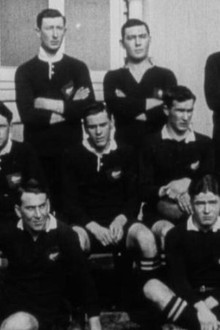
New Zealanders Win at Rugby (1916)
Soldiers representing South Africa and New Zealand billeted in London get stuck in during a rugby fixture in Richmond Park.
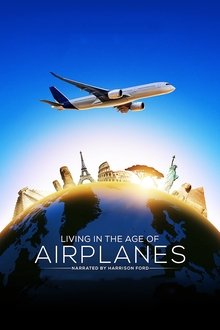
Living in the Age of Airplanes (2015)
A fresh perspective on a modern-day miracle that many of us take for granted: flying. Narrated by Harrison Ford and featuring an original score from Academy Award® winning composer James Horner, the film takes viewers to 18 countries across all seven continents to illuminate how airplanes have empowered a century of global connectedness our ancestors could never have imagined.
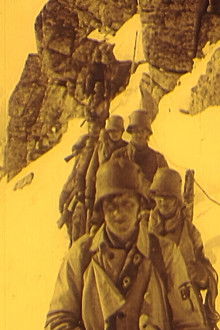
Heroes' War in Snow and Ice (1917)
Heroic Struggle in Snow and Ice is a 1917 Austro-Hungarian propaganda newsreel film produced by Sascha-Film for the Imperial and Royal War Press Headquarters. The film is hand-colored and presented in two parts. It depicts the fighting on the Alpine Front between Italy and Austria-Hungary.

Prüdes Hollywood - Laster, Lust und Leidenschaft im Film (2025)
In recent years, Hollywood productions have turned away from sensuality. Is the sex scene on the verge of extinction or reinvention? Alongside film professionals and researchers, this documentary deciphers a trend that speaks volumes about the evolution of the industry and our societies.
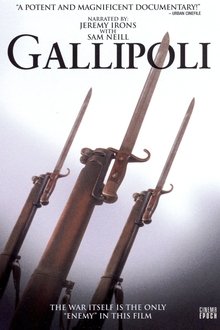
Gallipoli (2005)
The Gallipoli campaign of World War I was so controversial & devastating, it changed the face of battle forever. Using diaries, letters, photographs and memoirs, acclaimed director, Tolga Ornek, traces the personal journeys of Australian, New Zealand, British and Turkish soldiers, from innocence and patriotism to hardship and heartbreak.
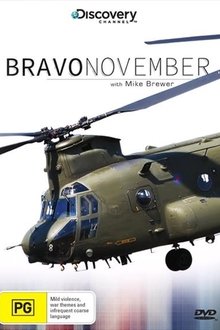
Bravo November (2012)
Mike Brewer sets off on a journey of discovery to find out the story of one of the most remarkable aircraft in the British Armed Forces: a Chinook helicopter code named Bravo November. By doing so he examines the invaluable contribution that these helicopters have made to campaigns from the Falklands War to modern day British Military service over the past thirty years.