Berlin’s brutalist heritage is under fire. The city’s powerful Charité hospital wants to destroy a brutalist icon of the Cold War era: The infamous former animal research laboratory called the Mäusebunker. Meanwhile, a dedicated group of politicians, preservationists, architects, gallerists, and students fight for an adaptive reuse of these magnificent, uncompromisingly unique structures. Who will win? No matter the outcome, you’re left with the impression that preservation can be brutal.
Related Movies

Great Homes of Rochester (2002)
Travel through the streets of Rochester and you’ll find some extraordinary architecture. From California bungalows to English Tudors, French colonials to Victorians, the Flour City is home to so many beautiful dwellings. WXXI takes you on a private tour inside some of these exquisite house in Great Homes of Rochester.
Berlin: Symphony of a Great City (1927)
A day in the city of Berlin, which experienced an industrial boom in the 1920s, and still provides an insight into the living and working conditions at that time. Germany had just recovered a little from the worst consequences of the First World War, the great economic crisis was still a few years away and Hitler was not yet an issue at the time.

Postmodernism: The Substance of Style (2011)
This film features some of the most important living Postmodern practitioners, Charles Jencks, Robert A M Stern and Sir Terry Farrell among them, and asks them how and why Postmodernism came about, and what it means to be Postmodern. This film was originally made for the V&A exhibition 'Postmodernism: Style and Subversion 1970 - 1990'.
Frei Otto: Spanning the Future (2016)
The life and works of Frei Otto told in his own words and by those he inspired. An in-depth look at the rise of lightweight architecture, form finding, and its continued relevance for the future of architecture.
Schade, daß Beton nicht brennt (1981)
A documentary about the clashes between squatters and the police in Berlin in early 1981. Despite the absence of commentary, this is an openly partisan film that aims less for political analysis than for an up-close description of the situation and mood.
Cathedrals (2014)
The city of Ordos, in the middle of China, was build for a million people yet remains completely empty. Ordos is not so much a place but a symbol of babylonic hype. But nothing will change - as long as people believe.
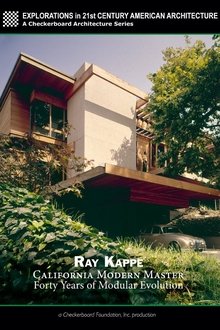
Ray Kappe: California Modern Master - Forty Years of Modular Evolution (2009)
Explorations in 21st Century American Architecture Series: Ray Kappe has long been a cult figure in the architectural scene in and around Los Angeles. In 1972, he founded the influential, avant garde Southern California Institute of Architecture (SCI-ARC), where many of the younger-generation architects have studied or taught.
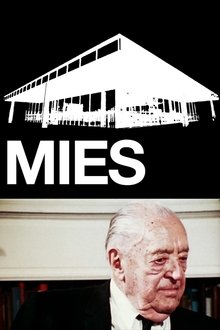
Mies (1986)
No understanding of the modern movement in architecture is possible without knowledge of its master builder, Mies van der Rohe. Together with documentation of his life, this film shows all his major buildings, as well as rare film footage of Mies explaining his philosophy. Phyllis Lambert relates her choice of Mies as the architect for the Seagram building. Mies's achievements and continuing influence are debated by architects Robert A.M. Stern, Robert Venturi, and Philip Johnson, by former students and by architectural historians. Mies is seen in rare documentary footage.

Zaha Hadid... Who Dares Wins (2013)
Alan Yentob profiles the most successful female architect there has ever been, the late Zaha Hadid, who designed buildings around the globe from Austria to Azerbaijan.

Spiritual Letters (2021)
The film is a story about the deep connection of the life and art of the artist. It takes you on a journey through Berlin like you have never seen before. Take a deep dive behind the scenes of the famous red and blue graffiti letterings that cover the heart of the city and tune into the connection between art, letters and spirituality.
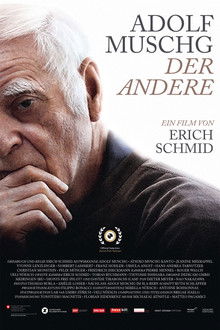
Adolf Muschg – The Other (2021)
In his exploration of the cultural dynamic between East and West, Adolf Muschg, the most significant Swiss writer since Frisch and Dürrenmatt, searched for the other in himself in order to understand otherness.
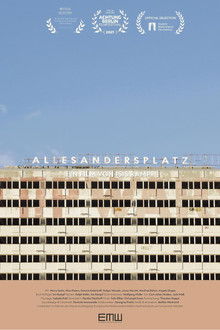
Allesandersplatz (2021)
Artists, urban planners and the city of Berlin trying to transform a former GDR ruin into a place for new visions and concepts of city - a place where everything is different than before?
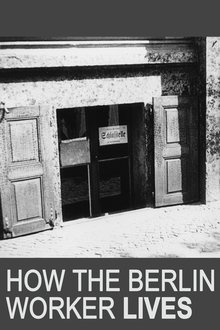
How the Berlin Worker Lives (1930)
This documentary shows how the Berliner workers lived in 1930. The director Slatan Dudow shows through images: a) the workers leaving the factory; b) the raise of the rents; c) the "unpleasant" guest, meaning the justice officer that brings the eviction notice; d) the fight of classes of the houses of capitalists and working classes; e) the parks of the working class; f) the houses of the working class, origin of the tuberculosis and the victims; g) the playground of the working class; h) the swimming pool for the working class, ironically called the "Baltic Sea" of the working class; i) the effects of humidity of basement where a family lives, with one member deaf; j) one working class family having dinner while the capitalist baths his dog; k) the eviction notice received from an unemployed family and their eviction.
Rhin et Danube (1948)
A documentary produced by the French armed forces which chronicles the way of France’s “1ere armée” in the second world war from the days it first crossed the Rhine in March of 1945, through the liberation of a POW-camp in Swabia, until the forces reached the Danube and the Alps at the end of the war and the day French troops marched in the victory parade in Berlin.

Prinzessinnenbad (2007)
A film about three teenagers - Klara, Mina and Tanutscha - from the Berlin district of Kreuzberg. The trio have known each other since Kindergarten and have plenty in common. The three 15-year-olds are the best of friends; they are spending the summer at Prinzenbad, a large open-air swimming pool at the heart of the district where they live. They're feeling pretty grown up, and are convinced they've now left their childhood behind.
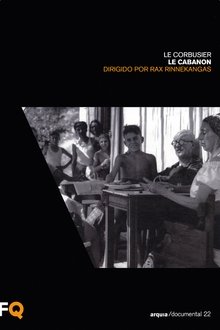
The Cabanon by Le Corbusier (2010)
Minimalist documentary by Rax Rinnekangas about the wooden cottage "La Cabanon" designed and built in 1952 by Swiss architect and furniture designer Le Corbusier - a refuge intended for a single person with a living space of only 3.66 x 3.66 meters. The construction followed Corbusier's maxim that architecture must adapt to the human body and not vice versa.

Trip to Asia: The Quest for Harmony (2008)
Journey with the musicians of the Berlin Philharmonic and their conductor Sir Simon Rattle on a breakneck concert tour of six metropolises across Asia: Beijing, Seoul, Shanghai, Hong Kong, Taipei and Tokyo. Their artistic triumph onstage belies a dynamic and dramatic life backstage. The orchestra is a closed society that observes its own laws and traditions, and in the words of one of its musicians is, “an island, a democratic microcosm – almost without precedent in the music world - whose social structure and cohesion is not only founded on a common love for music but also informed by competition, compulsion and the pressure to perform to a high pitch of excellence... .” Never before has the Berlin Philharmonic allowed such intimate and exclusive access into its private world.