Unconquered: Allan Houser and the Legacy of One Apache Family (2008)
In decades past, Native American artists who wanted to sell to mainstream collectors had little choice but to create predictable, Hollywood-style western scenes. Then came a generation of painters and sculptors led by Allan Houser (or Haozous), a Chiricahua Apache artist with no interest in stereotyped imagery and a belief that his own rich heritage was compatible with modernist ideas and techniques. Narrated by actor Val Kilmer and originally commissioned as part of an exhibit of Houser’s work at the Oklahoma History Center, this program depicts the artist’s tribal ancestry, his rise to regional and national acclaim, and the continuing success of his sons as they expand upon and depart from their father’s achievements. Key works are documented, as is Houser’s tenure at the Santa Fe–based Institute of American Indian Arts.
Related Movies

The Yes Men Fix the World (2009)
THE YES MEN FIX THE WORLD is a screwball true story about two gonzo political activists who, posing as top executives of giant corporations, lie their way into big business conferences and pull off the world's most outrageous pranks.
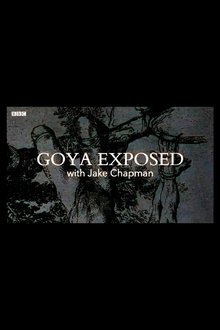
Goya Exposed with Jake Chapman (2016)
Jake Chapman explores why Goya's The Disasters of War etchings are so central to his own art and explains why, for him, there is a fundamental conflict at the heart of Goya's art.

Essence of Healing: The Journey of American Indian Nurses (2017)
Essence of Healing is a documentary exploring the life journeys of 14 American Indian nurses - their experiences growing up, their experiences in nursing school, and their experiences on the job. They are part of a larger story - a historical line of care and compassion that has run through hundreds of indigenous tribes for thousands of years.
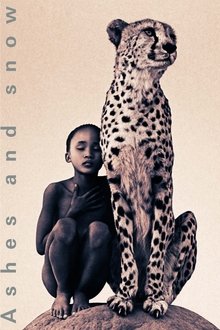
Ashes and Snow (2005)
Ashes and Snow, a film by Gregory Colbert, uses both still and movie cameras to explore extraordinary interactions between humans and animals. The 60-minute feature is a poetic narrative rather than a documentary. It aims to lift the natural and artificial barriers between humans and other species, dissolving the distance that exists between them.
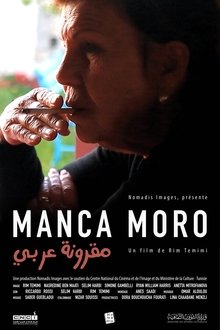
Manca Moro (2021)
Born to an Algerian father and a Sicilian mother in Tunisia, I have always been wealthy of three cultures. This motherland is where were born my Algerian ancestors when it was called Ifriqya but also my Sicilian grand-parents whose parents were part of the important migration flux of the beginning of the last century. A reservoir of workforce by the thousands reached the shores of this "promised land". A hundred years later, I embark on a quest to rediscover my Sicilian family, exiled for the past sixty years, scattered between Italy and France.

Two Autumns: Andy Goldsworthy (1992)
A study of artist Andy Goldsworthy’s work in Scotland and Japan.
What Price Art? By Tracey Emin (2006)
Why is it that art by male artists always sells for more than that of female artists? Is it subject matter? Is it machismo? Or is it plain old sexism? In this film, Tracey Emin crosses the country on a quest to find out. She meets artists such as Dame Maggi Hambling and Rachel Whiteread; curators such as Norman Rosenthal and gatekeepers such as Oliver Baker from Sotherby's? Have things changed? Or is it society that needs to change before the art market can follow?

Aitamaako'tamisskapi Natosi: Before the Sun (2023)
An intimate and thrilling portrait of a young Siksika woman and the deep bonds between her father and family in the golden plains of Blackfoot Territory as she prepares for one of the most dangerous horse races in the world… bareback.
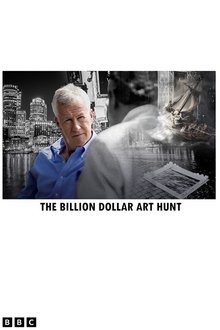
The Billion Dollar Art Hunt (2020)
In June 2019, arts journalist John Wilson received an extraordinary tip-off – one billion dollars’ worth of stolen art may be about to be recovered. Included are a unique Rembrandt - his only seascape - and a Vermeer considered the most valuable stolen painting in the world. The art was taken from the walls of the Isabella Stewart Gardner Museum in Boston in the early hours of 18 March 1990. It remains the world’s biggest unsolved art heist. For John, to follow the recovery of the paintings, as it happens, would be the biggest art story of the century.
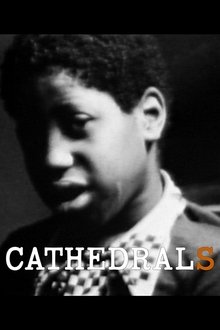
Cathedrals (2025)
In CATHEDRALS, filmmaker Dan Algrant embarks on a journey to reconnect with two black collaborators from a film made nearly 50 years ago. CATHEDRALS becomes a powerful exploration of the bonds that tie us together and the experiences that shape our identities. Through the lens of a creative collaboration, the film illuminates the struggles and triumphs that define life in a close-knit community, ultimately reaffirming the importance of human connection and the power of collective memory.
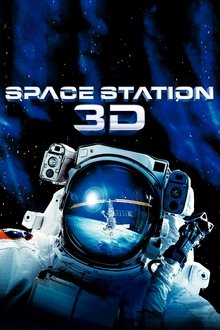
Space Station 3D (2002)
Some 220 miles above Earth lies the International Space Station, a one-of-a-kind outer space laboratory that 16 nations came together to build. Get a behind-the-scenes look at the making of this extraordinary structure in this spectacular IMAX film. Viewers will blast off from Florida's Kennedy Space Center and the Baikonur Cosmodrome in Russia for this incredible journey -- IMAX's first-ever space film. Tom Cruise narrates.
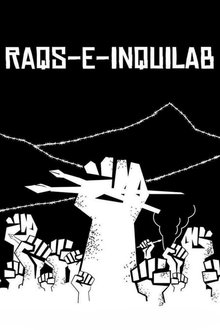
Raqs-e-Inquilab (2019)
The film interweaves the personal narratives of four Kashmiri artists, three of whom - Syed Mujtaba Rizvi, Hina Arif and Zeeshan Jaipuri - are children of the conflict, their impressionable adolescent years years landing right in the middle of the region's most violent period in the 90s. The fourth character, renowned painter and art teacher Masood Hussain, grew up in a time of relative peace before becoming witness to Kashmir's tragic transformation. While their individual traumas are unique, they are connected by their pursuit to process this splintered world through unfiltered artistic expression.
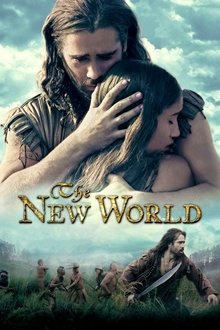
The New World (2005)
A drama about explorer John Smith and the clash between Native Americans and English settlers in the 17th century.
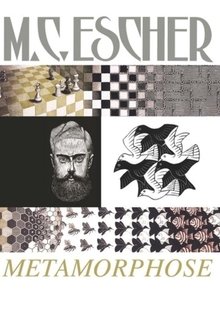
Metamorphose: M.C. Escher, 1898-1972 (1999)
A documentary about the life and works of the artist M. C. Escher. Maurits Cornelis Escher (1898-1972) usually referred to as M. C. Escher, was a Dutch graphic artist. He is known for his often mathematically inspired woodcuts, lithographs, and mezzotints. These feature impossible constructions, explorations of infinity, architecture, and tessellations.
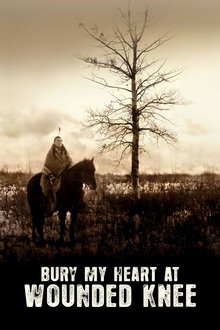
Bury My Heart at Wounded Knee (2007)
Beginning just after the bloody Sioux victory over General Custer at Little Big Horn, the story is told through two unique perspectives: Charles Eastman, a young, white-educated Sioux doctor held up as living proof of the alleged success of assimilation, and Sitting Bull the proud Lakota chief whose tribe won the American Indians’ last major victory at Little Big Horn.
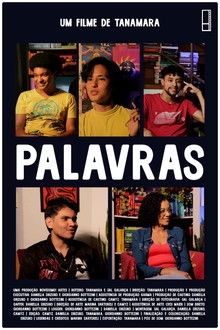
Words From Home (2025)
WORDS FROM HOME is a poetic documentary that explores the kinds of affection and identity in the portuguese language spoken in Brazil. Through migrants' stories and their reflections, the movie reveals how expressions, accents and memories form emotional and cultural bonds, showing how speaking connects us, differentiates us and, above all, brings us closer together.
Fried Shoes Cooked Diamonds (1979)
After World War II a group of young writers, outsiders and friends who were disillusioned by the pursuit of the American dream met in New York City. Associated through mutual friendships, these cultural dissidents looked for new ways and means to express themselves. Soon their writings found an audience and the American media took notice, dubbing them the Beat Generation. Members of this group included writers Jack Kerouac, William Burroughs, Allen Ginsberg. a trinity that would ultimately influence the works of others during that era, including the "hippie" movement of the '60s. In this 55-minute video narrated by Allen Ginsberg, members of the Beat Generation (including the aforementioned Burroughs, Anne Waldman, Peter Orlovsky, Amiri Baraka, Diane Di Prima, and Timothy Leary) are reunited at Naropa University in Boulder, CO during the late 1970's to share their works and influence a new generation of young American bohemians.