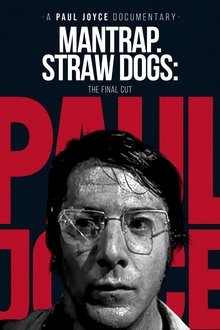
In 1975, as America faced social and political upheaval, filmmakers turned chaos into art.
Related Movies

The Changing Face Of Salford Collection (1970)
Between 1968 and 1970, J M Goodger, a lecturer at the University of Salford, made a film record of the living conditions in the slums of Ordsall, Salford, which were then in the process of being demolished. Under the title 'The Changing face of Salford', the film was in two parts: 'Life in the slums' and 'Bloody slums'.
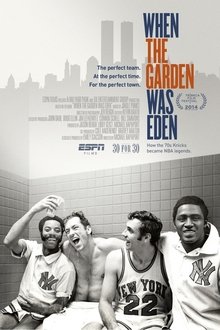
When the Garden Was Eden (2014)
This nostalgic sports documentary captures the New York Knicks at the height of their golden era during the 1970s, revealing in the process a singularly gifted and inspired team revered by its fans.
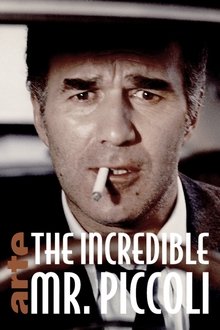
The Incredible Mr. Piccoli (2017)
A captivating portrait of French actor Michel Piccoli, who has worked with the greatest filmmakers of his time and has built a dazzling career of remarkable merit and success, focusing on his work during the 1970s and his professional relationship with Claude Sautet, Romy Schneider, Marco Ferreri and Luis Buñuel.

I'm not unhappy (2019)
Film student Laïs Decaster trains her camera on her close-knit group of friends to capture daily life in the suburb of Argenteuil, near Paris.

The Yes Men Fix the World (2009)
THE YES MEN FIX THE WORLD is a screwball true story about two gonzo political activists who, posing as top executives of giant corporations, lie their way into big business conferences and pull off the world's most outrageous pranks.


35 dias dirigindo até Ushuaia dormindo e cozinhando no carro | Patagônia (NaN)
Documentary showing a couple of photographers driving for 35 days, leaving Brazil for Ushuaia.
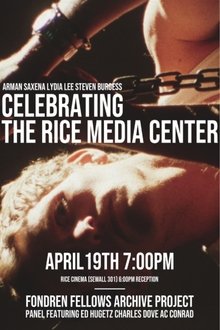
Celebrating the Rice Media Center (2024)
Through the Fondren Fellows program, the Rice Media Center Archive Project has spent the past few months sifting through material stored at the now-defunct Rice Media Center. The team has identified several films as especially notable and will be presenting them in conjunction with documentary footage the team shot of people involved with the films. From lectures featuring Roberto Rossellini and Werner Herzog to films from former Rice students and faculty, the film presentation will tell the narrative of the Rice Media Center through the films and filmmakers that passed through its corridors.

Place Clichy sans complexe (1996)
Documentary on the 18-month renovation of the large Pathé Wepler cinema on the Place de Clichy in Paris. This 1,600-seat cinema is a landmark in the heart of a working-class district of Paris. The cinema becomes a twelve-screen multiplex.

9/11 (2002)
An on-the-scene documentary following the events of September 11, 2001 from an insider's view, through the lens of two French filmmakers who simply set out to make a movie about a rookie NYC fireman and ended up filming the tragic event that changed our lives forever.
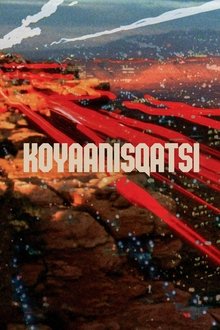
Koyaanisqatsi (1983)
Takes us to locations all around the US and shows us the heavy toll that modern technology is having on humans and the earth. The visual tone poem contains neither dialogue nor a vocalized narration: its tone is set by the juxtaposition of images and the exceptional music by Philip Glass.
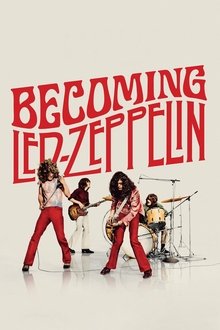
Becoming Led Zeppelin (2025)
The individual journeys of the four members of the band, as they move through the music scene of the 1960s, playing small clubs throughout Britain and performing some of the biggest hits of the era, until their meeting in the summer of 1968 for a rehearsal that changes their lives forever.

Le Temps de cerveau disponible (2010)
Cruelty, psychological and sexual violence, humiliations: reality television seems to have gone mad. His debut in the early 2000s inaugurated a new era in the history of the audio-visual. Fifty years of archives trace the evolution of entertainment: how the staging of intimacy during the 80s opened new territories, how the privatization of the biggest channels has changed the relationship with the spectator. With the contribution of specialists, including philosopher Bernard Stiegler, this documentary demonstrates how emotion has made way for the exacerbation of the most destructive impulses.
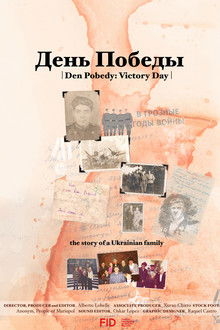
Den Pobedy: Victory Day (2015)
"Den Pobedy" (Victory Day) is counted among the most important celebrations for many former Soviet Republics. It is held on May 9 and commemorates the victory of the USSR over Nazi Germany in the Great Patriotic War (1941-1945). This day pays homage to the war veterans and to the over 26 million Soviets who lost their lives fighting this war. Kalinichenko Vasily Porfirievich fought in the Red Army on the 3rd Ukrainian Front and on the 1st Belarusian Front. As a member of the 226th Infantry Regiment he entered Berlin on April 22, 1945. This documentary explores the war, his life and his family story.
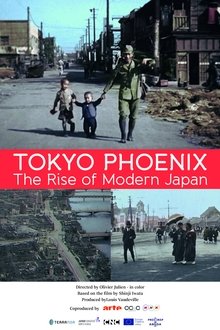
Tokyo Phoenix (2017)
In 150 years, twice marked by total destruction —a terrible earthquake in 1923 and incendiary bombings in 1945— followed by a spectacular rebirth, Tokyo, the old city of Edo, has become the largest and most futuristic capital in the world in a transformation process fueled by the exceptional resilience of its inhabitants, and nourished by a unique phenomenon of cultural hybridization.

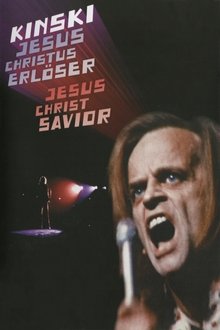
Jesus Christ Saviour (2008)
Klaus Kinski has perhaps the most ferocious reputation of all screen actors: his volatility was documented to electrifying effect in Werner Herzog’s 1999 portrait My Best Fiend. This documentary provides further fascinating insight into the talent and the tantrums of the great man. Beset by hecklers, Kinski tries to deliver an epic monologue about the life of Christ (with whom he perhaps identifies a little too closely). The performance becomes a stand-off, as Kinski fights for control of the crowd and alters the words to bait his tormentors. Indispensable for Kinski fans, and a riveting introduction for newcomers, this is a unique document, which Variety called ‘a time capsule of societal ideals and personal demons.’