The first woman to appear in front of an Edison motion picture camera and possibly the first woman to appear in a motion picture within the United States. In the film, Carmencita is recorded going through a routine she had been performing at Koster & Bial's in New York since February 1890.
Related Movies
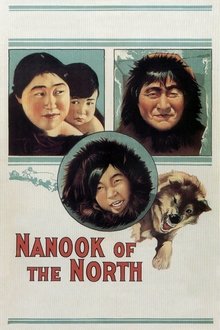
Nanook of the North (1922)
This pioneering documentary film depicts the lives of the indigenous Inuit people of Canada's northern Quebec region. Although the production contains some fictional elements, it vividly shows how its resourceful subjects survive in such a harsh climate, revealing how they construct their igloo homes and find food by hunting and fishing. The film also captures the beautiful, if unforgiving, frozen landscape of the Great White North, far removed from conventional civilization.
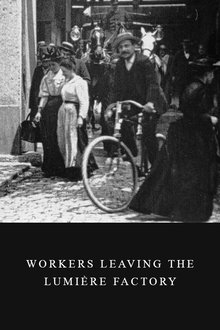
Workers Leaving the Lumière Factory (1895)
Working men and women leave through the main gate of the Lumière factory in Lyon, France. Filmed on 22 March 1895, it is often referred to as the first real motion picture ever made, although Louis Le Prince's 1888 Roundhay Garden Scene pre-dated it by seven years. Three separate versions of this film exist, which differ from one another in numerous ways. The first version features a carriage drawn by one horse, while in the second version the carriage is drawn by two horses, and there is no carriage at all in the third version. The clothing style is also different between the three versions, demonstrating the different seasons in which each was filmed. This film was made in the 35 mm format with an aspect ratio of 1.33:1, and at a speed of 16 frames per second. At that rate, the 17 meters of film length provided a duration of 46 seconds, holding a total of 800 frames.

Shake Hands with Danger (1980)
This short cautionary training film examines dangers associated with earthmoving equipment operation, showing many simulated accidents on construction sites.
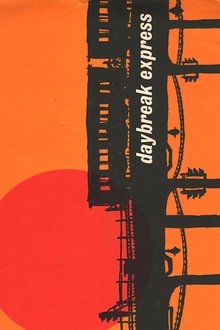
Daybreak Express (1953)
Set to a classic Duke Ellington recording "Daybreak Express", this is a five-minute short of the soon-to-be-demolished Third Avenue elevated subway station in New York City.
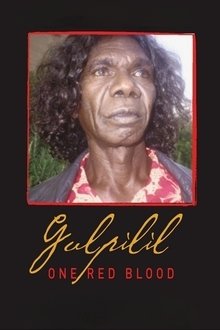
Gulpilil: One Red Blood (2002)
An hour-long documentary on the life and career of actor David Gulpilil.
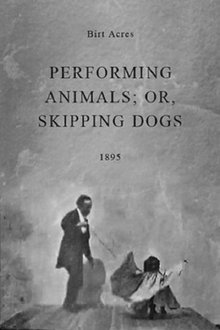
Performing Animals; or, Skipping Dogs (1895)
A short black-and-white silent documentary film featuring one dog jumping through hoops and another dancing in a costume, which was considered lost until footage from an 1896 Fairground Programme was identified as being from this film.



Journey Around My Room (2008)
The camera slowly pans through a room as Smolders offers various observations and memories.

Children of Flameco (2013)
This film tells a story about two young talented artists coming from different ethnic and family backgrounds whose paths cross because of their unusual talent and passion for flamenco music. Amós is twelve and grows up in Salamanca. A rising star recognized by Paco de Lucía, Amós has been playing guitar and composing since he was three. Abraham is a twelve year old flamenco singer from the Gypsy community in Madrid's periphery. He grows up in an extended family where flamenco singing is a part of everyday life and passed on from generation to generation. This is a moving story about child fame, the road taken to get there and the vibrant subculture of flamenco.

Keeping Clean and Neat (1956)
Two eighth graders doing an assembly on cleanliness and neatness seek underclassmen. A look into Don and Mildred's hygienic endeavors.

Benek Blues (2000)
The action is placed in a cramped flat in Warsaw’s district of Ochota. A father and a son, both bedridden, live in a fascinating symbiosis. The son, a well‑known photographer Bernard ben Dobrowolski, is lying in bed because a chronic condition has deformed his body and immobilized him. The father, Dominik, has recently suffered from a stroke. Now they are taking care of each other and crowds of visitors move through their room.

Visions of Europe (2004)
Twenty-five films from twenty-five European countries by twenty-five European directors.
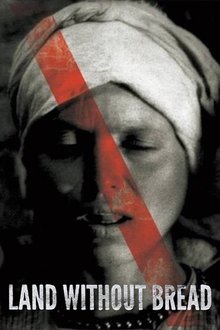
Land Without Bread (1933)
An exploration —manipulated and staged— of life in Las Hurdes, in the province of Cáceres, in Extremadura, Spain, as it was in 1932. Insalubrity, misery and lack of opportunities provoke the emigration of young people and the solitude of those who remain in the desolation of one of the poorest and least developed Spanish regions at that time.