Using spectacular graphics based on the latest science and stories of remarkable people around the world, Michael Mosley takes us on a fantastic voyage through our inner universe.
Related Movies
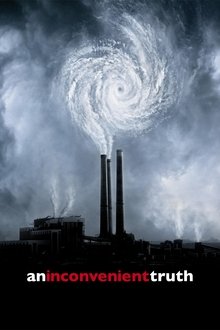
An Inconvenient Truth (2006)
A documentary on Al Gore's campaign to make the issue of global warming a recognized problem worldwide.
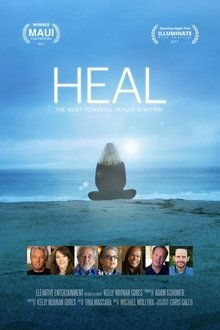
Heal (2017)
A documentary film that takes us on a scientific and spiritual journey where we discover that by changing one's perceptions, the human body can heal itself from any disease.

Stuttgart Shanghai (2007)
A young pair from Stuttgart fly to Shanghai to hop aboard the textile business of his father while she prepares for the birth of their son. A story about the ever more common movement of Germans into the East for professional gain.
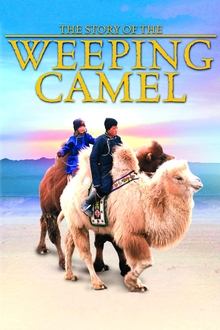
The Story of the Weeping Camel (2004)
When a Mongolian nomadic family's newest camel colt is rejected by its mother, a musician is needed for a ritual to change her mind.
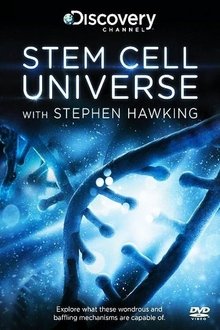
Stem Cell Universe With Stephen Hawking (2014)
The use of embryonic stem cells has ignited fierce debate across the spiritual and political spectrum. But what if we could create manmade stem cells - or find super cells in adults that could forever replace embryonic cells and remove the controversy? Today, we are on the brink of a new era - an age where we may be able to cure our bodies of any illness. Stephen HAWKING has spent his life exploring the mysteries of the cosmos, now there is another universe that fascinates him - the one hidden inside our bodies - our own personal galaxies of cells.
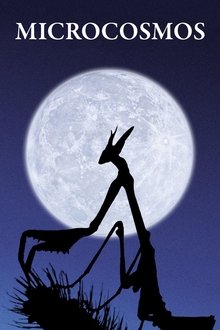
Microcosmos (1996)
A documentary of insect life in meadows and ponds, using incredible close-ups, slow motion, and time-lapse photography. It includes bees collecting nectar, ladybugs eating mites, snails mating, spiders wrapping their catch, a scarab beetle relentlessly pushing its ball of dung uphill, endless lines of caterpillars, an underwater spider creating an air bubble to live in, and a mosquito hatching.
What She Carries (NaN)
Exploring the revitalization of traditional birthing practices in Indigenous communities across Turtle Island, the film blends personal stories of pregnancy, birth, loss, and renewal, revealing the vast and diverse experiences of women within the life-giving cycle.
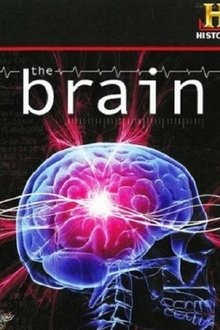
The Brain (2008)
THE BRAIN is an astonishing voyage of discovery into our last biological frontier. Although today s computers can make calculations in one-100th of a second and technology can transport us outside the bonds of Earth, only now are we beginning to understand the most complex machine in the universe. Using simple analogies, real-life case studies, and state-of-the-art CGI, this special shows how the brain works, explains the frequent battle between instinct and reason, and unravels the mysteries of memory and decision-making. It takes us inside the mind of a soldier under fire to see how decisions are made in extreme situations, examines how an autistic person like Rain Man develops remarkable skills, and takes on the age-old question of what makes one person good and another evil. Research is rushing forward. We’ve learned more about the workings of the brain in the last five years than in the previous one hundred.
Victoria (2021)
In a small and conservative city in Jalisco, Alex builds his identity and defends his dreams: fatherhood, music, being a man.
The Beasts Within (2001)
A closer look at the science of Human evolution, and how much early humans might've contributed to the extinction of large mammals during the Ice Age.
Cradle to Grave (2017)
Through our subject Adam, we reveal the incredible changes and forces that take all humankind from Cradle to Grave.
The Kingdom: How Fungi Made Our World (2018)
You find fungi in Antarctica and in nuclear reactors. They live inside your lungs and your skin is covered with them. Fungi are the most under appreciated and unexplained organisms, yet they could cure you from smallpox and turn cardboard boxes into forests. They could even transform Mars into Eden. There are vastly more fungi species than plants and each and every one of them play a crucial role in life’s support systems. Join us on a journey into the mysterious world of Fungi to witness their beauty, unravel their mysteries and discover how this secret kingdom is essential to life on Earth, and may in fact hold the key to our future.
In The Womb (2005)
In The Womb is a 2005 National Geographic Channel documentary that focus on studying and showing the development of the embryo in the uterus. The show makes extensive use of Computer-generated imagery to recreate the real stages of the process.
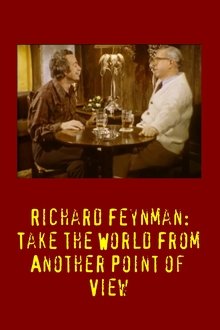
Take the World From Another Point of View (1973)
In 1973 Yorkshire public television made a short film of the Nobel laureate while he was there. The resulting film, Take the World from Another Point of View, was broadcast in America as part of the PBS Nova series. The documentary features a fascinating interview, but what sets it apart from other films on Feynman is the inclusion of a lively conversation he had with the eminent British astrophysicist Fred Hoyle.
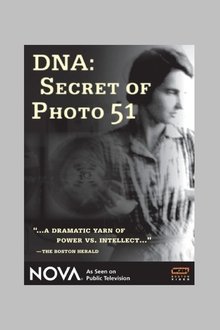
DNA: Secret of Photo 51 (2007)
On April 25, 1953, James Watson and Francis Crick published their groundbreaking discovery of the double helix structure of DNA. But their crucial breakthrough depended on the pioneering work of another biologist, Rosalind Franklin. 50 years later, NOVA investigates the shocking truth behind one of the greatest scientific discoveries and presents a moving portrait of a brilliant woman in an era of male-dominated science.
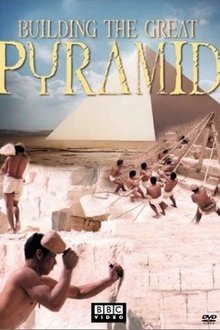
Pyramid (2002)
Of the Seven Wonders of the Ancient World, the Pyramid is the only one to survive. Many believe that even with our 21st-century technology, we could not build anything like it today. Based on the most up-to-date research and the latest archaeological discoveries, here is how the Pyramid came to be.
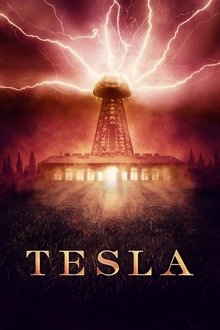
Tesla (2016)
Meet Nikola Tesla, the genius engineer and tireless inventor whose technology revolutionized the electrical age of the 20th century. Although eclipsed in fame by Edison and Marconi, it was Tesla's vision that paved the way for today's wireless world. His fertile but undisciplined imagination was the source of his genius but also his downfall, as the image of Tesla as a mad scientist came to overshadow his reputation as a brilliant innovator.
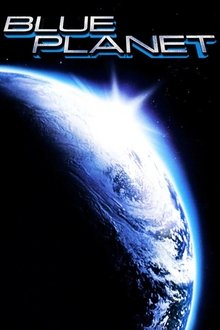
Blue Planet (1990)
From the unique vantage point of 200 miles above Earth's surface, we see how natural forces - volcanoes, earthquakes and hurricanes - affect our world, and how a powerful new force - humankind - has begun to alter the face of the planet. From Amazon rain forests to Serengeti grasslands, Blue Planet inspires a new appreciation of life on Earth, our only home.