Darwin's great insight – that life has evolved over millions of years by natural selection – has been the cornerstone of all David Attenborough’s natural history series. In this documentary, he takes us on a deeply personal journey which reflects his own life and the way he came to understand Darwin’s theory.
Related Movies
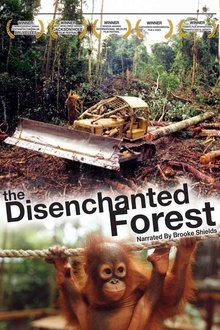
Disenchanted Forest (2002)
We call them o-rang-u-tans, which literally means "forest persons" in the Malay and Indonesian languages. They are the only great apes native to Asia. Of all the apes, they are the closest to man in genetic makeup. And they face extinction. Two years in the making, the film is an intimate portrayal of the world of orangutans, the threats to their survival and the people committed to help them thrive. The film focuses on a recent discovery that orangutans do not rely on animal instinct for survival, but instead have a culture that they have preserved from generation to generation.
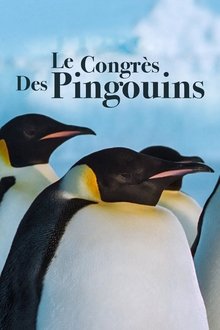
The Congress of Penguins (1993)
The real place where the penguin congress takes place is also the most fictional place on this planet where you can stand on your own two legs. Here, even the animals can talk. This land of dreams and nightmares is called Antarctica. In this desert of ice surrounded by a stormy sea, a few dozen human beings also live. Using sophisticated instruments, they observe the worrying changes affecting our world: the hole in the ozone layer, climate change, and so on.
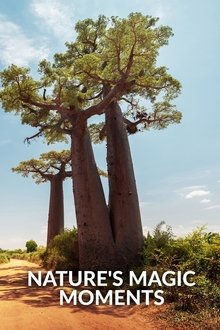
Nature's Magic Moments (2022)
Whether it’s night or day, the northern or southern hemisphere, irrespective of the season or the precise location – our planet’s natural world produces truly magical moments all year round.
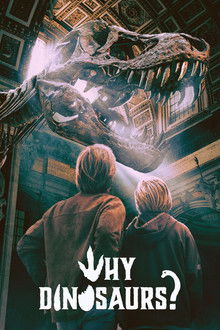
Why Dinosaurs? (2025)
A dinosaur-obsessed teen and his filmmaker father travel the world interviewing paleontologists about the latest discoveries, tracking down the crew of Jurassic Park, digging up 150-million-year-old bones, and meeting dino fanatics of all walks of life.
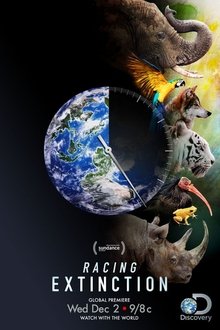
Racing Extinction (2015)
An unlikely team of activists and innovators hatches a bold mission to save endangered species.

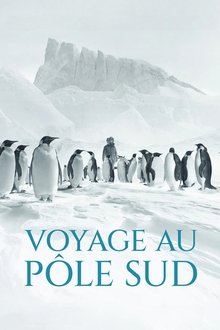
Antarctica Calling (2023)
The few thousand kilometers that separate Patagonia from the South Pole are a fascinating and hypnotic journey for explorers. Some even speak of an addiction, 'the Antarctic bite'. March of the Penguins (2005) director Luc Jacquet has been experiencing it for 30 years. His new film is a visually-striking adventure, offering us images beyond words, an ultimate tribute to a vanishing continent.
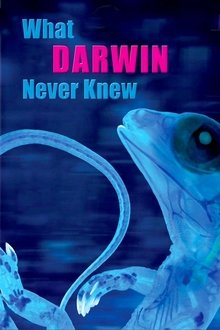
What Darwin Never Knew (2009)
Earth teems with a staggering variety of animals, including 9,000 kinds of birds, 28,000 types of fish, and more than 350,000 species of beetles. What explains this explosion of living creatures—1.4 million different species discovered so far, with perhaps another 50 million to go? The source of life's endless forms was a profound mystery until Charles Darwin brought forth his revolutionary idea of natural selection. But Darwin's radical insights raised as many questions as they answered. What actually drives evolution and turns one species into another? To what degree do different animals rely on the same genetic toolkit? And how did we evolve?
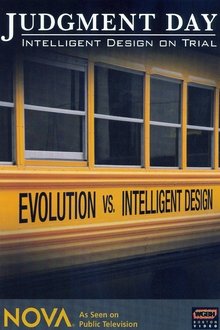
NOVA: Judgement Day - Intelligent Design on Trial (2007)
In this two-hour special, NOVA captures the turmoil that tore apart the community of Dover, Pennsylvania in one of the latest battles over teaching evolution in public schools. Featuring trial reenactments based on court transcripts and interviews with key participants, including expert scientists and Dover parents, teachers, and town officials, "Judgment Day: Intelligent Design on Trial" follows the celebrated federal case of Kitzmiller v. Dover School District.
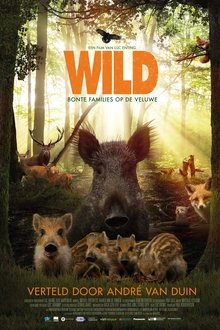
Wild (2018)
From the imposing mating call of the red deer and the flight of the buzzard to the hunt of the fox and the micro-ecosystem on a massive oak: nature documentarist Luc Enting recorded it all for his stunning feature film Wild Heart of Holland, produced by PVPictures. The result of his efforts is an exciting, moving and often humorous film, revealing the beauty and diversity of this wild park in every season. We also watch the main characters grow up to adulthood, a path inevitably dogged with challenges. Enting: “To me, this park, in any season, has an almost un-Dutch beauty. It is the largest continuous nature reserve in northwest Europe with an incredible variety of landscapes and life. It has forests, heath, sand drifts, brooks and pushed moraines. With my film, I would like to give a new insight into its incredibly diverse nature.”

IMAX: Sun 3D / Mars 3D (2007)
The universe, endless expanse. In this galactic double feature you will experience a breath-taking insight into our solar system. Up close, made for IMAX® Theaters and of course in 3D!
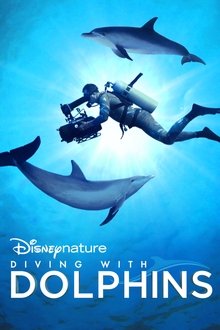
Diving with Dolphins (2020)
A chronicle of the making of Disneynature’s Dolphin Reef, the story of a young Pacific bottlenose dolphin named Echo. From wave surfing with dolphins in South Africa to dancing with humpback whales in Hawaii, filmmakers go to great lengths - and depths - to shed new light on the ocean’s mysteries.
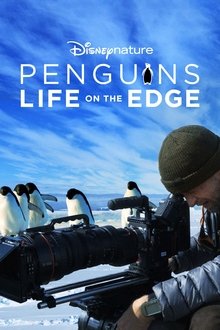
Penguins: Life on the Edge (2020)
A witty and tenacious team of filmmakers brave the Antarctic to film Disneynature's "Penguins."
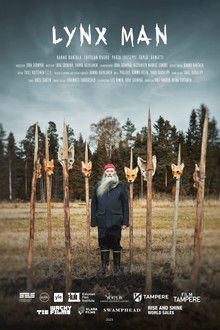
Lynx Man (2023)
A Finnish equivalent of Werner Herzog’s Grizzly Man, Hannu has a love and connection to nature that surpasses most. It is the rare lynx in particular that has bitten into Hannu’s heart – so much so that he actually claims to be able to speak its language. So when a dead lynx turns up in his forest, he dons an animal mask, crawls down on all fours and sniffs out the mystery through the mire and thicket. With hauntingly beautiful footage captured by hidden cameras throughout the forest, ‘Lynx Man’ paints a colourful and vivid twilight picture of the natural world around us – and of man’s impact on it. For no matter what Hannu does to live in harmony with the animals, he cannot hide from belonging himself to the species that is the lynx’s worst enemy. It makes sense that most of Juha Suonpää’s atmospheric film takes place in the twilight between dream and reality. Here, the vast forests come alive in Hannu’s hypnotic Night Vision footage of the nocturnal life of the lynx.
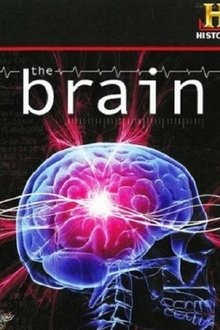
The Brain (2008)
THE BRAIN is an astonishing voyage of discovery into our last biological frontier. Although today s computers can make calculations in one-100th of a second and technology can transport us outside the bonds of Earth, only now are we beginning to understand the most complex machine in the universe. Using simple analogies, real-life case studies, and state-of-the-art CGI, this special shows how the brain works, explains the frequent battle between instinct and reason, and unravels the mysteries of memory and decision-making. It takes us inside the mind of a soldier under fire to see how decisions are made in extreme situations, examines how an autistic person like Rain Man develops remarkable skills, and takes on the age-old question of what makes one person good and another evil. Research is rushing forward. We’ve learned more about the workings of the brain in the last five years than in the previous one hundred.
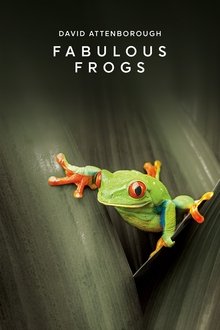
Fabulous Frogs (2014)
Sir David Attenborough takes us on a journey through the weird and wonderful world of frogs, shedding new light on these charismatic, colorful and frequently bizarre little animals through first-hand stories, the latest science, and cutting-edge technology. Frogs from around the world are used to demonstrate the wide variety of frog anatomy, appearance and behavior. Their amazing adaptations and survival techniques have made them the most successful of all amphibians.

Songs of Earth (2023)
With Olin's 85-year-old father as guide, we experience Norway's most adventurous valley, Oldedalen in Nordfjord. He grew up here, and here generations before him have lived in balance with nature.

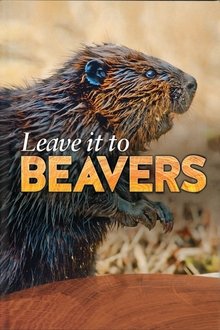
Leave it to Beavers (2014)
From PBS - The fascinating story of beavers in North America - their history, their near extinction, and their current comeback, as a growing number of scientists, conservationists and grass-roots environmentalists have come to regard beavers as overlooked tools when it comes to reversing the disastrous effects of global warming and world-wide water shortages. Once valued for their fur or hunted as pests, these industrious rodents are seen in a new light through the eyes of this novel assembly of beaver enthusiasts and "employers" who reveal the ways in which the presence of beavers can transform and revive landscapes. Using their skills as natural builders and brilliant hydro-engineers, beavers are being recruited to accomplish everything from re-establishing water sources in bone-dry deserts to supporting whole communities of wildlife drawn to the revitalizing aquatic ecosystems their ponds provide.