Compared to girls, research shows that boys in the United States are more likely to be diagnosed with a behaviour disorder, prescribed stimulant medications, fail out of school, binge drink, commit a violent crime, and/or take their own lives. The Mask You Live In asks: as a society, how are we failing our boys?
Related Movies

Whitewash (2016)
Whitewash is a poetic video that examines the little-known subject of slavery in Canada and its omission from the national narrative.
The Rape of Europa (2007)
World War II was not just the most destructive conflict in humanity, it was also the greatest theft in history: lives, families, communities, property, culture and heritage were all stolen. The story of Nazi Germany's plundering of Europe's great works of art during World War II and Allied efforts to minimize the damage.

Four Daughters (2023)
Between light and darkness stands Olfa, a Tunisian woman and the mother of four daughters. One day, her two older daughters disappear. To fill in their absence, the filmmaker Kaouther Ben Hania invites professional actresses and invents a unique cinema experience that will lift the veil on Olfa and her daughters' life stories. An intimate journey of hope, rebellion, violence, transmission and sisterhood that will question the very foundations of our societies.

Rabot (2017)
Rabot is one of the poorest neighborhoods in Gent. The documentary focusses on the last remaining members living in three tower blocks that are ready to be demolished. It’s a universal parabel about dreams, loneliness and our own indifference.
Cinétracts (1968)
A series of 43 documentary shorts, directed (without credit) by several famous French filmmakers and each running between two and four minutes. Each "tract" espouses a leftist political viewpoint through the filmed depiction of real-life events, including workers' strikes and the events of Paris in May '68.
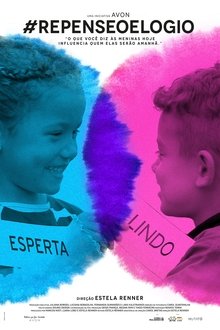
Repense o Elogio (2017)
A documentary that proposes a conversation about the way children are praised. While girls are often praised solely for their appearance, boys can receive compliments by highlighting their skills. "Rethink the Praise" reflects on the power of words and culture that has brought an imbalance in the way we commend our boys and girls.
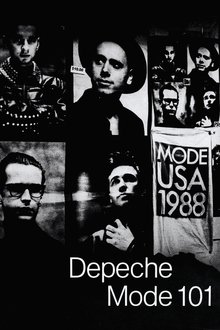
Depeche Mode 101 (1989)
A fascinating documentary focusing on backstage realities of art and business during the British synthesizer band's 1988 American tour.
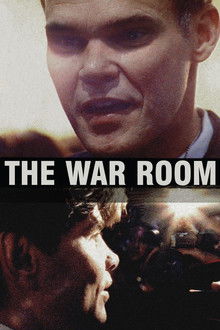
The War Room (1993)
A behind-the-scenes documentary about the Clinton for President campaign, focusing on the adventures of spin doctors James Carville and George Stephanopoulos.
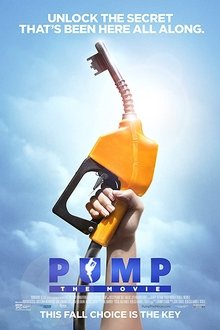
Pump (2014)
PUMP is a documentary that tells the story of America’s addiction to oil, from its corporate conspiracy beginnings to its current monopoly today, and explains clearly and simply how we can end it — and finally win choice at the pump. Today, oil is our only option for transportation-fuel at the pump. Our exclusive use of it has drained our wallets, increased air pollution and sent our sons and daughters to war in faraway lands. PUMP shows how, through the use of a variety of replacement fuels, we will be able to fill up our cars — cheaper, cleaner and American made — and in the process create more jobs for a stronger, healthier economy. Narrated by Jason Bateman and featuring notable experts such as John Hofmeister former President of Shell Oil, and Elon Musk, the CEO of Tesla Motors, PUMP will forever change the way you think about your car — and the fuel that powers it.

Violently in Love (2017)
Behind the closed doors of the Copenhagen-based women's shelter, the women and children are slowly recovering after having escaped domestic violence. Day by day the women are processing their traumas, building confidence and slowly understanding what it takes to break the cycle of violence.
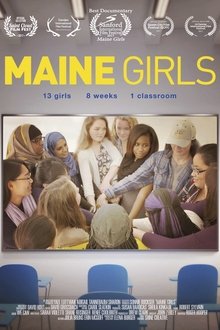
Maine Girls (2017)
With one million immigrants making their home in the U.S. annually, immigrant students are entering American public schools in record numbers. Welcome to South Portland, Maine explores a demographic shift through the lives of young women attending high school in what is considered the whitest state in America - Maine. The film's 14 teen protagonists-from Somalia, the Congo, Vietnam, Jamaica, and southern Maine-are enrolled in a hip hop, health and culture program during the most anti-immigrant period in recent U.S. history. The 2016 presidential race and recent terrorist attacks have fueled an atmosphere of mistrust, fear, and violence against recent immigrants. Viewers will watch as the girls relate to one another's hopes and fears, and manage to build trust as the charged events unfold around them.
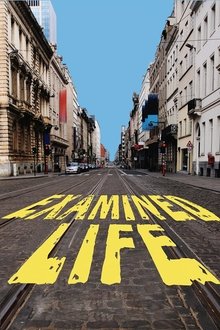
Examined Life (2008)
Examined Life pulls philosophy out of academic journals and classrooms, and puts it back on the streets. Offering privileged moments with great thinkers from fields ranging from moral philosophy to cultural theory, Examined Life reveals philosophy's power to transform the way we see the world around us and imagine our place in it.
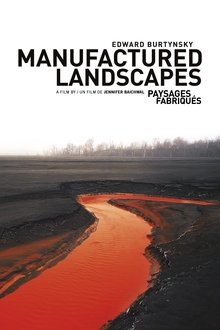
Manufactured Landscapes (2006)
MANUFACTURED LANDSCAPES is the striking new documentary on the world and work of renowned artist Edward Burtynsky. Internationally acclaimed for his large-scale photographs of “manufactured landscapes”—quarries, recycling yards, factories, mines and dams—Burtynsky creates stunningly beautiful art from civilization’s materials and debris.

Yulu (2011)
The film uses a documentary approach to tell the stories of 12 Chinese pioneers, chosen from the fields of business and the arts. The protagonists reflect upon their life journeys against the backdrop of modern China.

Kate and Anna McGarrigle (1981)
A short documentary about singers Kate and Anna McGarrigle made by animator Caroline Leaf.
Bellissime (2004)
Documentary consisting of archival footage that depicts the evolving conditions of Italian women during the first half of the 20th century.
Will Eisner: Profissão Cartunista (1999)
Documentary that explores the long and remarkable career of Will Eisner, a pioneering cartoonist whose work continues to have an impact on pop culture around the world. Includes interviews with Ann Eisner, Art Spiegelman, Bill Sienkiewicz, Denis Kitchen, Jerry Robinson, Angeli, Maurício de Souza, Ziraldo, Jano, François Schuiten and many other artists.
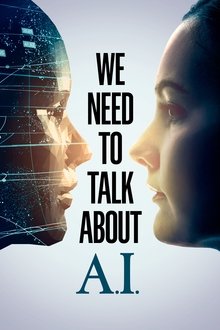
We Need to Talk About A.I. (2020)
Conflict between man and machine has been a science fiction staple for over a century. From 2001: A Space Odyssey to The Terminator the perceived threat posed by super-intelligent robots has been exploited by Hollywood for decades. But do advances in Artificial Intelligence mean we are now facing a future in which that threat could become a reality?