The Unknown Woman is a documentary film scripted and directed by Elina Kivihalme. It depicts the reality of Finnish agriculture and forestry during the war years, when the home front relied entirely upon the work and endurance of the women. All farm work, caring for the children, woodcutting and other forestry operations were undertaken by the civilians, as the men in their prime were on the front.
Related Movies

Garden Friends and Foes (1943)
How to distinguish and deal with various insects that destroy vegetables.
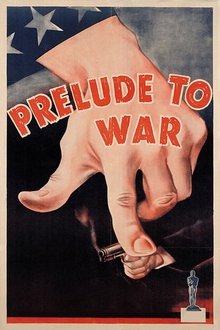
Why We Fight: Prelude to War (1942)
Prelude to War was the first film of Frank Capra's Why We Fight propaganda film series, commissioned by the Pentagon and George C. Marshall. It was made to convince American troops of the necessity of combating the Axis Powers during World War II. This film examines the differences between democratic and fascist states.
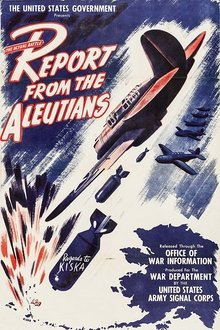
Report from the Aleutians (1943)
A documentary propaganda film produced by the U.S. Army Signal Corps about the Aleutian Islands Campaign during World War II. The film opens with a map showing the strategic importance of the island, and the thrust of the 1942 Japanese offensive into Midway and Dutch Harbor. Nominated for the Academy Award for Best Documentary Feature.
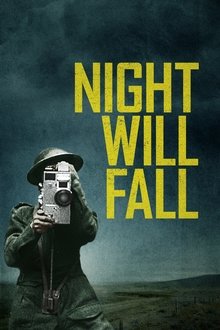
Night Will Fall (2014)
When Allied forces liberated the Nazi concentration camps in 1944-45, their terrible discoveries were recorded by army and newsreel cameramen, revealing for the first time the full horror of what had happened. Making use of British, Soviet and American footage, the Ministry of Information’s Sidney Bernstein (later founder of Granada Television) aimed to create a documentary that would provide lasting, undeniable evidence of the Nazis’ unspeakable crimes. He commissioned a wealth of British talent, including editor Stewart McAllister, writer and future cabinet minister Richard Crossman – and, as treatment advisor, his friend Alfred Hitchcock. Yet, despite initial support from the British and US Governments, the film was shelved, and only now, 70 years on, has it been restored and completed by Imperial War Museums under its original title "German Concentration Camps Factual Survey".
Obliging Collaborators (2014)
The code to unlocking this feature documentary is 1949, the year the director was born, and also the year of the return of Soviet repressions to Latvia. The film tells a very personal story against the background of less visited historic events – the death of director’s father due to the KGB repressions, which is closely linked to the devious game Soviet Latvia’s KGB played against Swedish-British-American spy agencies.
Wie konnte es geschehen? - Teil 1: "Deutschland erwache..." (1914 - 1938) (2006)
In 1945, 160 German cities lay in ruins and the loss of millions of lives, billions in material assets and countless cultural treasures was mourned throughout Europe... With the question “How could it happen?”, the film goes back to the year 1914, when the “primal catastrophe of the 20th century” took its course with the First World War.
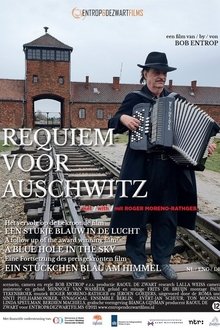
Requiem for Auschwitz - the film (2022)
13 years ago, director Bob Entrop made the film A piece of blue in the sky, the first film in the Netherlands that depicted the murder of almost 1 million Sinti and Roma during the Second World War. There is a taboo on what happened during the war, you don't talk about it with anyone and certainly not in front of a camera. Requiem for Auschwitz is a sequel, with the most valuable moments from the first film, supplemented with the grandchildren and the creation and performance of the 'Requiem for Auschwitz' by Sinti composer Roger Moreno Rathgeb by the Sinti and Roma Philharmonic from Frankfurt and a Jewish choir in the Berliner Dom in Berlin, during Holocaust Memorial Day. During his visit to Auschwitz in 2020 with four musicians from the Dutch Accompaniment Orchestra, Roger shows them the places that inspired him.
Peter Eisenman: Building Germany's Holocaust Memorial (2009)
This documentary explores the creation of the Holocaust Memorial in Berlin as designed by architect Peter Eisenman. Reaction of the German public to the completed memorial is also shown.
Grandmother Told Grandmother (2018)
The little-known story of Ukrainian children torn from their homes in the crush between the Nazi and Soviet fronts in World War II. Spending their childhood as refugees in Europe, these inspiring individuals later immigrated to the United States, creating new homes and communities through their grit, faith and deep belief in the importance of preserving culture.
Album(s) d'Auschwitz (2012)
Recently, two photo albums with photos from Auschwitz were found in 1944. One belongs to Officer Karl Höcker and the other prisoner Lili Jacob, who survived the concentration camp. The pictures taken during the same months show completely different worlds. A documentary that once again tells this important and awful part of Europe's history.
The Jack King Affair (2015)
England, 1940, during World War II. An MI5 officer, codenamed Jack King, infiltrates a network of conspirators, a British fifth column sympathetic to Nazi Germany, in order to control the organization and destroy it in the event of a German invasion. But who was he? A single person or several?
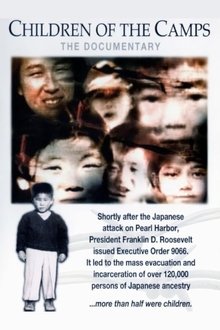
Children of the Camps (1999)
Documentary following six Americans of Japanese ancestry who were held in U.S. internment camps during World War II.
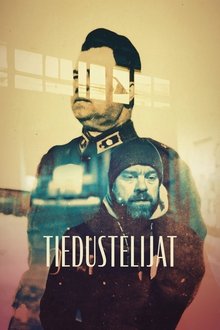
Spy from a Distance (2024)
The secret past of a World War II-era intelligence officer comes to light when his grandson, actor Joonas Saartamo, begins to investigate his grandfather's activities as the leader of a long-range reconnaissance patrol. Meeting various experts along the way, Saartamo discovers a new insight into the crucial role of long-range reconnaissance patrols in war. He also realizes how strongly the weight of his grandfather's war experiences has been passed down from generation to generation, affecting him directly.
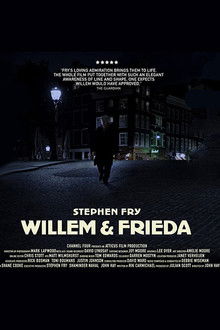
Willem and Frieda: Defying the Nazis (2023)
Willem was an artist who lived openly as a gay man at a time when few did. Frieda was a well-connected musician who became the first woman to lead an orchestra. We learn of their early lives and the selfless decisions that informed their devotion to the anti-Nazi cause, often at great personal risk. The gentle revelation of these extraordinary lives is gradually revealed through archive footage, skillfully combined with photographs and interviews with experts, journalists and family members.
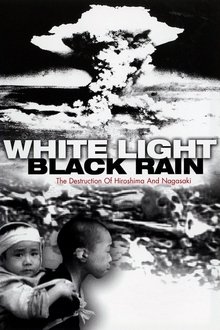
White Light/Black Rain: The Destruction of Hiroshima and Nagasaki (2007)
Steven Okazaki presents a deeply moving look at the painful legacy of the first -- and hopefully last -- uses of nuclear weapons in war. Featuring interviews with fourteen atomic bomb survivors - many who have never spoken publicly before - and four Americans intimately involved in the bombings, White Light/Black Rain provides a detailed exploration of the bombings and their aftermath.
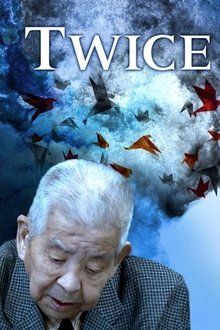
Twice: The Extraordinary Life of Tsutomu Yamaguchi (2010)
Tsutomu Yamaguchi is a hibakusha. A survivor of both atomic bomb blasts in 1945. First at Hiroshima, then again at Nagasaki. Now nearing 90, Yamaguchi finally speaks out. Breaking taboos of shame and sorrow, he responds to a call to fight for a world without nuclear weapons by telling his story, so that no one else will ever have to tell one like it again. Twice reconstructs Yamaguchi’s experiences in 1945 Japan, interviews him on the after-effects of exposure and documents the last five years of the late-blooming activist’s life.
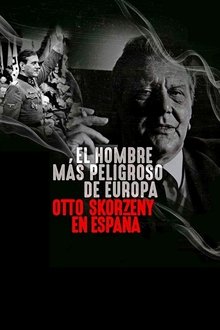
The Most Dangerous Man in Europe: Otto Skorzeny's After War (2020)
Waffen-SS officer Otto Skorzeny (1908-75) became famous for his participation in daring military actions during World War II. In 1947 he was judged and imprisoned, but he escaped less than a year later and found a safe haven in Spain, ruled with an iron hand by General Francisco Franco. What did he do during the many years he spent there?