The true story of Helen Keller and Annie Sullivan, a gripping battle to overcome impossible obstacles and the struggle to communicate. As a young girl, Helen Keller is stricken with scarlet fever. The illness leaves her blind, mute, and deaf. Sealed off from the world, Helen cannot communicate with anyone, nor anyone with her. Often frustrated and desperate, Helen flies into uncontrollable rages and tantrums that terrify her hopeless family. The gifted teacher Annie Sullivan is summoned by the family to help the girl understand the world from which she is isolated, freeing Helen Keller from her internal prison forever. Television remake of the 1962 film which also starred Patty Duke in the role of Helen Keller.
Related Movies
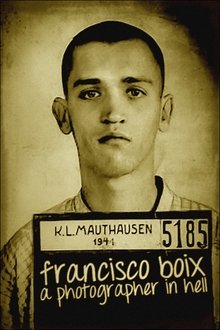
Francisco Boix: A Photographer in Hell (2000)
In 1939, just finished the Spanish Civil War, Spanish republican photographer Francesc Boix escapes from Spain; but is captured by the Nazis in 1940 and imprisoned in the Mauthausen concentration camp, in Austria, a year later. There, he works as a prisoner in the SS Photographic Service, hiding, between 1943 and 1945, around 20,000 negatives that later will be presented as evidence during several trials conducted against Nazi war criminals after World War II.
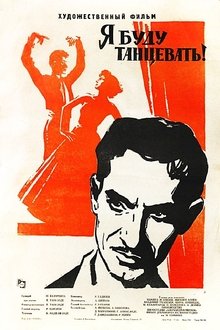
The Labour and Rose (1963)
The film is about famous Chechen ballet and folk dancer Mahmud Essembayev's life.

Are You Awake? (2025)
After seeking transcendence through shamanic rituals, Ana’s life is transformed overnight by an unexpected turn toward faith.

Enrico Piaggio: Vespa (2019)
It is 1945. Enrico Piaggio’s Pontedera factory is in ruins and the 12,000 people who worked there are condemned to unemployment and misery. Piaggio feels the enormous responsibility resting on his shoulders: the lives of so many families depend on his ability to create new jobs. A project is born in the mind of the entrepreneur: a small, robust, agile and affordable means of transport, capable of relaunching mobility, giving impetus to the recovery of the country’s economic and civil life. To make this dream come true, Piaggio turns to engineer Corradino D’Ascanio, a brilliant designer who uses the experience gained in the field of aeronautics to create the scooter that remains today the symbol of Italian creativity and design: the Vespa!
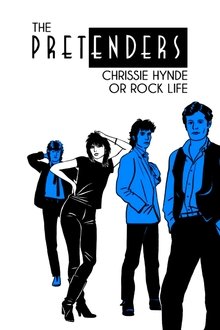
The Pretenders: Chrissie Hynde or Rock Life (2023)
A journey through the artistic life of the British-American rock band The Pretenders, formed in 1978, and a portrait of its leader, the charismatic singer and songwriter Chrissie Hynde.

Veneer (2021)
Middle aged sisters Mimi and Martha still live together. In fact, Martha still cooks, cleans and oversees Mimi’s life, afraid that her deaf sister cannot cope on her own. Mimi, in turn, hides behind a veneer of make-up and wigs to avoid confronting her non-starter life. But everything is not what it seems...

About Us But Not About Us (2023)
A literature professor meets his student at a restaurant and, over the course of one meal, secrets and lies will be unearthed and the sinister connection to a tragedy will be revealed.

Reagan (2024)
Told through the voice of former KGB agent Viktor Petrovich, whose life becomes inextricably linked with Ronald Reagan's when Reagan first caught the Soviets’ attention as an actor in Hollywood, Reagan overcomes the odds to become the 40th president of the United States.

Jim Morrison: The End (2021)
Paris, Rue Beautreillis, July 3, 1971. The corpse of rock star Jim Morrison is found in a bathtub, in the apartment of his girlfriend Pamela Courson. The chronicle of the last months of the life of the poet, singer and charismatic leader of the American band The Doors, one of the most influential in the history of rock.
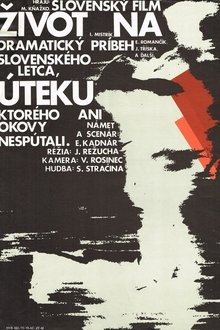
Život na úteku (1976)
In Slovakia, they often and gladly honored those soldiers who refused to serve the fascist regime and stood against it. Lieutenant Kukorelli also rejected the tempting career of a pilot, instead helping the resistance fighters and later participating in the Slovak National Uprising.

Makan (2023)
This is the story of many of us. Those who left their country, their families, their languages. For a new life, perhaps a better one. This is the story of my mother, who left everything to join her husband in France. To (re)build a family life, without knowing what awaited her: loneliness, a feeling of strangeness and the difficulty of expressing herself in a language she does not speak. I, Ghanwa, her daughter, slipped into my mother's shoes to tell her story.
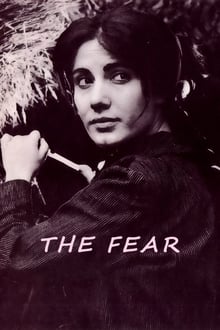
The Fear (1966)
In this disturbing family drama, a prosperous middle-aged farmer takes up gambling and whoring at the expense of his devoted second wife. Meanwhile, his son the pervert becomes fascinated with the family's maid, a deaf-mute.

Tears of Neon (NaN)
At the age of five, Chris, a young village boy meets his mother, Czesława, who is at the cusp of conquering entertainment industry by adopting a new persona - Violetta Villas. An unbelievably talented, ambitious mother and a sensitive child go on a decades long journey through Warsaw, Paris and Las Vegas.

Menendez: Blood Brothers (2017)
Lyle and Eric Menendez were nice, educated boys from Beverly Hills, which makes the murder of their parents even more inexplicable. Never-before-seen details emerge in this investigation into their lives.
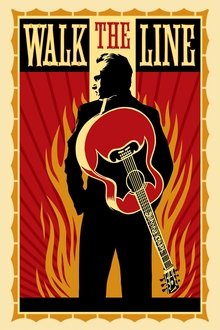
Walk the Line (2005)
A chronicle of country music legend Johnny Cash's life, from his early days on an Arkansas cotton farm to his rise to fame with Sun Records in Memphis, where he recorded alongside Elvis Presley, Jerry Lee Lewis and Carl Perkins.

Mahanati (2018)
Mahanati depicts the life and career of one of Telugu cinema's greatest and most iconic starlets, the first Indian female super star, Savitri.

Captain (2018)
V P Sathyan was a legendary footballer who played for the national team. But lack of recognition and depression forced him to take his own life. Captain is a biopic on the life of V P Sathyan.
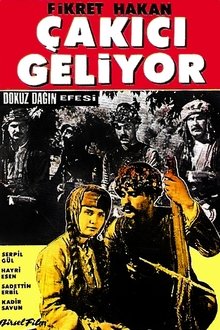
Dokuz Dağın Efesi: Çakıcı Geliyor (1958)
The film traces the life of Çakırcalı Mehmet Efe, a Zeybek (active as an outlaw in the region enclosing İzmir, Aydın, Denizli, Muğla and Antalya in modern western Turkey, from 1893 to 1910) whose father, Çakırcalı Koca Ahmet Efe was murdered by an Ottoman sergeant.