Until recently geometry was 'cold', incapable of describing the irregular shape of a cloud, the slope of a mountain or the beauty of the human body. With fractal geometry, Benoit Mandelbrot gave us a language for our natural world. In this captivating documentary, the man himself explains this groundbreaking discovery.
Related Movies
The Genius of George Boole (2015)
Narrated by Oscar-winning actor Jeremy Irons, The Genius of George Boole assembles academics and industry leaders from across the globe to explore the life and importance of one of the world’s greatest unsung heroes.
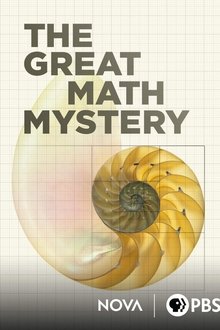
NOVA: The Great Math Mystery (2015)
NOVA leads viewers on a mathematical mystery tour -- a provocative exploration of math's astonishing power across the centuries. We discover math's signature in the swirl of a nautilus shell, the whirlpool of a galaxy and the spiral in the center of a sunflower. Math was essential to everything from the first wireless radio transmissions to the prediction and discovery of the Higgs boson and the successful landing of rovers on Mars. But where does math get its power? Astrophysicist and writer Mario Livio, along with a colorful cast of mathematicians, physicists and engineers, follows math from Pythagoras to Einstein and beyond, all leading to the ultimate riddle: Is math an invention or a discovery? Humankind's clever trick or the language of the universe?
The Story of 1 (2005)
A humor-inflected history of the of the number one, covering military applications in ancient Rome, the measurement of distances in India, and the decimal system created by Leibnitz.
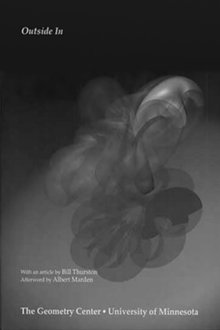
Outside In (1994)
The computer animation Outside In explains the amazing discovery, made by Steve Smale in 1957, that a sphere can be turned inside out by means of smooth motions and self-intersections. Through a combination of dialogue and exposition accessible to anyone who has some interest in mathematics, Outside In builds up to the grand finale: Bill Thurston's "corrugations" method of turning the sphere inside out.
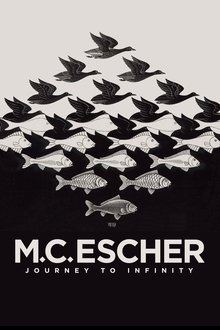
M. C. Escher: Journey to Infinity (2018)
A portrait of the visionary Dutch artist M. C. Escher (1898-1972), according to his own words, taken from his diary, his correspondence and the texts of his lectures.

Defeating the Hackers (2013)
Exploring the murky and fast-paced world of the hackers out to steal money and identities and wreak havoc with people's online lives, and the scientists who are joining forces to help defeat them.

Eliyahu Rips: The Burning (2016)
In April 1969 Ilya (Eliyahu) Rips, then a young student of mathematics, tried to burn himself in a public square in Riga, Latvia protesting against the Soviet invasion of Czechoslovakia. He was stopped and eventually sent to a psychiatric hospital for two years. Thanks to international pressure from the mathematical community in 1972 he was allowed to emigrate to Israel. Now he is considered one of the most brilliant mathematicians in the world. At the same time, for most people familiar with his name, Rips is first of all associated with the development of the so called Bible Code – a mathematical program allegedly helping to decipher hidden messages encoded in Torah – the Five Books of Moses. He is attacked by both the scientific and religious community, yet his research continues.
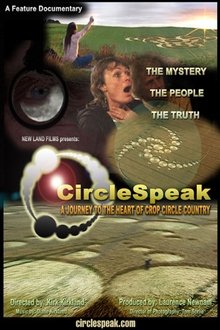
CircleSpeak (2005)
Shot in Southern England over the course of six weeks by a crew of three American filmmakers, CircleSpeak offers a nuanced look at the passions and beliefs of the people immersed in the crop circle phenomenon during the season of 2001. This feature-length documentary presents interviews with serious “researchers”, self-proclaimed “hoaxers”, local farmers and villagers who are all, in one way or another, involved in this strange and compelling summer spectacle taking place year after year.
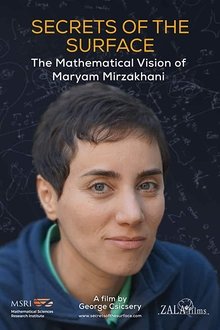
Secrets of the Surface: The Mathematical Vision of Maryam Mirzakhani (2020)
Filmed in Canada, Iran, and the United States, Secrets of the Surface: The Mathematical Vision of Maryam Mirzakhani examines the life and mathematical work of Maryam Mirzakhani, an Iranian immigrant to the United States who became a superstar in her field. In 2014, she was both the first woman and the first Iranian to be honored by mathematics' highest prize, the Fields Medal. Mirzakhani's contributions are explained by leading mathematicians and illustrated by animated sequences. Her mathematical colleagues from around the world, as well as former teachers, classmates, and students in Iran today, convey the deep impact of her achievements. The path of her education, success on Iran's Math Olympiad team, and her brilliant work, make Mirzakhani an ideal role model for girls looking toward careers in science and mathematics. Written by George Csicsery

Counting from Infinity: Yitang Zhang and the Twin Prime Conjecture (2015)
In April 2013, a lecturer at the University of New Hampshire submitted a paper to the Annals of Mathematics. Within weeks word spread: a little-known mathematician, with no permanent job, working in complete isolation, had made an important breakthrough toward solving the Twin Prime Conjecture. Yitang Zhang's techniques for bounding the gaps between primes soon led to rapid progress by the Polymath Group, and a further innovation by James Maynard.
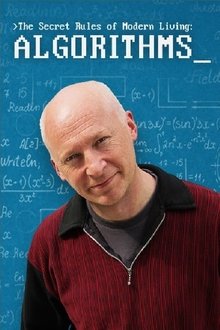
The Secret Rules of Modern Living: Algorithms (2015)
Without us noticing, modern life has been taken over. Algorithms run everything from search engines on the internet to satnavs and credit card data security - they even help us travel the world, find love and save lives. Mathematician Professor Marcus du Sautoy demystifies the hidden world of algorithms. By showing us some of the algorithms most essential to our lives, he reveals where these 2,000-year-old problem solvers came from, how they work, what they have achieved and how they are now so advanced they can even programme themselves.
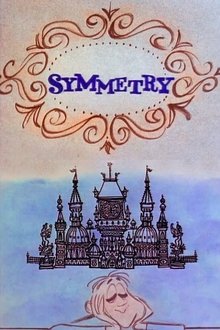
Symmetry (1961)
Symmetry is one of five shorts featured in the film "Mathematical Peep Shows." The collection was made by Charles and Ray Eames for the IBM Mathematica Exhibit which opened in 1961. The degree to which an object is symmetrical is illustrated by the number of different positions in which it can fit into a box of its shape.
beweistheorie I (2016)
A video puzzle using mathematical principles and prime numbers, daring the audience to decode it's journey.
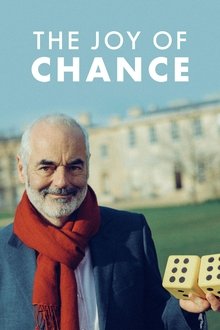
The Joy of Chance (2012)
How can you maximize your chances of living until you’re 100? Why do many of us experience spooky coincidences? Should I take an umbrella? Professor David Spiegelhalter tries to pin down what chance is as he explores the mysteries of probability. In this compelling, funny BBC science documentary he tells the story of how we discovered the way chance works. But can we ever make chance work for us?
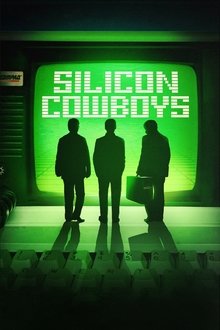
Silicon Cowboys (2016)
Launched in 1982 by three friends in a Houston diner, Compaq Computer set out to build a portable PC to take on IBM, the world’s most powerful tech company. Many had tried cloning the industry leader’s code, only to be trounced by IBM and its high-priced lawyers. Explore the remarkable David vs. Goliath story, and eventual demise, of Compaq, an unlikely upstart who altered the future of computing and helped shape the world as we know it today.

The Joy of Winning (2018)
How to have a happier life and a better world all thanks to maths, in this witty, mind-expanding guide to the science of success with Hannah Fry. Following in the footsteps of BBC Four's award-winning maths films The Joy of Stats and The Joy of Data, this latest gleefully nerdy adventure sees mathematician Dr Hannah Fry unlock the essential strategies you'll need to get what you want - to win - more of the time. From how to bag a bargain dinner to how best to stop the kids arguing on a long car journey, maths can give you a winning strategy. And the same rules apply to the world's biggest problems - whether it's avoiding nuclear annihilation or tackling climate change.
A Trip to Infinity (2022)
Does infinity exist? Can we experience the Infinite? In an animated film (created by artists from 10 countries) the world's most cutting-edge scientists and mathematicians go in search of the infinite and its mind-bending implications for the universe. Eminent mathematicians, particle physicists and cosmologists dive into infinity and its mind-bending implications for the universe.
The Standard Deviants: The Candy-Coated World of Calculus, Part 2 (1998)
Revised 1998 version. When you're ready to tackle advanced calculus, The Standard Deviants are ready to help! Part 2 covers applications of the derivative, antiderivatives and the definite integral. By combining a relaxed and enjoyable format with computer graphics and animation, the Standard Deviants enhance understanding and increase retention of difficult subjects. The key to a better grade in calculus is only a play button away.
The Standard Deviants: The Candy-Coated World of Calculus, Part 1 (1998)
Revised 1998 version. Beginning with a review of functions and graphing, Part 1 jumps into the world of calculus by covering limits, vertical and horizontal asymptote, slopes and derivatives. The Standard Deviants take students by the hand and walk them through the most difficult topics with a relaxed and approachable format, step-by-step illustrations and plenty of examples.