Related Movies
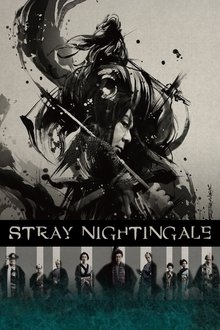
Stray Nightingale (2017)
Japan, 1785. Jūzaburō, a famous thief who refuses to kill innocent people, is betrayed, ambushed, and left for dead.
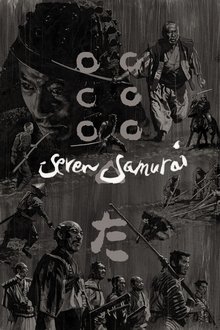
Seven Samurai (1954)
A samurai answers a village's request for protection after he falls on hard times. The town needs protection from bandits, so the samurai gathers six others to help him teach the people how to defend themselves, and the villagers provide the soldiers with food.
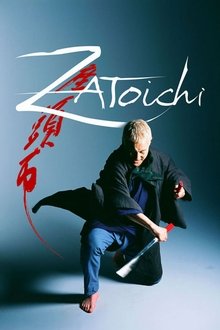
Zatoichi (2003)
Blind traveler Zatoichi is a master swordsman and a masseur with a fondness for gambling on dice games. When he arrives in a village torn apart by warring gangs, he sets out to protect the townspeople.
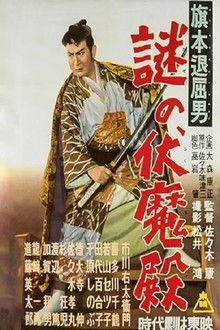
Bored Hatamoto: The Mysterious Demon Palace (1955)
In Kyoto, a samurai named Boredom Otoko, Saotome Mondonosuke , appears and helps a woman being chased by a spy named Genshichi. Unfortunately, the woman is shot and killed. Later, Genshichi explains that the woman was a member of a band of thieves, and because she was let go once, the police officer, Genjuro Mazaki, was demoted to a desk job. Consumed by guilt, Boredom Otoko...
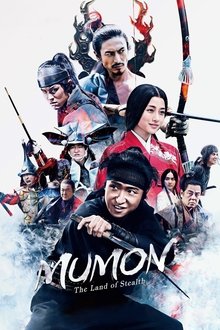
Mumon: The Land of Stealth (2017)
Raised suckling poison arrows among the sparring Iga ninja factions, Mumon is a carefree 16th-century mercenary. When the ninja council makes a power play to defeat the young Nobukatsu Oda struggling to step into his father’s warlord shoes as they expand rule across the country, Mumon jumps into the fray to satisfy his new bride Okuni’s demand that he make good on his promises of wealth. Yet Mumon soon finds what is worth fighting for beyond money or nation.
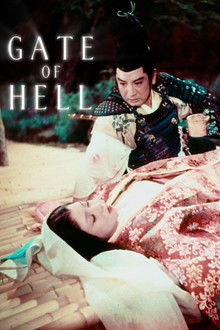
Gate of Hell (1953)
Japan, 1159. Moritō, a brave samurai, performs a heroic act by rescuing the lovely Kesa during a violent uprising. Moritō falls in love with her, but becomes distraught when he finds out that she is married.
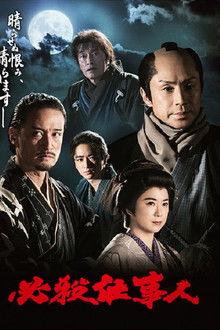
Deadly Professional 2023 (2023)
An epidemic is spreading through the towns of Edo – it spreads via people, and if you get the fever, your face will turn red like a demon, and then you will die. There is no cure in sight, and people’s anxiety is increasing.
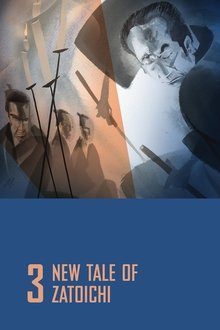
New Tale of Zatoichi (1963)
Wishing to find peace, Zatoichi travels to his old village but only finds trouble when he ends up in a love triangle and finds old scores have followed him home.
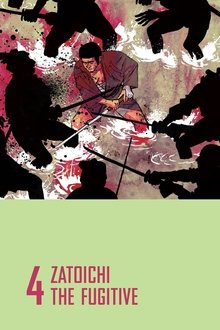
Zatoichi the Fugitive (1963)
After arriving in the town of Shimonita, Ichi finds that a price has been put on his head by a local yakuza boss. He's drawn into a trap, but after hearing of the slaying of a former love, Ichi furiously fights his way through the entire clan to face the killer, a hired ronin.
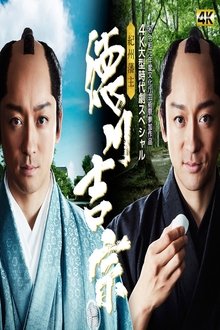
Kishu Hanshu Yoshimune (2019)
Before Tokugawa Yoshimune, known as the "Ravage Shogun", was the lord of the Kishu domain, before he became the shogun! Yoshimune hides his identity and begins an investigation in the city of Edo in order to find out who he really is. As he grows up, he ends up throwing himself into a turmoil involving the shogunate... This is an entertainment historical drama in which a young 21-year-old named Yoshimune solves the problems of the common people in the city and goes around dealing with merchants and powerful people plotting evil deeds.
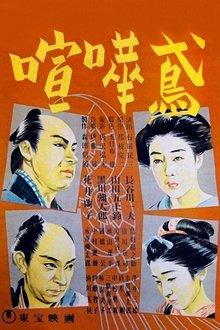
The Fighting Firemen (1939)
Kichigoro, a firefighter from the Maeda family of the Kaga Principality, rescues Oshimo, the younger sister of Jirokichi, a city firefighter from the Ha-gumi group, from a samurai who is trying to kidnap her. Oshimo has feelings for Kichigoro. At this moment, a fire warning bell sounds in the city...
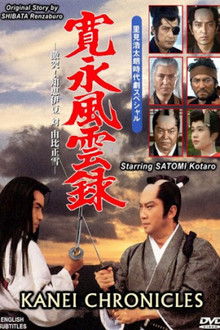
Kanei Chronicles (1991)
From all over Japan, the greatest warriors: Yagyu Jubei, Miyamoto Musashi, Araki Mataemon, and more came to test their blades in a tournament of swords. But behind the match a bloodthirsty plot is born. Tokugawa Yorinobu, a corrupt shogunate official plans to assassinate Shogun Iemitsu and take his place. With scheming samurai Yui Shosetsu and ruthless Negoro ninja leader Genyusai, he plans to incite a ronin uprising and cut a bloody trail across Japan, with terrifying Chinese gunboats to back his play. Matsudaira Izu-no-kami, councilor and friend to the shogun, along with master swordsman Yagyu Jubei and ninja master Hanzo Hattori must stop Yui Shosetsu and his army of ronin and ninja assassins from tearing the country in half and taking over the government!
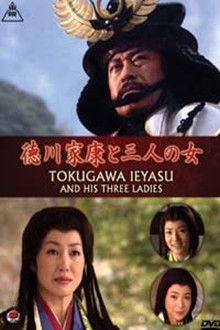
Tokugawa Ieyasu and his Three Ladies (2008)
With a mixture of drama, warlords, battles, love, tragedy all set with great music, this made for television movie has it all. Showing the rise of Tokugawa Ieyasu as portrayed by Matsudaira Ken (Abarenbo Shogun) this stunning portrait of an exciting era shows how the influence of three women played a pivotal role in the formation of the Tokugawa Shogunate. Brilliant performances by Nakamura Atsuo (Cold Wind Monjiro) and Nakamura Tamao (widow of Katsu Shintaro) highlight this production as such notables as Oda Nobunaga, Toyotami Hideyoshi, Lady Sena, Princess Asahi, and Lady Yodo jump from the pages of history all leading up to the Battle of Sekigahara that would change Japan forever!

Taboo (1999)
Set during Japan's Shogun era, this film looks at life in a samurai compound where young warriors are trained in swordfighting. A number of interpersonal conflicts are brewing in the training room, all centering around a handsome young samurai named Sozaburo Kano. The school's stern master can choose to intervene, or to let Kano decide his own path.
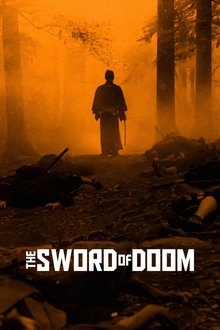
The Sword of Doom (1966)
Ryunosuke, a gifted swordsman plying his trade during the turbulent final days of Shogunate rule, has no moral code and kills without remorse. It’s a way of life that leads to madness.

Hana (2006)
In a poor district of Edo lives a young samurai named Soza. He has been sent by his clan to avenge the death of his father. He isn't an accomplished swordsman however, and he prefers sharing the life of the residents, teaching the kids how to write etc. When he finally finds the man he is looking for, he will have to decide whether he follows the way of the samurai or chooses peace and reconciliation.
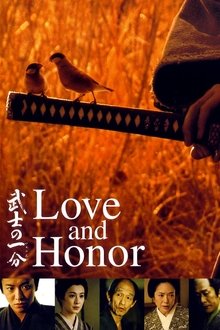
Love and Honor (2006)
A look at the relationship between a young blind samurai and his wife, who will make a sacrifice in order to defend her husband's honor.
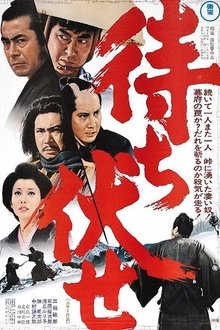
Incident at Blood Pass (1970)
In the Edo period, a nameless ronin accepts an assignment to go to a mountain pass and wait. Near the pass he stops at an inn where a collection of characters gather, including a gang set on stealing shogunate gold that's soon to come over the pass. When the Ronin's assignment becomes clear, to help the gang, he's ordered to kill the inn's residents, including a woman he's rescued from an abusive husband. He's reluctant to murder innocent people; then he learns that the gold shipment is a trap and he's part of a double cross. How he sorts through these divided loyalties tests of his samurai honor, and perhaps of his love for a woman.

ICHI (2008)
Ichi is a blind entertainer that travels the countryside with her traditional Japanese guitar and walking stick. She’s in search for the kind man that brought her up as a child, but because of her beauty she encounters problems every step of the way. Fortunately for Ichi, she is also a gifted swordswoman and carries a lethal blade within her walking stick.