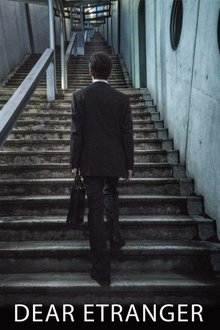
In the early 1200s, Dogen brought Chinese Zen philosophy to Japan, and established the Japanese Zen school of Buddhism. He taught that a person was capable of realizing Buddhahood within himself, by way of Zazen. Zazen is extended hours of sitting and meditating to achieve a state of “Mu” (nothingness, or empty existence).
Related Movies
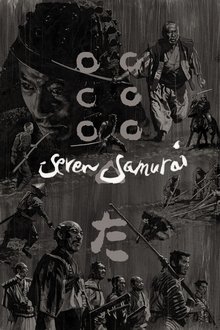
Seven Samurai (1954)
A samurai answers a village's request for protection after he falls on hard times. The town needs protection from bandits, so the samurai gathers six others to help him teach the people how to defend themselves, and the villagers provide the soldiers with food.
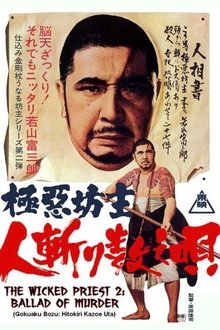
Wicked Priest 2: Ballad of Murder (1968)
The long awaited second film in the Wicked Priest series is a masterpiece of sword swinging fury as Shinkai is asked by a man on the run to bring his young son to live with his grandfather, the master of a ju-jitsu dojo during the Taisho period of the early 20th century. Shinkai then runs afoul of a gangster group using strong-arm tactics to take over the profits from local gambling. When he proves to be more than they can handle, they hire the one man who has the ability to kill Shinkai and exact revenge, Ryotatsu, the karate priest whom Shinkai blinded in the first film. This ultra-violent entry has long been considered the best movie in the series and never made its way to home video before. See a spectacular display of Wakayama Tomisaburo’s martial art expertise in this action packed film. The Holy Grail of sword movies has arrived at last! /Winterheart of CG
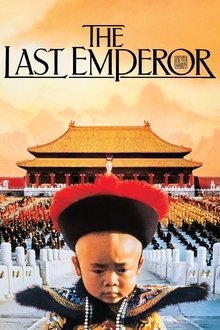
The Last Emperor (1987)
A dramatic history of Pu Yi, the last of the Emperors of China, from his lofty birth and brief reign in the Forbidden City, the object of worship by half a billion people; through his abdication, his decline and dissolute lifestyle; his exploitation by the invading Japanese, and finally to his obscure existence as just another peasant worker in the People's Republic.
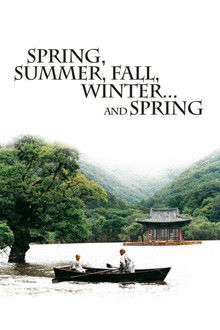
Spring, Summer, Fall, Winter... and Spring (2003)
An isolated lake, where an old monk lives in a small floating temple. The monk has a young boy living with him, learning to become a monk. We watch as seasons and years pass by.
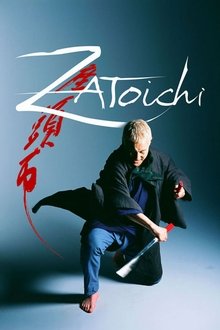
Zatoichi (2003)
Blind traveler Zatoichi is a master swordsman and a masseur with a fondness for gambling on dice games. When he arrives in a village torn apart by warring gangs, he sets out to protect the townspeople.
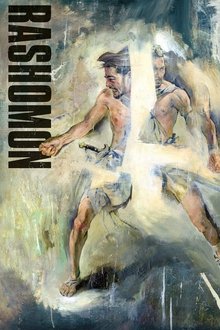
Rashomon (1950)
Four people recount different versions of the story of a man's murder and the rape of his wife.

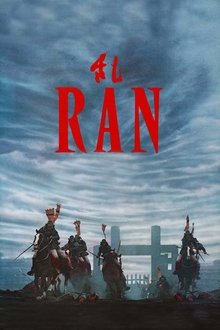
Ran (1985)
Shakespeare's King Lear is reimagined as a singular historical epic set in sixteenth-century Japan where an aging warlord divides his kingdom between his three sons.

The Blood of Wolves (2018)
Set in 1988 in Hiroshima, Japan, prior to the enactment of the anti-organized crime law. A rumor exists that Detective Shogo Ogami has ties with the yakuza. He is partnered with Detective Shuichi Hioka and they investigate a missing person case involving a financial company employee. Conflicts between opposing yakuza groups become more serious.

Antarctica (1983)
Two Japanese scientists, Ushioda and Ochi, develop a bond with their sled dogs while on an expedition in Antarctica.
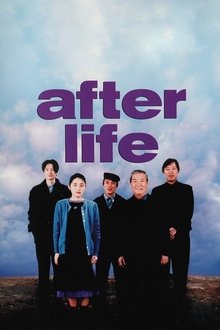
After Life (1999)
On a cold Monday morning, a group of counselors clock in at an old-fashioned social services office. Their task is to interview the recently deceased, record their personal details, then, over the course of the week, assist them in choosing a single memory to keep for eternity.

Parasyte: Part 1 (2014)
Humanity is suffering from a series of mysterious murders across the globe, known as the 'Mincemeat murders'. High school student Izumi Shinichi has a parasite living off him, having replaced his right hand, and he might be the discoverer of truth.
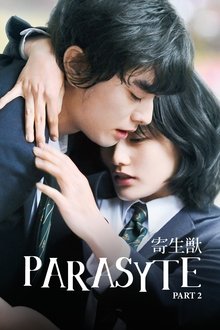
Parasyte: Part 2 (2015)
Humanity is under attack by human-mimicking flesh-eating alien parasites. One parasite bonds with his young high school student host, and he convinces the parasite to help him stop the others.
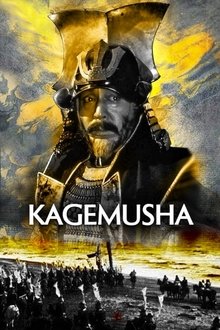
Kagemusha (1980)
Akira Kurosawa's lauded feudal epic presents the tale of a petty thief who is recruited to impersonate Shingen, an aging warlord, in order to avoid attacks by competing clans. When Shingen dies, his generals reluctantly agree to have the impostor take over as the powerful ruler. He soon begins to appreciate life as Shingen, but his commitment to the role is tested when he must lead his troops into battle against the forces of a rival warlord.

Harakiri (1962)
Down-on-his-luck veteran Tsugumo Hanshirō enters the courtyard of the prosperous House of Iyi. Unemployed, and with no family, he hopes to find a place to commit seppuku—and a worthy second to deliver the coup de grâce in his suicide ritual. The senior counselor for the Iyi clan questions the ronin’s resolve and integrity, suspecting Hanshirō of seeking charity rather than an honorable end. What follows is a pair of interlocking stories which lay bare the difference between honor and respect, and promises to examine the legendary foundations of the Samurai code.

Marketa Lazarová (1967)
Mikolás and his brother Adam end up with a young German hostage of noble blood during a robbery. While their clan prepares for the wrath of the German king, Mikolás is sent to pressure his neighbor Lazar into a defense pact. Persuasion fails and he abducts Lazar's daughter Marketa on the eve of her initiation as a nun in an act of vengeance.

The Valley of the Bees (1968)
Cast out by his father, young Ondrej joins the Order of the Teutonic Knights, where he is raised by strict monk Armin. After years of hardship, Ondrej escapes from the Order when he is wrongly punished, and sets out for his former home. Arriving to discover his father to be dead, Ondrej now not only assumes control of his father's properties, but seeks to marry his former stepmother.

Baby Assassins: 2 Babies (2023)
Chisato and Mahiro must pay four years of overdue fees or lose their membership in their assassin guild. They take part-time jobs, but find themselves in the middle of an armed robbery and being hunted by other assassins.