A film about modern Japanese architecture, its roots in the Japanese tradition and its impact on the Nordic building-tradition. Winding its way through visions of the future, traditions, nature, concrete, gardens and high-tech, KOCHUU tells us how contemporary Japanese architects strive to unite the ways of modern man with the old philosophies in astounding constructions. Interviews with, and works by, Japanese architects Tadad Ando, Kisho Kurokawa, Toyo Ito and Kazuo Shinohara and Scandinavian architects Sverre Fehn, Kristian Gullichsen and Juhani Pallasmaa.
Related Movies
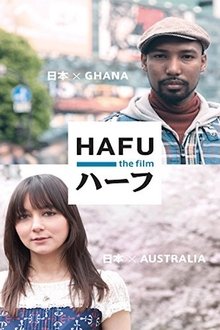
Hafu (2013)
A journey into the intricacies of mixed-race Japanese and their multicultural experiences in modern day Japan. For some hafus, Japan is the only home they know, for some living in Japan is an entirely new experience, and the others are caught somewhere between two different worlds.
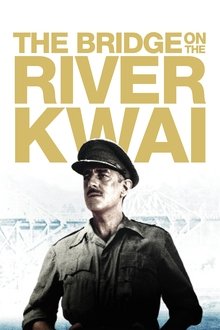
The Bridge on the River Kwai (1957)
The classic story of English POWs in Burma forced to build a bridge to aid the war effort of their Japanese captors. British and American intelligence officers conspire to blow up the structure, but Col. Nicholson, the commander who supervised the bridge's construction, has acquired a sense of pride in his creation and tries to foil their plans.
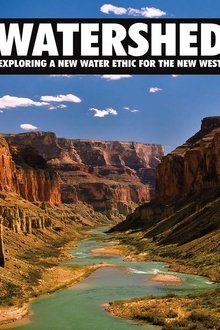
Watershed: Exploring a New Water Ethic for the New West (2012)
As the most dammed, dibbed, and diverted river in the world struggles to support thirty million people and the peace-keeping agreement known as the Colorado River Pact reaches its limits, WATERSHED introduces hope. Can we meet the needs of a growing population in the face of rising temperatures and lower rainfall in an already arid land? Can we find harmony amongst the competing interests of cities, agriculture, industry, recreation, wildlife, and indigenous communities with rights to the water? Sweeping through seven U.S. and two Mexican states, the Colorado River is a lifeline to expanding populations and booming urban centers that demand water for drinking, sanitation and energy generation. And with 70% of the rivers’ water supporting agriculture, the river already runs dry before it reaches its natural end at the Gulf of California. Unless action is taken, the river will continue its retreat – a potentially catastrophic scenario for the millions who depend on it.
The Japanese Version (1991)
How the Japanese process American pop culture and make it their own -- a mind-bending odyssey through cultural mixing.

Big Cats: Fast and Dangerous (2012)
The vast savannah of the Serengeti. A large part of the genus Panthera lives here. Better known as the "actual big cat". They are among the largest cat species on earth. Among them is the lion, the true predator beneath the vast African sky. 'The King of Africa', male specimens of which weigh up to 270 kg, captured in breathtaking images that show the fascinating world of the big cats. Funny, tragic and spectacular recordings also document the fastest animal in the world, the cheetah, follow leopards on your trail and experience the first days of a black panther.

Siberian Apocalypse (2006)
This astounding documentary delves into the mysteries of the Tunguska event – one of the largest cosmic disasters in the history of civilisation. At 7.15 am, on 30th June 1908, a giant fireball, as bright the sun, exploded in the sky over Tunguska in central Siberia. Its force was equivalent to twenty million tonnes of TNT, and a thousand times greater than that of the atomic bomb dropped on Hiroshima in 1945. An estimated sixty million trees were felled over an area of over two thousand square kilometres - an area over half the size of Rhode Island. If the explosion had occurred over London or Paris, hundreds of thousands of people would have been killed.

Matsuko in Real Life (2025)
Matsuko Deluxe explores the seemingly familiar yet overlooked facets of Japanese culture through real-life experiences.
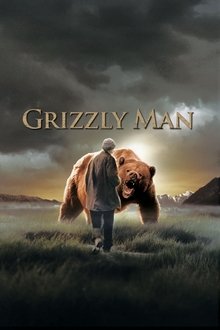
Grizzly Man (2005)
Follows the story of "Grizzly Man" Timothy Treadwell and what the thirteen summers in a National Park in Alaska were like in his attempt to protect the grizzly bears. The film is full of unique images and a look into the spirit of a man who sacrificed himself for nature.
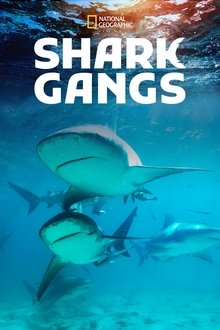
Shark Gangs (2021)
Scientists have discovered and investigate the reason behind the behavior of sharks swimming around in gangs even though they are viewed as solitary predators.
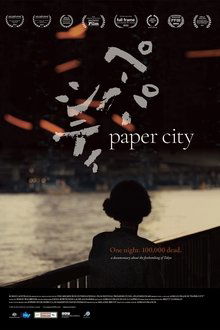
Paper City (2021)
Just after midnight on 10 March 1945, the US launched an air-based attack on eastern Tokyo; continuing until morning, the raid left more than 100,000 people dead and a quarter of the city eradicated. Unlike their loved ones, Hiroshi Hoshino, Michiko Kiyooka and Minoru Tsukiyama managed to emerge from the bombings. Now in their twilight years, they wish for nothing more than recognition and reparations for those who, like them, had been indelibly harmed by the war – but the Japanese government and even their fellow citizens seem disinclined to acknowledge the past.

Architecton (2024)
An extraordinary journey through the material that makes up our habitat: concrete and its ancestor, stone. Victor Kossakovsky raises a fundamental question: how do we inhabit the world of tomorrow?

Miss Hokusai (2015)
A daughter is constantly overshadowed by her famous father, but she is determined to make her own mark in the world.
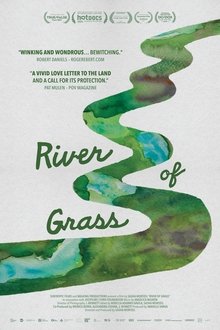
River of Grass (2025)
An ode to the Florida Everglades, past and present, told through the prescient writings of Marjory Stoneman Douglas and those who today call the region home.
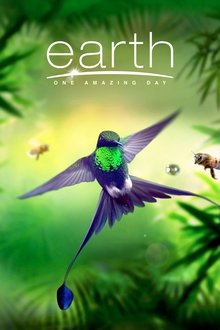
Earth: One Amazing Day (2017)
An astonishing journey revealing the awesome power of the natural world. Over the course of one single day, we track the sun from the highest mountains to the remotest islands to exotic jungles.
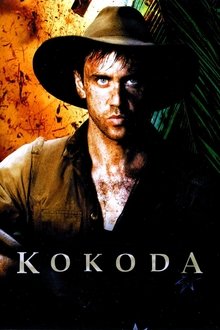
Kokoda (2006)
A bitter battle is fought between Australian and Japanese soldiers along the Kokoda trail in New Guinea during World War II.
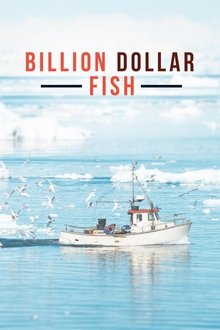
Billion Dollar Fish (2012)
The River Danube is home to a fish that grows larger than the Great White Shark. Although it leads a secretive life, the Beluga Sturgeon – the King of the Danube – produces the most prized food in the whole world. For over 200 million years, the 8-metre long fish had no enemies, and yet today it is on the verge of extinction. Evolution did not prepare the fish for pollution, river regulation and overfishing. Beluga caviar is traded for up to 20,000 dollars per kilogramme. Ironically, the high price of this precious product could save the animals from a premature disappearance from planet earth.
Reflection (2014)
Eerie images of landscapes after the Fukushima nuclear disaster shot on black and white 8mm.
Elephant Whisperer (2012)
Sangduen Chailert, or Lek, as she is generally known, has already rescued over 200 elephants. She has dedicated her life to saving the Asian elephant and founded a special camp, The Elephant Nature Park to protect them. We follow this winner of Time Magazine’s “Asian Hero of the Year” Award in her work. Lek is on a mission to save the Asian elephant in her native Thailand. This film looks at the plight of the Asian elephant, as it goes from being a widely used domestic animal, to becoming a burden on modernizing communities. With experts predicting its extinction within four decades, Lek’s work is needed now more than ever and she has gathered a large group of supporters and volunteers in her quest for a better future for the Asian elephant. This moving film demonstrates Lek’s natural understanding of and rapport with these huge animals and will stir the viewers emotions as it highlights the often desperate state some elephants are kept in.
Le Corbusier, l'architecte du bonheur (1957)
Documentary devoted to the architectural and urban planning designs of Le Corbusier. The architect supports his in-depth reflection on the city and its necessary adaptation to modern life with plans, drawings and images, particularly Paris, whose revolutionary development dreamed of by Le Corbusier is exhibited here. Its first projects will remain at the stage of a model: the modernization plan for the city of Algiers. Some will be created by other architects: Ministry of Education in Rio de Janeiro, UN Palace in New York. From the post-war period in less than 10 years, Le Corbusier created large housing units in Marseille, Nantes, a chapel in Ronchamps, a factory in Saint-Dié, a town in Chandigarh in India. Through diagrams, the architect presents his theory of the "radiant city", the mathematical key modulor of his work as well as his project for reorganizing the countryside, industrial and urban cities into a grouping around a cooperative system.