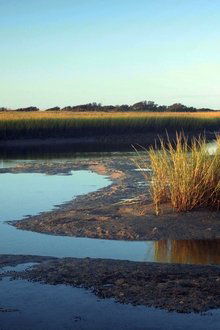
Off-grid is not a state of mind. It is not about being out of touch, living in a remote place, or turning off your mobile phone. Off-grid simply means living without a connection to the electric and natural gas infrastructure. From 2011 to 2013 Jonathan Taggart (Director) and Phillip Vannini (Producer) spent two years travelling across Canada to find 200 off-gridders and visit them in their homes. -
Related Movies
Salt in their Veins (2024)
This short film focuses on the Bajo of Southeast Sulawesi, Indonesia, highlighting their strong bond with the sea and the challenges small-scale fishing communities face. Impacted by overfishing, pollution, and biodiversity loss, they are struggling to survive.
Blue (2017)
From space, our planet appears as a tiny blue dot in the vastness of space. Blue, because 99% of all living space on Earth occurs in the Ocean. But the seas are under threat. The industrialization that has occurred in the oceans over the last century mirrors the events that triggered mass extinctions on land. As we learn of the ecological crimes occurring worldwide, we also uncover the shocking truths happening on our own shorelines.

HIV=AIDS: Fact or Fraud? (1996)
One of the most powerful video documentaries of our time boldly reveals the modern medical-industrial complex’s dire descent into utter corruption. HIV/AID$ - A deadly and dangerous DECEPTION! This feature-length expose explains exactly how the 300-Billion-dollar AID$ fraud began, why HIV can NOT be the cause of AIDS, what the real causes could be, and who manipulates the public’s good intentions while poisoning hundreds of thousands with toxic drugs that cause the very disease they are supposed to prevent.
It'll Never Work (2024)
A Scottish boat builder and fisherman perseveres in turning a vessel into an innovative solar-powered boat.

Still (2014)
The documentary tells the story of Uschi, a farmer living free and recluded in the bavarian alps. Shot in epic black and white pictures, Still follows Uschi's life over a ten year period. From an untroubled summer of making cheese through pregnancy and the uncertain future of the parental farm, Matti Bauer portrays Uschi's struggle to keep alive the dream of a way of life that has become rather untypical in this day and age.

DFW Punk (2008)
DFW Punk, covering the Dallas/Ft. Worth punk/new wave scene. If you thought Texas in the late ’70s was all about urban cowboys, country tunes and bible-thumping, get ready to be proved dead wrong. 2007, MiniDV.

Meteor (NaN)
A mysterious rumble splits the sky and reverberates in the middle of the forest. A man delves into its depths to discover its origin and answer the questions presented by the universe.
Propeler - subkultúry mládeže (2002)
The concept for the film was developed based on sociological research conducted as part of the Youth Subcultures conference in collaboration with the Institute of Sociology of the Slovak Academy of Sciences. The film’s core value lies in its ability to provide an inside look at selected subcultures, achieving an exceptional level of engagement with their members. The filmmakers managed to break through the participants' initial reluctance to openly discuss their experiences. The documentary directly addresses key aspects of these subcultures, including drugs, faith, and personal beliefs. It focuses on six specific groups: the techno scene, graffiti artists, antifascists, religiously oriented youth, skinheads, and young people inspired by Eastern spirituality. The film includes footage from illegal rave parties, graffiti sessions, and other underground activities. Overall, the documentary serves as an insightful map of Bratislava’s contemporary alternative scene.
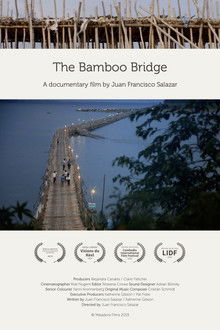
The Bamboo Bridge (2019)
This documentary looks at the stories that take place around a unique 1.5 kilometre long bamboo bridge that for generations has been built every year following the rhythms of nature across the Mekong River to join the rural community of Koh Paen to the city of Kampong Cham in Cambodia.
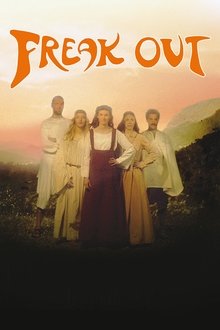
Freak Out! (2014)
Long-haired, barefoot people. Free love! Veganism! Experiments with drugs... The sixties, right? Not quite. In 1900 a group of middle class kids revolted against their time and started the original alternative community - Monte Verità, the mountain of truth. A community based on veganism, feminism, pacifism and free love. This creative documentary mixes interviews, archive and animation in a beautiful combination bringing you straight back to the early 1900 as seen through the eyes of these young radicals. The documentary Freak Out tells the untold story of the birth of the alternative movement and unfold the uncanny similarities between our time and what they revolted against in the early 1900s.
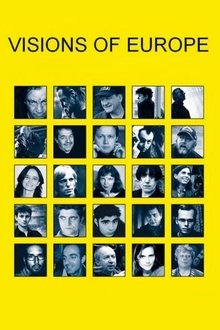
Visions of Europe (2004)
Twenty-five films from twenty-five European countries by twenty-five European directors.
Man Belongs to the Earth (1974)
Made for screening at the U.S. Pavilion at the 1974 World's Fair in Spokane Washington, USA, which had a Native-American environmental theme, MAN BELONGS TO THE EARTH depicts the history of air, water, and earth pollution, and how environmentalists are trying to solve these problems using various technologies.
The Game Changers (2019)
From the UFC Octagon in Las Vegas and the anthropology lab at Dartmouth, to a strongman gym in Berlin and the bushlands of Zimbabwe, the world is introduced to elite athletes, special ops soldiers, visionary scientists, cultural icons, and everyday heroes—each on a mission to create a seismic shift in the way we eat and live.
Prime Farmland (2020)
This documentary film follows farmers and activists fighting together to stop the Indiana Enterprise Center, a mega-sized industrial park planned west of South Bend, Indiana
Overbooking (2019)
What was once the "Island of Calm" is now on the verge of collapse. Multiple alarm bells are starting to ring. Is this model of tourism sustainable? Could Mallorca become a reference for so many other places suffering from the same problem?
The End of Suburbia: Oil Depletion and the Collapse of the American Dream (2004)
Since World War II North Americans have invested much of their newfound wealth in suburbia. It has promised a sense of space, affordability, family life and upward mobility. As the population of suburban sprawl has exploded in the past 50 years Suburbia, and all it promises, has become the American Dream. But as we enter the 21st century, serious questions are beginning to emerge...
Someplace with a Mountain (2011)
One hour documentary about a special group of pacific islanders. The Lapita Navigators. The proud forefathers of many cultures in the tropical Pacific. They are losing their homes and crops because of sea level rise. Their livelihood and culture are dramatically threatened as the islands they live on are flooding day by day. By chance, a sailor, Steve Goodall, came across them on his travels and discovered they knew nothing about the current forecasts for sea level rise. Once informed they asked for his help. The outcome and conclusion of this story will be told in the context of an event celebrating their living culture, a culture at a cross roads of great importance for all of us.
The Pine Barrens (2019)
Within the heart of New Jersey, a scorched wilderness stands in defiance of the encroaching megalopolis that surrounds it. Once deemed inhospitable; north and south, rural and suburban, harmony and disruption, truth and folklore, all merge and contradict around the stories that unite individuals living among the land. Spanning six years, the film paints a portrait of nature and identity that aims to capture the surreal wonder of the Pinelands during a time when corruption threatens to undermine its few protections.