Back in the 1960's a former Harvard professor stopped giving A's, B's and C's and started handing out LSD. his name was Timothy Leary and he was at the center of a controversy in North America over the growing use of psychedelic drugs. Leary ran a research center in New York state where young people took 'acid' while he took notes. The media took notice.
Related Movies
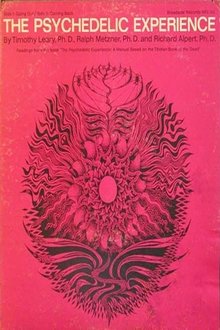
The Psychedelic Experience (1965)
Experimental movie, where a man comes home and experiences LSD. His kaleidoscopic visions follow, with readings inspired by the Tibethan Book of the Dead.
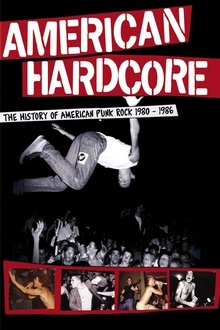
American Hardcore (2006)
Inspired by Steven Blush's book "American Hardcore: A tribal history" Paul Rachman's feature documentary debut is a chronicle of the underground hardcore punk years from 1979 to 1986. Interviews and rare live footage from artists such as Black Flag, Bad Brains, Minor Threat, SS Decontrol and the Dead Kennedys.
LSD: The Beyond Within (1986)
This refreshingly frank and impartial study of the discovery and development of the notorious hallucinogenic drug is notably free of moral judgmental, and features contributions from such legendary heroes of psychedelia as Albert Hoffman - the Swiss scientist who discovered the drug - Aldous Huxley - author of 'The Doors of Perception' - Ken Kesey - author of 'One Flew Over the Cuckoo's Nest.
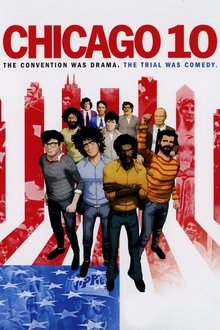
Chicago 10 (2008)
Archival footage, animation and music are used to look back at the eight anti-war protesters who were put on trial following the 1968 Democratic National Convention.
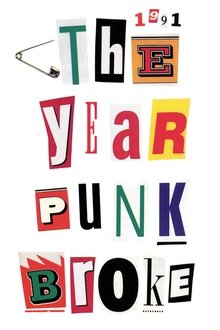
1991: The Year Punk Broke (1992)
David Markey's documentary of life on the road with Sonic Youth and Nirvana during their tour of Europe in late 1991. Also featuring live performances by Dinosaur Jr, Babes in Toyland, The Ramones and Gumball.
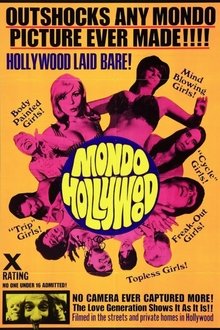
Mondo Hollywood (1967)
Long considered a cult classic, "Mondo Hollywood" captures the underside of Hollywood by documenting a moment in time (1965-67), when an inquisitive trust in the unknown was paramount, hope for the future was tangible and life was worth living on the fringe. An interior monologue narrative approach is used throughout the film, where each principal person shown not only decided on what they wanted to be filmed doing, but also narrated their own scenes. The film opens with Gypsy Boots (the original hippie vegan - desert hopping blender salesman), and stripper Jennie Lee, working out 'Watusi-style' beneath the 'Hollywood' sign -- leading into the 'sustainable community' insight of Lewis Beach Marvin III, the S&H Green Stamp heir, who lived in a $10 a month garage while owning a mountain retreat in Malibu.
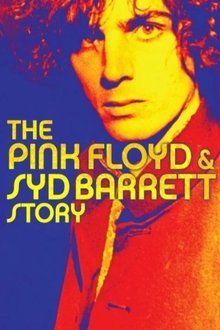
The Pink Floyd and Syd Barrett Story (2003)
The full bizarre, tragic but celebratory story of Syd Barrett, the co-founder of Pink Floyd.
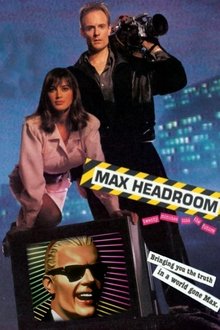
Max Headroom: 20 Minutes into the Future (1985)
While trying to expose corruption and greed, television reporter Edison Carter discovers that his employer, Network 23, has created a new form of subliminal advertising (termed "blip-verts") that can be fatal to certain viewers.
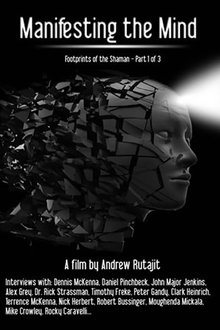
Manifesting the Mind: Footprints of the Shaman (2009)
In these interviews, Dennis McKenna, Alex Grey, Rick Strassman, and other champions of psychedelics share their views on the value of psychedelic medicine, and its neglect in Western society.
An Act of Service (2024)
Rob C., a firefighter in Idaho, undergoes psychedelic-assisted psychotherapy in an attempt to address his PTSD.
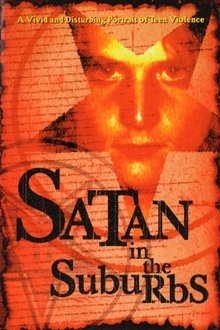
Satan in the Suburbs (2000)
Satan in the Suburbs tells the shocking story of a grisly ritualistic murder in the quiet bedroom community of Northport, Long Island in the summer of 1984. The killing, it soon emerged, was linked to a teen satanic cult. Perhaps more disturbing than the details of the murder itself was the revelation of a conspiracy of silence among the town's teenagers, many of whom had been aware of the, e killing in the two weeks before an anonymous call finally tipped off local police. 17- year-old Ricky Kasso was arrested and confessed to the crime; five days later, he hung himself in his holding cell. Kasso's friend Jimmy Troiano also. confessed, but was acquitted after jurors learned that he was beaten by local police. The murder shocked the local community and reverberated nationally, with some uninformed observers rushing to scapegoat rock music as the cause.
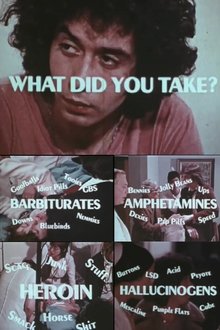
What Did You Take? (1971)
Stresses recognition and treatment of drug abuse emergencies, accurate identification of symptoms, and immediate clinical procedures. Presents scenes of actual cases in the emergency room and adjoining physician's offices of Beth Israel Medical Center in New York City. Viewers observe emergency treatment of patients in the major classes of drugs commonly abused, opiates, depressants, stimulants, and hallucinogens. The film demonstrates to health professionals that successful management of drug overdoses can save most lives and avert additional organic and psychiatric complications.

Fried Shoes Cooked Diamonds (1979)
After World War II a group of young writers, outsiders and friends who were disillusioned by the pursuit of the American dream met in New York City. Associated through mutual friendships, these cultural dissidents looked for new ways and means to express themselves. Soon their writings found an audience and the American media took notice, dubbing them the Beat Generation. Members of this group included writers Jack Kerouac, William Burroughs, Allen Ginsberg. a trinity that would ultimately influence the works of others during that era, including the "hippie" movement of the '60s. In this 55-minute video narrated by Allen Ginsberg, members of the Beat Generation (including the aforementioned Burroughs, Anne Waldman, Peter Orlovsky, Amiri Baraka, Diane Di Prima, and Timothy Leary) are reunited at Naropa University in Boulder, CO during the late 1970's to share their works and influence a new generation of young American bohemians.
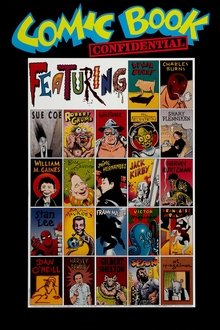
Comic Book Confidential (1989)
A survey of the artistic history of the comic book medium and some of the major talents associated with it.
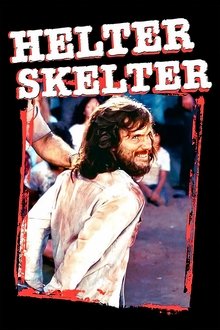
Helter Skelter (1976)
The investigation of two horrific mass murders leads to the capture and trial of the psychotic pseudo-hippie Charles Manson and his "family".
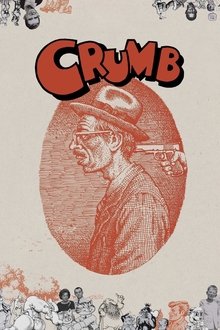
Crumb (1994)
This movie chronicles the life and times of R. Crumb. Robert Crumb is the cartoonist/artist who drew Keep On Truckin', Fritz the Cat, and played a major pioneering role in the genesis of underground comix. Through interviews with his mother, two brothers, wife, ex-wife and ex-girlfriends, as well as selections from his vast quantity of graphic art, we are treated to a darkly comic ride through one man's subconscious mind.

The Art of Acid (2018)
Mark McCloud is the world's leading collector Of LSD art. His 'Institute of Illegal Images' has over 30,000 framed hits of acid and traces the history of the drug's cultural influence through the unique art form used in its distribution - blotter art. After enduring and defeating aggressive prosecutions by law enforcement seeking to put him behind bars for life, Mark now appears to be more of a visionary than an outlaw and his museum has become a place of pilgrimage for believers in LSD's spiritual power.
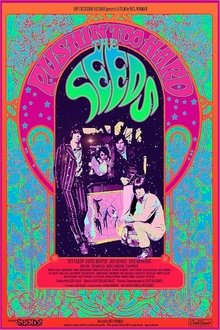
The Seeds: Pushin' Too Hard (2014)
Documentary about seminal garage-rock band, The Seeds, that uses vintage footage, rare photos, memorabilia and audio, plus fresh interviews with band members and associates as well as notable fans and observers, Pushin’ Too Hard relates the bizarre rage-to-riches-to-rags tale of the rock quartet who took Los Angeles by storm in the mid-60s.
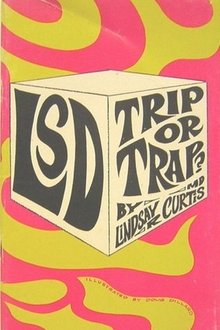
'LSD': Trip or Trap! (1967)
The Inglewood Police Department's 1960s video, "LSD: Trip or Trap?" is a classic of the genre. Alex sez, "It's a story of two friends who enjoy flying model planes, except that one becomes an 'acidhead' so he can be 'groovy' with the other acidheads. The other does research into LSD and decides it's a 'bummer'."
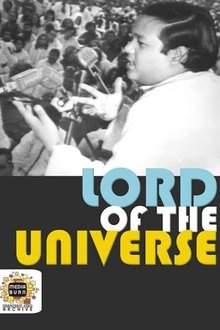
The Lord of the Universe (1974)
He was the 16-year-old Guru Maharaj Ji and, as the Millennium approached, he promised to levitate the Huston Astrodome. It was the early Seventies and anything was possible so thousands flocked to his gathering. Follow him from his mansion in New York to the limousines in Houston, listen to his followers and watch the spectacle unfold just as TVTV did in this Alfred I. du Pont award wining documentary.