Climate is changing. Instead of showing all the worst that can happen, this documentary focuses on the people suggesting solutions and their actions.
Related Movies
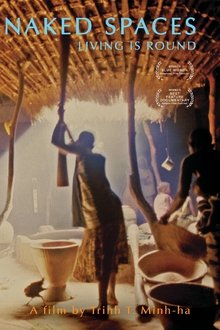
Naked Spaces: Living Is Round (1985)
Shot with stunning elegance and clarity, NAKED SPACES explores the rhythm and ritual of life in the rural environments of six West African countries (Mauritania, Mali, Burkino Faso, Togo, Benin and Senegal). The nonlinear structure of NAKED SPACES challenges the traditions of ethnographic filmmaking, while sensuous sights and sounds lead the viewer on a poetic journey to the most inaccessible parts of the African continent: the private interaction of people in their living spaces.
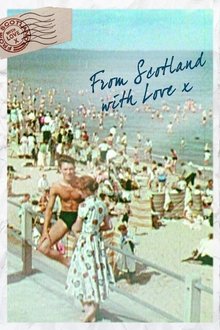
From Scotland with Love (2014)
Made entirely of Scottish film archive, a journey into our collective past, the film explores universal themes of love, loss, resistance, migration, work and play. Ordinary people, some long since dead, their names and identities largely forgotten, appear shimmering from the depth of the vaults to take a starring role. Brilliantly edited together, these silent individuals become composite characters, who emerge to tell us their stories, given voice by King Creosote's poetic music and lyrics
Startup.com (2001)
Friends since high school, 20-somethings Kaleil Isaza Tuzman and Tom Herman have an idea: a Web site for people to conduct business with municipal governments. This documentary tracks the rise and fall of govWorks.com from May of 1999 to December of 2000, and the trials the business brings to the relationship of these best friends. Kaleil raises the money, Tom's the technical chief. A third partner wants a buy out; girlfriends come and go; Tom's daughter needs attention. And always the need for cash and for improving the site. Venture capital comes in by the millions. Kaleil is on C-SPAN, CNN, and magazine covers. Will the business or the friendship crash first?
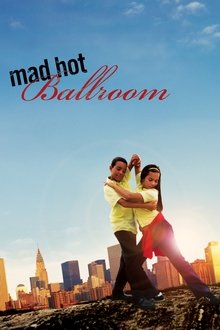
Mad Hot Ballroom (2005)
Eleven-year-old New York City public school kids journey into the world of ballroom dancing and reveal pieces of themselves and their world along the way. Told from their candid, sometimes humorous perspectives, these kids are transformed, from reluctant participants to determined competitors, from typical urban kids to "ladies and gentlemen," on their way to try to compete in the final citywide competition.

Wie konnte es geschehen? - Teil 1: "Deutschland erwache..." (1914 - 1938) (2006)
In 1945, 160 German cities lay in ruins and the loss of millions of lives, billions in material assets and countless cultural treasures was mourned throughout Europe... With the question “How could it happen?”, the film goes back to the year 1914, when the “primal catastrophe of the 20th century” took its course with the First World War.
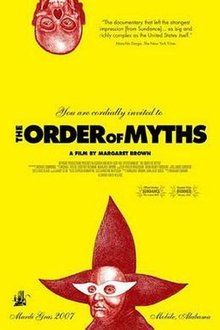
The Order of Myths (2008)
In 2007 Mobile, Alabama, Mardi Gras is celebrated... and complicated. Following a cast of characters, parades, and parties across an enduring color line, we see that beneath the surface of pageantry lies something else altogether.
In the Mind of Plants (2009)
Neurobiology has shown in the recent years that contrary to the traditional boundaries between animal and plants, plants can feel, move and even think. Over the recent years, a small but growing group of researchers from Austria, Germany, Italy, UK, Japan, South Africa and the USA, has developed a new scientific field of research: the neurobiology of plants. Their discoveries question the traditional boundaries set between the animal and the vegetable kingdom: plants are capable to develop the cognitive process claimed by humans and animals. If plants can move, and feel... Could they possibly think ? In a creative and captivating scientific investigation style, through spectacular specialist photography and CGI, and re-creating scientific experiments, this documentary is bound to change your own perception of plants.
Deep Water (2006)
DEEP WATER is the stunning true story of the fateful voyage of Donald Crowhurst, an amateur yachtsman who enters the most daring nautical challenge ever – the very first solo, non-stop, round-the-world boat race.
Addo - The African King (2002)
This documentary follows the harsh and competitive life of Addo, a male lion born into a successful pride.
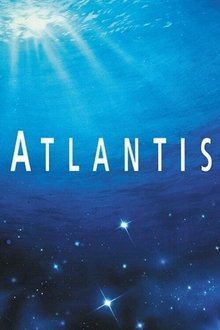
Atlantis (1991)
Atlantis is filmmaker Luc Besson's celebration of the beauty and wonder of the world beneath the sea, expanding upon themes touched on in his film The Big Blue. Combining stunning underwater cinematography and a hypnotic score by Eric Serra, Besson's singular vision defies dialogue or narrative structure to explore ocean life as you've never seen it before.
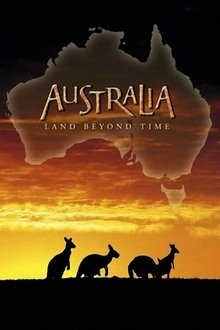
Australia: Land Beyond Time (2002)
Australia: Land Beyond Time takes viewers on a breathtaking journey back in time to witness the birth and evolution of a mysterious land that harbors remnants of Earth's earliest life and many of it's strangest creatures that exist nowhere else on the planet.
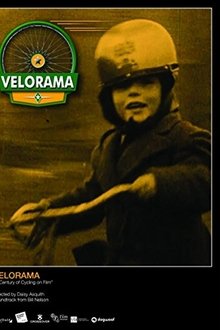
Velorama (2014)
Documentary looking at a century of cycling. Commissioned to mark the arrival of the 2014 Tour de France in Yorkshire, the film makes full use of stunning British Film Institute footage to transport the audience on a journey from the invention of the modern bike, through the rise of recreational cycling, to gruelling competitive races. Award-winning director Daisy Asquith artfully combines the richly-diverse archive with a hypnotic soundtrack from cult composer Bill Nelson in a joyful, absorbing watch for both cycling and archive fans.
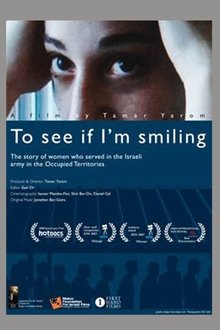
To See If I'm Smiling (2007)
Israel is the only country in the world where 18-year-old girls are drafted for compulsory military service. The frank testimonials of six female Israeli soldiers stationed in Gaza and the West Bank sees the young women revisit their tours of duty in the occupied territories, and share shocking moments of negligence, flippancy, immaturity and power-tripping.

The Atlantis Mussels (2024)
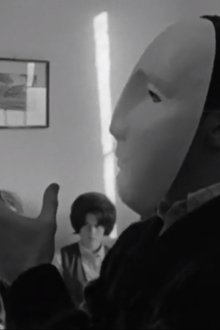
This film narrates the story of a community on the coast of the Special Capital Region of Jakarta, experiencing the direct impact of land subsidence and global climate change that jeopardize their area. In an effort to face this crisis, they come up with a unique solution by using green mussels shells for raising the ground to prevent the disaster from engulfing their homes.
I Remember Me (2000)
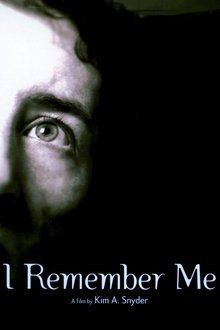
In 1984-85, people at Lake Tahoe fell ill with flu symptoms, but they didn't get better. Medical literature documents similar outbreaks: in 1934 at LA county hospital, in 1948-49 in Iceland, in 1956 in Punta Gorda, Florida. The malady now has a name, chronic fatigue syndrome, and filmmaker Kim Snyder, who suffered from the disease for several years, tells her story and talks to victims and their families, and to physicians and researchers: is it viral, it is psychosomatic, is it one disease or several (a syndrome) ; what's the CDC doing about it; what's it like to have a disease that's not yet understood? Her inquiry takes her to Punta Gorda and to a high-school graduation.
Anthem (1997)
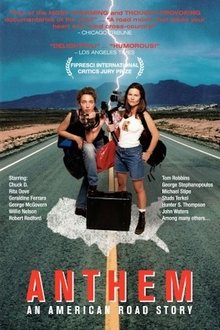
When twenty-six-year-olds Shainee Gabel and Kristin Hahn quit their Hollywood jobs, packed up a borrowed car and hit the road, it was with the deeply felt conviction that somewhere, shrouded in the din of talk shows and tabloid headlines, they'd discover the real America, alive and well in all of its regions and demographics.

Edinburgh (1934)
Directed by Marion Grierson, who ran the film unit of the Travel and Industrial Development Association (TIDA), this short film contains some fine photography of the delights on offer to Edinburgh visitors - including trams, bustling streets, restful parks and some familiar tourist sights.

So This Is London (1933)
London at its best? This gorgeously photographed portrait of the capital was made by Marion Grierson, sister of the more famous John Grierson, often hailed as the father of documentary film. The film transcends the typical travelogue thanks to the photography of William Shenton and Grierson's poetic approach to editing - which prefigures modern films like the acclaimed From the Sea to the Land Beyond (2012). The film achieved international fame at the time of its original release, yet Marion Grierson is almost completely overshadowed in the history of British documentary film by her brother John.