Related Movies
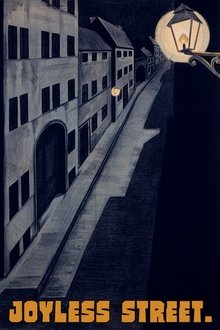
The Joyless Street (1925)
In 1921, we follow two women - Marie and Grete - from the same poor Viennese neighborhood, as they try to better the lives of themselves and their families during the period of Austrian postwar hyperinflation.

The History Boys (2006)
The story of an unruly class of bright, funny history students at a Yorkshire grammar school in pursuit of an undergraduate place at Oxford or Cambridge. Bounced between their maverick English master, a young and shrewd teacher hired to up their test scores, a grossly out-numbered history teacher, and a headmaster obsessed with results, the boys attempt to pass.
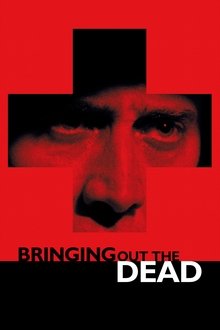
Bringing Out the Dead (1999)
Once called "Father Frank" for his efforts to rescue lives, Frank Pierce sees the ghosts of those he failed to save around every turn. He has tried everything he can to get fired, calling in sick, delaying taking calls where he might have to face one more victim he couldn't help, yet cannot quit the job on his own.

The Exam (2021)
Rojin is a young Kurdish woman about to take the university entrance exam. Rojin's unhappily married older sister Shilan decides to help her pass at any cost, hoping to give her a more emancipated life. Thus, the sisters inevitably become entangled in a huge network of corruption that connects all parts of society.

My Wonderful Life (2021)
A caring daughter, a laid-back mother, a popular teacher, a wife you are thick as thieves with – Joanna – is outstanding in each of these roles. But in none of them does she feel like herself. That is why she leads a double life. She has a secret she shares with no-one.
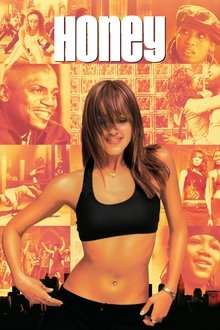
Honey (2003)
Honey Daniels dreams of making a name for herself as a hip-hop choreographer. When she's not busy hitting downtown clubs with her friends, she teaches dance classes at a nearby community center in Harlem, N.Y., as a way to keep kids off the streets. Honey thinks she's hit the jackpot when she meets a hotshot director casts her in one of his music videos. But, when he starts demanding sexual favors from her, Honey makes a decision that will change her life.

The Principal (1987)
Burglary. Drugs. Assault. Rape. The students at Brandel High are more than new Principal Rick Latimer bargained for. Gangs fight to control the school using knives - even guns - when they have to. When Latimer and the head of security try to clean up the school and stop the narcotics trade, they run up against a teenage mafia. A violent confrontation on the campus leads to a deadly showdown with the drug dealer's gang, and one last chance for Latimer to save his career... and his life.
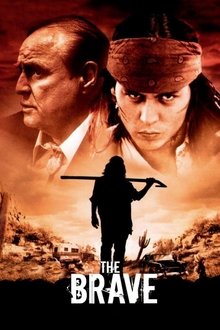
The Brave (1997)
A down-on-his-luck American Indian recently released from jail is offered the chance to "star" as the victim of a snuff film, the resulting pay of which could greatly help his poverty stricken family.
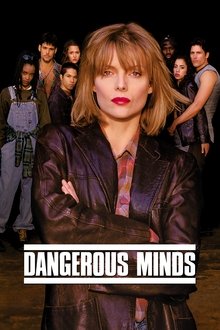
Dangerous Minds (1995)
Former Marine Louanne Johnson lands a gig teaching in a pilot program for bright but underachieving teens at a notorious inner-city high school. After having a terrible first day, she decides she must throw decorum to the wind. When Johnson returns to the classroom, she does so armed with a no-nonsense attitude informed by her military training and a fearless determination to better the lives of her students -- no matter what the cost.

Through Her Little Smile (2025)
Alya, a sixth-grade student, feels insecure because she has never fasted and is often teased by her classmates. When she receives an assignment from her teacher to write a story about activities during Ramadan, she becomes determined to try fasting to complete the task and avoid further teasing from her classmates.

BEE, My Friend (2020)
Zhi Xuan is a new teacher at her alma mater. One day, her troubled student, Zhe Yu commits a misdemeanour which reminds her of a past mistake. Zhi Xuan is determined to help her student solve his family problems, and also seeking redemption for herself.
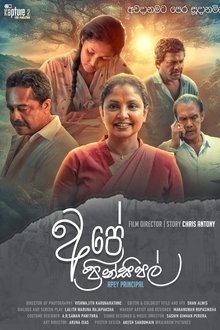
Ape Principal (2023)
A new principal comes to the underdeveloped village school that is affected by lazy teachers and drugs.
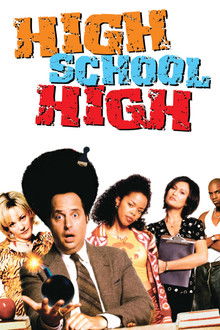
High School High (1996)
Richard Clark has just left the well-known Wellington Academy to teach at Marion Barry High School. Now, he will try to inspire the D-average students into making good grades and try to woo a fellow teacher.
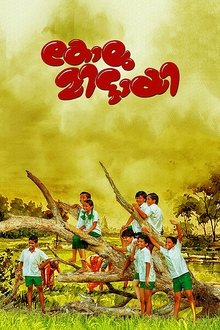
Kolumittayi (2016)
Unni and his friends move to the 6th grade after the new academic year begins. He loves his school life mainly because of his crush Riya and feels threatened by the newcomer in his class - Roney. Soon they lock horns and are in competition.
Or We Die Trying (2022)
Three high schoolers investigate the disappearance of a fellow student, Aubrey. She was last seen entering the abandoned back hallways of their school, Asher Academies. There is a legend that the founder of the school, Asher Neal, died in the back halls and now his ghost haunts that half of the school, but no one believes that. However, as the team continues to investigate Aubrey's disappearance, the presence of a ghost seems more and more real.
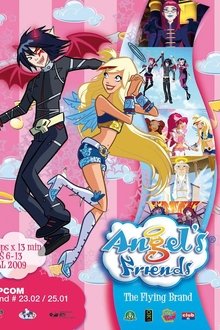
Angel's Friends - Between Dream and Reality (2011)
A television movie based on the animated series and settled between the first and the second season aired, in Italy, on 23 April 2011. The movie focuses on the Angels attending the Summer School at the Sunny College in Alpinville, where Raf hopes she will not meet Sulfus. The Devils show up at the school and Raf tells Sulfus she has fallen in love with someone else. Meanwhile, the Earthly ones receive the task of refurbishing the Theatre of Princes (Italian: Teatro dei Principi) and organising a play, Romeo & Juliet by William Shakespeare. However, they are attacked by a mysterious hooded man who wants them to leave the theatre. The Angels and the Devils decide to investigate and find out the truth about Tyco and Sai's fate. At last, Raf and Sulfus conclude that they'll decide what to do about their future together once returned to the Golden School for the new term.

Just Don't Think I'll Cry (1965)
High-school senior Peter considers the adults around him to be hypocritical, self-congratulatory, and immersed in the past. He gets suspended for writing an essay that his teachers consider to be a challenge to the state. Just Don't Think I'll Cry became one of twelve films and film projects-almost an entire year's production-that were banned in 1965-1966 due to their alleged anti-socialist aspects. Although scenes and dialogs were altered and the end was reshot twice, officials condemned this title as "particularly harmful." In 1989, cinematographer Ost restored the original version, and this and most of the other banned films were finally screened in January 1990. Belatedly, they were acclaimed as masterpieces of critical realism.