An event organised by CND pits the bomb against poetry. Hear artists who hoped that words and rhymes could put an end to destructive times.
Related Movies
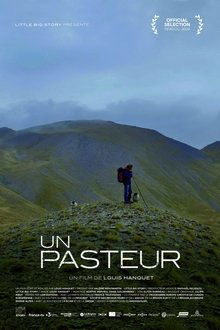
A Shepherd (2024)
Félix, a young, melancholic and secretive shepherd, leads a surprisingly timeless life. He lives alone and works along his father to raise the family herd. From autumn to spring, he looks after his animals, feeds them and keeps them in the dense forests of holm oaks of French Pre-Alps. In the summer, he travels on foot for more than two hundred kilometres, leaving his father to lead the herd to the mountains pastures, in the High Alps Ubaye valley. There, he lives far from everything for many long months, in a mineral and inaccessible world where an invisible being prowls: the wolf. Against the tide of his time, Félix has chosen a profession that isolates him and keeps him out of the world.

I Burned Legs (1993)
This film deals with the atrocities of war as portrayed by a film student who spends some time working as a medic. One of the duties he performed was to carry amputated limbs to the cremation furnace. This is a film about the collective madness that engulfed Sarajevo. A one-armed boy is troubled because he can't make big, firm snowballs; a man who lost both legs demonstrates walking on his stumps... The film and the director's story help us understand the commotion and tumult that have occurred in the minds of Sarajevans.
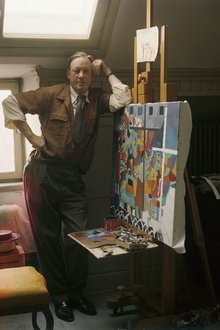
X:et (1963)
About Swedish artist, painter, sculptor and set designer Sven "X-et" Erixson, presented with Lars Johan Werle's music and accompanied by readings from various literature and poetry.
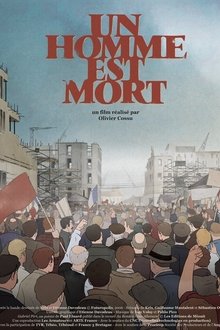
A Man is Dead (2018)
Brest, 1950. The war ended five years ago and nothing remains of the city. Massive bombings and intense fighting lasting more than a month turned the city, its docks, its arsenal, into ashes. Thousands of workers will build it up again, brick by brick. But with awful work conditions protests quickly arise and a strike begins. Violent confrontations happen during manifestations. Until one man falls. The next day René Vautier lands at Brest clandestinely to make a movie about the movement.

The Laughing Man (1966)
Posing as West German journalists, East German documentary filmmakers Heynowski and Scheumann pay a visit to the notorious Nazi-turned-mercenary Siegfried “Kongo” Müller, pump him with booze, and get him to talk about his life and war campaigns in Africa.
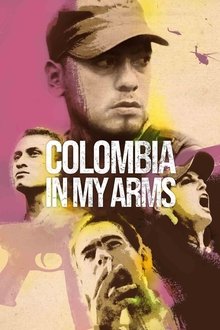
Colombia in My Arms (2022)
After 52 years of armed conflict the FARC guerrillas are about to hand over their arms in exchange for political participation and social inclusion of the poor. Ernesto is one of them. The much celebrated Colombian peace agreement throws Ernesto and the polarised society around him into chaos in which everyone is afraid of the future and their own survival.
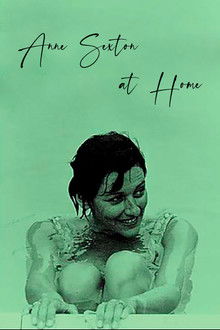
Anne Sexton at Home (NaN)
A fourteen-minute documentary splitted in two parts where we can see Anne Sexton at her home reading, talking about poetry and about her family.
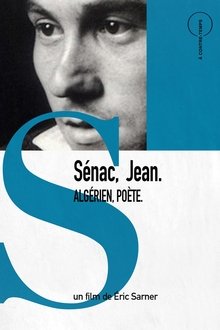
Sénac, Jean. Algérien, Poète (2011)
Jean Sénac, born in Béni Saf in Algeria in 1926 and died in Algiers in 1973, is today considered one of the great French writers and poets and the only one of his reputation to have accompanied the Algerian revolution before November 1954. part of all the debates and got involved, very early and with immense enthusiasm, in a work of commitment which ended badly. His poetry, his sexual preferences and his political lyricism work against him: rejected as much by the Pieds Noirs as by the FLN activists then by the power in place in Algiers, Jean Sénac was assassinated in 1973 at his home in Algiers, in circumstances never clarified.
I Will Dance (2015)
Follows the young people of Selma, Alabama's RATCo (Random Acts of Theatre Company) as they journey to New York City to share their story of hope, resilience, and overcoming.
Fried Shoes Cooked Diamonds (1979)
After World War II a group of young writers, outsiders and friends who were disillusioned by the pursuit of the American dream met in New York City. Associated through mutual friendships, these cultural dissidents looked for new ways and means to express themselves. Soon their writings found an audience and the American media took notice, dubbing them the Beat Generation. Members of this group included writers Jack Kerouac, William Burroughs, Allen Ginsberg. a trinity that would ultimately influence the works of others during that era, including the "hippie" movement of the '60s. In this 55-minute video narrated by Allen Ginsberg, members of the Beat Generation (including the aforementioned Burroughs, Anne Waldman, Peter Orlovsky, Amiri Baraka, Diane Di Prima, and Timothy Leary) are reunited at Naropa University in Boulder, CO during the late 1970's to share their works and influence a new generation of young American bohemians.
Crustaceans (2014)
The film Crustaceans treats itself like an impressionist picture or a Japanese Haiku. Crustaceans is a matter of reflection on an instance in life with the social-economical crisis as a landscape. The heartbreak in times of crisis. The film was filmed as demonstrations in the streets against crisis and social welfare cuts took place. For two years, it filmed street demonstrations and incorporated actors in the social landscape. The result, is a film in which the collective and the intimate come together. Both the characters and the people in the street, like identical crustaceans, take to the street to express their shame and rage for what is happening and try to find a solution. A time of anxiety, uncertainty and protest that conforms the landscape in which the characters, such as crustaceans hide their wounds under their hard shell is seen.
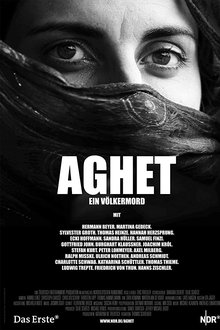
Aghet (2010)
2010 documentary film on the Armenian Genocide by the Young Turk government of the Ottoman Empire during World War I. It is based on eyewitness reports by European and American personnel stationed in the Near East at the time, Armenian survivors and other contemporary witnesses which are recited by modern German actors.
A Life Together: Donald Hall and Jane Kenyon (1993)
Performance and conversation with husband-and-wife poets Donald Hall and Jane Kenyon at a New Jersey festival, in their Wilmot (N.H.) hometown and their Eagle Pond farmhouse.
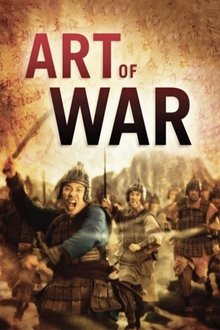
Art of War (2009)
Documentary on the main principles of Sun Tsu "Art of War" illustrated with examples from the second world war, the Vietnam war and the American civil war.
You Can Beat the A-Bomb (1950)
An educational film that instructs people on how to survive atomic bombs and the radiation they emit while following a family facing nuclear attack who calmly prepare for the aftermath. Shows the various modes of Civil Defense that were being developed to protect the American population in the event of a nuclear war.

The Mother of All Hurricanes (2018)
The Hurricane Maria represented a historic event for the island of Puerto Rico. The Puerto Rican spirit at the helm of this natural disaster was shattered beyond repair. And from the rumble the Puerto Rican spirit will be reborn again. Omar Iloy makes a desperate call to the wounded spirit of the island, a call for hope and help.
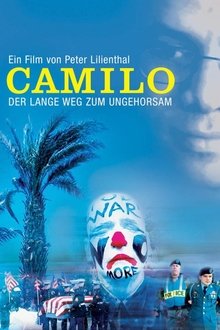
Camilo: The Long Road to Disobedience (2008)
The award-winning filmmaker Peter Lilienthal is dedicated to this extremely poignant documentary of U.S. military policy and the living conditions of former resistance fighters in Latin America.
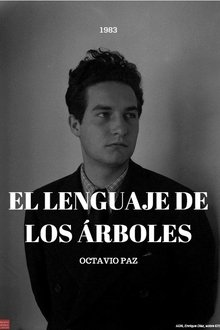
The Language of Trees (1983)
An exploration on Paz's poetry by Paz himself, his childhood, his ideas about love and the nature of art
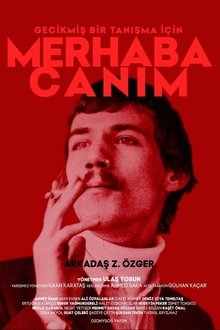
Hello My Dear (2021)
The documentary is titled after Arkadaş Z. Özger’s poem “Hello My Dear” which had caused much controversy in the period it was first published. Considered to be in defiance of heteronormativity, the said poem includes references to the poet’s personality, his family, his relationship to the society, and his “unexpected” death, which came three years after its publication. Today, 50 years after it was written, the documentary follows these same lines in the poem utilising cinematic elements. The documentary also rediscovers the poetics; reaches out to the family, the comrades, the friendships, departing from the official historical accounts, cognizant of his experience of otherness, in pursuit of the “lost” portrait of Arkadaş Z. Özger.