Angdu is no ordinary boy. Indeed, in a past life he was a venerated Buddhist master. His village already treats him like a saint as a result. The village doctor, who has taken the boy under his wing, prepares him to be able to pass on his wisdom. Alas, Tibet, Angdu’s former homeland and the centre of his faith, lies far away from his current home in the highlands of Northern India. On top of that, the conflict between China and Tibet makes the prospect of a trip there even more daunting. Undeterred by these harsh facts, the duo set off for their destination on foot, accompanied by questions of friendship and the nature of life. With its narrative approach steeped in a serene sense of concentration, this documentary film, composed over a period of eight years, stands as a fundamental experience in its own right.
Related Movies
Buddha Wild: Monk in a Hut (2008)
Buddhist monks open up about the joys and challenges of living out the precepts of the Buddha as a full-time vocation. Controversies swirling within modern monastic Buddhism are examined, from celibacy and the role of women to racism and concerns about the environment.

The Dalai Lama's Gift (2025)
In 1981, a Buddhist monk teaching at the University of Madison, Wisconsin, made the bold request of the Dalai Lama to come and perform a rare ritual, never before done outside of India or Tibet: the Kalachakra, among the highest of the Buddhist tantric teachings. In just a few months, with a team of dedicated students, and cameras rolling, they constructed a temple and organized an event for over a thousand spiritual seekers, in a cornfield outside Madison. The incredible footage was tucked away in the Smithsonian vaults, until now. What unfolds is the story of a powerful ritual, its impact on the people that made it happen, and the meaning behind this ancient initiation.
10 Questions for the Dalai Lama (2006)
How do you reconcile a commitment to non-violence when faced with violence? Why do the poor often seem happier than the rich? Must a society lose its traditions in order to move into the future? These are some of the questions posed to His Holiness the Dalai Lama by filmmaker and explorer Rick Ray. Ray examines some of the fundamental questions of our time by weaving together observations from his own journeys throughout India and the Middle East, and the wisdom of an extraordinary spiritual leader. This is his story, as told and filmed by Rick Ray during a private visit to his monastery in Dharamsala, India over the course of several months. Also included is rare historical footage as well as footage supplied by individuals who at great personal risk, filmed with hidden cameras within Tibet.

Fried Shoes Cooked Diamonds (1979)
After World War II a group of young writers, outsiders and friends who were disillusioned by the pursuit of the American dream met in New York City. Associated through mutual friendships, these cultural dissidents looked for new ways and means to express themselves. Soon their writings found an audience and the American media took notice, dubbing them the Beat Generation. Members of this group included writers Jack Kerouac, William Burroughs, Allen Ginsberg. a trinity that would ultimately influence the works of others during that era, including the "hippie" movement of the '60s. In this 55-minute video narrated by Allen Ginsberg, members of the Beat Generation (including the aforementioned Burroughs, Anne Waldman, Peter Orlovsky, Amiri Baraka, Diane Di Prima, and Timothy Leary) are reunited at Naropa University in Boulder, CO during the late 1970's to share their works and influence a new generation of young American bohemians.

Tarnation (2003)
Filmmaker Jonathan Caouette's documentary on growing up with his schizophrenic mother -- a mixture of snapshots, Super-8, answering machine messages, video diaries, early short films, and more -- culled from 19 years of his life.
Brilliant Moon: Glimpses of Dilgo Khyentse Rinpoche (2010)
Brilliant Moon chronicles the life of the writer, poet, and meditation master Khyentse Rinpoche, one of Tibet's most revered 20th-century Buddhist teachers. Spiritual guide to His Holiness the Dalai Lama and the Royal Family of Bhutan, his life and teachings were an inspiration to all who encountered him. Richard Gere and Lou Reed provide the narration for his dangerous journey out of China, the subsequent spread of his influence and the search for his reincarnation after his death.
Blindsight (2006)
Six blind Tibetan teenagers climb the Lhakpa-Ri peak of Mount Everest, led by seven-summit blind mountain-climber Erik Weihenmayer.
A Gesar Bard's Tale (2013)
As a boy, Dawa was an illiterate Tibetan nomad whose life revolved around herding yaks. At 13, his life changed: through a series of visions, Dawa acquired the gift of telling the epic story of Tibet’s King Gesar. Now, at 35, Dawa receives a salary from the government as a guardian of national cultural heritage and is regarded as a holy man by his community. When an earthquake reduces his hometown to rubble, redevelopment of the region takes a giant leap forward. In the midst of such seismic shifts, Dawa seeks healing from King Gesar and other divine protectors of the land.
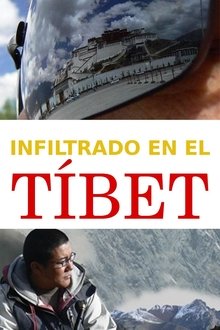
Undercover in Tibet (2008)
Undercover in Tibet reveals the regime of terror which dominates daily life and makes freedom of expression an impossibility. Tash meets victims of arbitrary arrests, detention, torture and ‘disappearances’ and uncovers evidence of enforced sterilizations on ethnic Tibetan women. He sees for himself the impact of the enormous military and police presence in the region, the hunger and hardship being endured by many Tibetans and hears warnings of the uprising taking place across the provinces now.
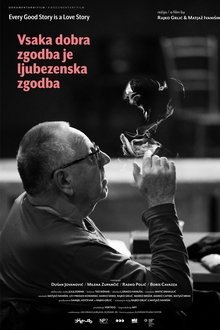
Every Good Story Is a Love Story (2017)
A film about a theatre performance and four very notable people behind it: writer and director D. Jovanović, actress M. Zupančič and actors R. Polič and B. Cavazza. This is a story of a love triangle and of a multi-layered, entirely overt intertwining of protagonists’ public artistic personas and their personal lives. The film documents a 4-month process of the making of a theatre piece from the first rehearsal to the opening night, at the same time uncovering the intimate lives of the artists and telling a universal story of the relationship between the real and the imagined, a story of personal and public perceptions of art.
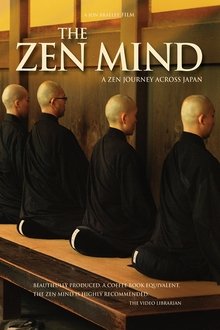
The Zen Mind (2007)
In the last fifty years the culture of Zen has spread far beyond Japan. Zen centers and zen retreats have sprung up throughout America and Europe. When Dogen, the founder of Soto Zen, brought Zen to Japan from China 800 years ago, it quickly took root and became an integral part of Japanese life. Yet what do we know about zen practice in Japan today? The Zen Mind is a fascinating journey across Japan to explore zen in its natural habitat.
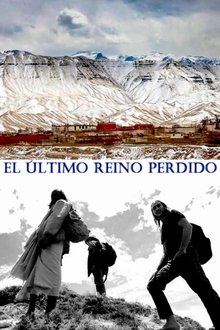
The Last Lost Kingdom (2014)
Following in the footsteps of his father, Folco Felzani embarks on an epic journey on foot in search of Mustang, the last lost kingdom, in northern Nepal. The story of a king without a kingdom. The adventure of a son without a father.

Orphans of Tibet (2010)
Each year, groups of Tibetan children secretly flee their homeland over the Himalayas to reach schools in India founded by the government in exile. Entrusted to smugglers, they are risking their lives by illegally crossing the great Himalayan range, a towering rampart between Tibet and India. The director will take us in the Mussorie school, in North India, where two thousand four hundred children have been rescued. They have left behind their family childhood and are now considered as orphans. We will discover the itineraries of Sonam, aged nine, and Dholma, the little new girl of the school. Here in India, they are taught about Tibetan culture and will find out about the history of their country and their ancestors. Sonam and Dholma's story is that of thousands of Tibetan children. Are they orphans of a lost country or bearers of hope who will save an endangered culture?
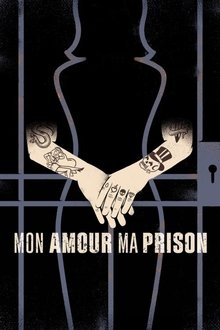
Mon amour, ma prison (2018)
Every year, hundreds of women develop relationships with prisoners. They fall under the charms of killers, petty criminals, rapists and crooks. Most only share a few letters, but some make it all the way to the altar. It is hard to understand what these women expect from a relationship with a convict with a long prison sentence. This documentary takes a look at their lives and the reasons that make them pursue a relationship with a criminal.
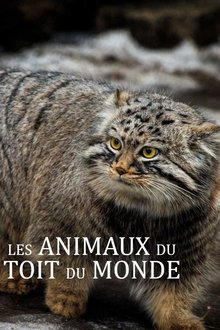
Tibet: Roof of the World (2020)
Join us as we explore life on the highest mountain plateau on Earth. This beautiful and other worldly place is also one of the harshest on the planet. We follow the lives of some of the iconic creatures that call it home. From Tibetan wolves struggling to raise pups in the rugged peaks, and rare snub nosed monkeys facing family dramas on the forest slopes to chiru antelopes that travel hundreds of miles to give birth while facing death, and hardy pika who tough out the elements all year, whilst under constant attack. Discover how these extraordinary animals manage to not only survive, but also thrive on the roof of the world.
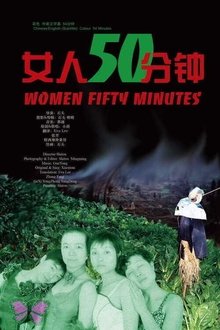
Women 50 Minutes (2007)
A representation of queer and feminist imagery that was mainly shot in the Qinghai-Tibetan Plateau, remote and developing areas in southwest China, and metropolitan cities like Beijing from 2000 to 2004 to document the social changes in contemporary China. The director sympathetically and erotically represents a variety of women, including women as laborers, women as prayers, women in the ground, women in marriage, and women who lie on the funeral pyre with their dead husbands. Her camera juxtaposes the mountains and rivers in old times, the commercialized handicrafts as exposition, the capital exploitation of the elders’ living space, and the erotic freedom of the young people in a changing city.