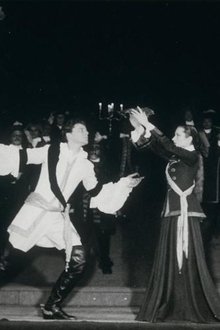
Gil Cardinal searches for his natural family and an understanding of the circumstances that led to his becoming a foster child. An important figure in the history of Canadian Indigenous filmmaking, Gil Cardinal was born to a Métis mother but raised by a non-Indigenous foster family, and with this auto-biographical documentary he charts his efforts to find his biological mother and to understand why he was removed from her. Considered a milestone in documentary cinema, it addressed the country’s internal colonialism in a profoundly personal manner, winning a Special Jury Prize at Banff and multiple international awards.
Related Movies
Blueberry Waggle Dance (2024)
It's a warm spring night, and the bee cowboys of Prince Edward Island begin rounding up their hives.

Making Of Castelo (2019)
A two parts making of documentary, following José Augusto Silva and his film crew during the shooting of a university short film called Castelo.
Night and Fog (1959)
Filmmaker Alain Resnais documents the atrocities behind the walls of Hitler's concentration camps.
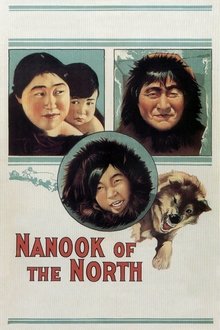
Nanook of the North (1922)
This pioneering documentary film depicts the lives of the indigenous Inuit people of Canada's northern Quebec region. Although the production contains some fictional elements, it vividly shows how its resourceful subjects survive in such a harsh climate, revealing how they construct their igloo homes and find food by hunting and fishing. The film also captures the beautiful, if unforgiving, frozen landscape of the Great White North, far removed from conventional civilization.
La ruta de don Quijote (1934)
A poetic journey through the paths and places of old Castile that were traveled and visited by the melancholic knight Don Quixote of La Mancha and his judicious squire Sancho Panza, the immortal characters of Miguel de Cervantes, which offers a candid depiction of rural life in Spain in the early 1930s and illustrates the first sentence of the first article of the Spanish Constitution of 1931, which proclaims that Spain is a democratic republic of workers of all kind.
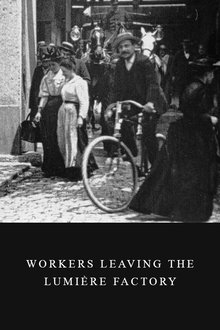
Workers Leaving the Lumière Factory (1895)
Working men and women leave through the main gate of the Lumière factory in Lyon, France. Filmed on 22 March 1895, it is often referred to as the first real motion picture ever made, although Louis Le Prince's 1888 Roundhay Garden Scene pre-dated it by seven years. Three separate versions of this film exist, which differ from one another in numerous ways. The first version features a carriage drawn by one horse, while in the second version the carriage is drawn by two horses, and there is no carriage at all in the third version. The clothing style is also different between the three versions, demonstrating the different seasons in which each was filmed. This film was made in the 35 mm format with an aspect ratio of 1.33:1, and at a speed of 16 frames per second. At that rate, the 17 meters of film length provided a duration of 46 seconds, holding a total of 800 frames.
The Hills of Qaytariyeh (1969)
A strange and mischievous documentary on an archeological site in the Qaytarieh hills in Tehran. This short narrates the story of the dead people who wished never to be found.
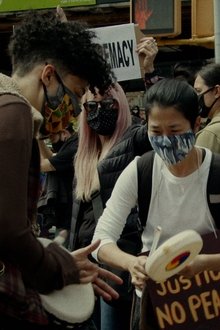
People Unite! (2022)
In the face of AAPI violence, an intergenerational coalition of Black, Indigenous, Latinx, Asian, People of Color organizers come together to organize a march across historic Washington Heights and Harlem, as a continuation of the historic and radical Black and Asian solidarity tradition.
The Forger (2017)
Adolfo Kaminsky started saving lives when chance and necessity made him a master forger. As a teenager, he became a member of the French Resistance and used his talent to save the lives of thousands of Jews. The Forger is a well-crafted origin story of a real-life superhero.

I Was Only 14 (2016)
Filmmaker Froukje van Wengerden’s 86-year-old grandmother shares a powerful memory from 1944, when she was just 14. As her story unfolds, we see a group of contemporary 14-year-old girls. Their procession of portraits permits the spectator to see simultaneously forward and back, into the future and towards the past. A miraculous testimonial that uses eye contact to focus the viewer inward and evoke unexpected emotions.
Isabella (2015)
This film aims to capture the stories of the aging Isabella, but also captures her condition and loss of cohesiveness as she loses herself into dementia and Parkinson's. It is also a very personal film since the subject is the grandmother of one of the co- directors. The idea is interesting as it links one strong clear memory, told several times, to other fragments and truths of her condition. Animation is sparingly but cleverly used to complement the delivery and avoid it just being a talking head.
Bowling for Columbine (2002)
This is not a film about gun control. It is a film about the fearful heart and soul of the United States, and the 280 million Americans lucky enough to have the right to a constitutionally protected Uzi. From a look at the Columbine High School security camera tapes to the home of Oscar-winning NRA President Charlton Heston, from a young man who makes homemade napalm with The Anarchist's Cookbook to the murder of a six-year-old girl by another six-year-old. Bowling for Columbine is a journey through the US, through our past, hoping to discover why our pursuit of happiness is so riddled with violence.
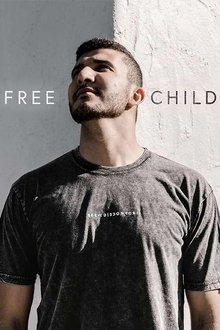
Free Child (2020)
From leaving Egypt 10 years ago, to almost dying a month ago in a car accident. This film is about the journey in between and the massive role the internet played in the life of prominent Youtuber and Yes Theory co-founder Ammar Kandil.
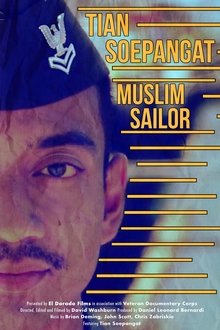
Tian Soepangat: Muslim Sailor (2015)
Tian Soepangat joins the U.S. Navy out of a commitment to helping others. As a Muslim, Tian is uncertain of his shipmates' attitudes toward his religion, and so he hides it. Eventually discovering he doesn't have to hide his faith, he is free to express pride in his heritage.

Harbour (1998)
While shooting “Flying over blue field” we lived in Birtonas sanatorium hotel. I was watching treatment procedures. People were plunging into bubble, mud and mineral water baths. They were going circles singing, were standing under cold water spouts. All this seemed like a sacred ritual, that frees from scurf of life. They were naked, like just born, without any signs of standing in society. Movie – silent impression about tired people "harbour".
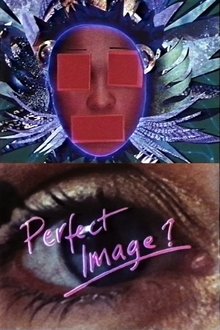
Perfect Image? (1989)
Two actresses take us through a series of 'raps' and sketches about what it means to be beautiful and black.