Director Jean Renoir’s entrancing first color feature—shot entirely on location in India—is a visual tour de force. Based on the novel by Rumer Godden, the film eloquently contrasts the growing pains of three young women with the immutability of the Bengal river around which their daily lives unfold. Enriched by Renoir’s subtle understanding and appreciation for India and its people, The River gracefully explores the fragile connections between transitory emotions and everlasting creation.
Related Movies

The Mothers (NaN)
The Mothers centers on three young adults in the congregation of a black church in Southern California. Nadia has been away from home for years, having moved to Michigan to attend college, but her estranged father's heart attack brings her back to Oceanside. There she reconnects with Aubrey, her old BFF, and Luke, the young man who got her pregnant in high school. Aubrey and Luke are now happily married, and the former has no idea of what once existed between her husband and her friend.
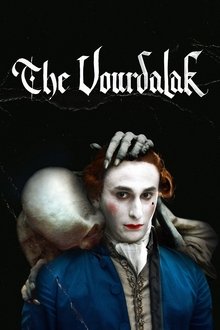
The Vourdalak (2023)
The Marquis d’Urfé finds refuge in the home of a strange family after becoming lost in a hostile forest while working as an emissary for the King of France.
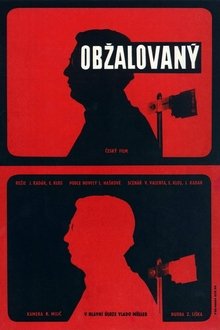
Defendant (1964)
Managers at the construction of a big hydro plant are accused of having embezzled money.

Brand of Evil (1964)
A Jonan Station detective, Kikuchi, is framed for smuggling drugs and sent to prison. When he is paroled, he joins a private detective agency, where he is asked to investigate Mitsue Takazawa, the wife of a local trading firm president. While secretly conducting his own research, he finds out that Takazawa's husband is the one, responsible for Kikuchi's imprisonment, who also have set sights on Setsuko, a woman Kikuchi becomes romantically involved with.

Scarface (1932)
In 1920s Chicago, Italian immigrant and notorious thug, Antonio 'Tony' Camonte, aka Scarface, shoots his way to the top of the mobs while trying to protect his sister from the criminal life.

Crash (1996)
A car crash victim suddenly finds himself turned on by car accidents and becomes involved with an underground sub-culture of like-minded souls.

The World of Apu (1959)
Apu, now a jobless ex-student dreaming vaguely of a future as a writer, is invited to join an old college friend on a trip up-country to a village wedding.
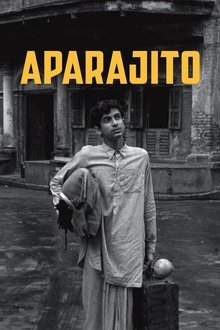
Aparajito (1956)
Apu and his family have moved away from the country to live in the bustling holy city of Benares. As he progresses from wide-eyed child to intellectually curious teenager, eventually studying in Kolkata, we witness his academic and moral education, as well as the growing complexity of his relationship with his mother.
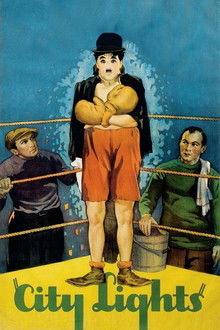
City Lights (1931)
A tramp falls in love with a beautiful blind flower girl. His on-and-off friendship with a wealthy man allows him to be the girl's benefactor and suitor.
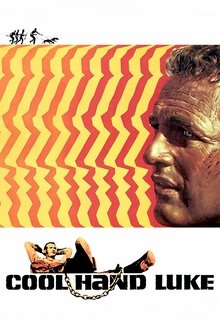
Cool Hand Luke (1967)
When petty criminal Luke Jackson is sentenced to two years in a Florida prison farm, he doesn't play by the rules of either the sadistic warden or the yard's resident heavy, Dragline, who ends up admiring the new guy's unbreakable will. Luke's bravado, even in the face of repeated stints in the prison's dreaded solitary confinement cell, "the box," make him a rebel hero to his fellow convicts and a thorn in the side of the prison officers.

Doctor Zhivago (1965)
The life of a Russian physician and poet who, although married to another, falls in love with a political activist's wife and experiences hardship during World War I and then the October Revolution.

Meet Me in St. Louis (1944)
A year in the life of a turn-of-the-century middle class family, leading up to the opening of the 1904 St. Louis World's Fair.

Do the Right Thing (1989)
Salvatore "Sal" Fragione is the Italian owner of a pizzeria in Brooklyn. A neighborhood local, Buggin' Out, becomes upset when he sees that the pizzeria's Wall of Fame exhibits only Italian actors. Buggin' Out believes a pizzeria in a black neighborhood should showcase black actors, but Sal disagrees. The wall becomes a symbol of racism and hate to Buggin' Out and to other people in the neighborhood, and tensions rise.
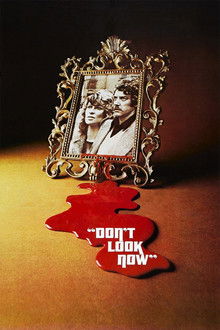
Don't Look Now (1973)
While grieving a terrible loss, a married couple meet two mysterious sisters, one of whom gives them a message sent from the afterlife.
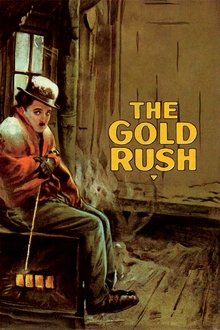
The Gold Rush (1925)
A gold prospector in Alaska struggles to survive the elements and win the heart of a dance hall girl.

Spartacus (1960)
The rebellious Thracian Spartacus, born and raised a slave, is sold to Gladiator trainer Batiatus. After weeks of being trained to kill for the arena, Spartacus turns on his owners and leads the other slaves in rebellion. As the rebels move from town to town, their numbers swell as escaped slaves join their ranks. Under the leadership of Spartacus, they make their way to southern Italy, where they will cross the sea and return to their homes.

Paths of Glory (1957)
A commanding officer defends three scapegoats on trial for a failed offensive that occurred within the French Army in 1916.

Irreversible (2002)
A woman’s lover and her ex-boyfriend take justice into their own hands after she becomes the victim of a rapist. Because some acts can’t be undone. Because man is an animal. Because the desire for vengeance is a natural impulse. Because most crimes remain unpunished.

Love Conquers Paul (2009)
Paul has a chance encounter with a free-spirited artist named Esoterica that provides the spark that ignites his first passionate relationship. She changes he way he looks at love and life and introduces him to the person he could be, inspiring a new confidence. But just as soon as their fairy-tale romance begins to sizzle, Paul discovers that Esoterica has a secret of her own.
Life and Death in Flanders (1963)
A drama consisting of two parts: In 't Water and De Boer Die Sterft. The first part tells the story of Jan Boele, who is forced to marry Tale Siepers, a girl who is pregnant with his child. However, Jan is in love with Poezeke, the daughter of a wealthy farmer, and dreads his marriage. On their wedding day, he refuses to get up when the bride arrives, leading to a tragic ending. The second part follows Nand, a Flemish farmer who, on his deathbed, looks back on his life, which consisted mainly of working and eating according to the rhythm of the seasons. He remembers his childhood, his wife Wanne, and his mother, and realizes that his life was not as empty as he thought.