"The End of the Line - Rochester's Subway" tells the little-known story of the rail line that operated in a former section of the Erie Canal from 1927 until its abandonment in 1956. Produced in 1994 by filmmakers Fredrick Armstrong and James P. Harte, the forty-five minute documentary recounts the tale of an American city's bumpy ride through the Twentieth Century, from the perspective of a little engine that could, but didn't. The film has since been rereleased (2005) and now contains the main feature with special portions that were added as part of the rereleased version. These include a look at the only surviving subway car from the lines and a Phantom tun through the tunnels in their abandoned state, among others, for a total of 90 minutes of unique and well preserved historical information.
Related Movies

Echo of the Mountain (2015)
Echo of the Mountain takes a look at the life and work of Santos de la Torre, a great Huichol artist who, like his people, lives in oblivion. Despite having made a great mural for the metro station Palais Royal – Musée du Louvre, Santos lives isolated and ignored in his country. This documentary follows his pilgrimage to Wirikuta, where he asks gods for permission to make a new mural; his journey across 385 miles of the Peyote Route, and Santos's creative process during the making of a new mural which aims to illustrate the history, mythology and religious traditions of the Huichol people.
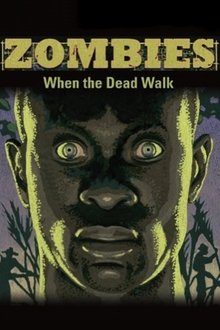
Zombies: When the Dead Walk (2008)
Zombies are part of pop culture, but what are they? Where do they come from? To find real zombies we visit Haiti where Zombies are an integral part of the island's cultural and religious roots.
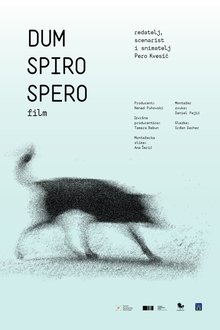
Dum spiro spero (2017)
Well-known Croatian author Pero Kvesić, who has been struggling with a severe lung disease, documents his death from his own point of view. Recording his everyday struggle, the picture resembles a peculiar blog filled with self-irony and witty comments about life and death. Although the world around continues to shrink, the hero and the director in one does not cease to fill it with sense.
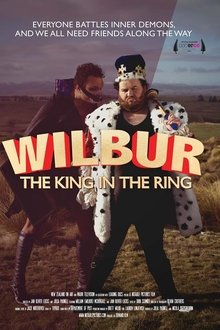
Wilbur: The King in the Ring (2017)
Wilbur: The King in the Ring is a comedic documentary, which wrestles with the worldwide obesity plight. Wilbur McDougall, a former pro-wrestler, agrees to let his best friend J. Ollie Lucks make a documentary about his gastric sleeve surgery and subsequent transformation. But in order to stay literally half the man he was, Wilbur will be forced to maintain a healthier lifestyle while Ollie’s altruistic intentions verge on exploitative.
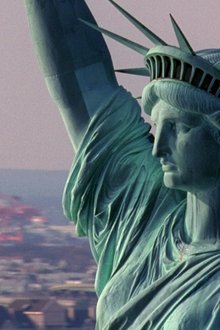
Static (2009)
Static was filmed from a helicopter circling around the Statue of Liberty in New York Harbour. It was shot shortly after the monument was fully re-opened following the September 11th attacks. Flying alongside the statue, the camera presents us with startling close-up views of its oxidised copper surface. The continual sense of movement is disorienting, undermining its sense of permanence and stability.
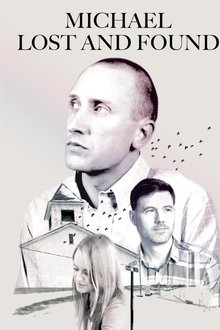
Michael Lost and Found (2017)
When a feature film is made about them seven years after their break-up, Benjie Nycum visits his ex-boyfriend Michael Glatze and finally tries to get answers about his bewildering shift from gay activist to ex-gay evangelical.

Schindler's List (1993)
The true story of how businessman Oskar Schindler saved over a thousand Jewish lives from the Nazis while they worked as slaves in his factory during World War II.
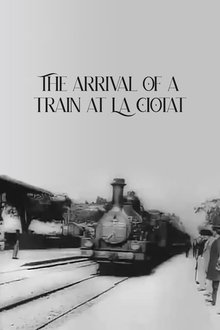
The Arrival of a Train at La Ciotat (1896)
A group of people are standing along the platform of a railway station in La Ciotat, waiting for a train. One is seen coming, at some distance, and eventually stops at the platform. Doors of the railway-cars open and attendants help passengers off and on. Popular legend has it that, when this film was shown, the first-night audience fled the café in terror, fearing being run over by the "approaching" train. This legend has since been identified as promotional embellishment, though there is evidence to suggest that people were astounded at the capabilities of the Lumières' cinématographe.
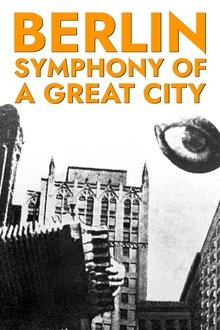
Berlin: Symphony of a Great City (1927)
A day in the city of Berlin, which experienced an industrial boom in the 1920s, and still provides an insight into the living and working conditions at that time. Germany had just recovered a little from the worst consequences of the First World War, the great economic crisis was still a few years away and Hitler was not yet an issue at the time.
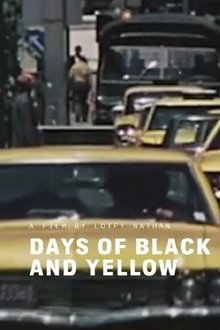
Days of Black and Yellow (2019)
New York cab and black car drivers are facing economic and emotional hardship in a city dominated by ride-share apps. As these long standing industries are decimated by economic and political forces, drivers are forced to cope or fight back.
Wealth of a Nation (1964)
"This film explores how freedom of speech — including dissent — is afforded to all Americans, and shows freedom of expression in art, music, dance, architecture, and science. The film also emphasizes the importance of the individual’s contribution to the whole of society and demonstrates how a productive and creative society is formed by the open and respectful exchange of ideas. The film was written, produced, and directed by William Greaves" (National Archives).

Newspaper Train (1942)
The story of how newspapers were distributed during the Blitz, stressing the importance of an accurate and objective press on the home front.
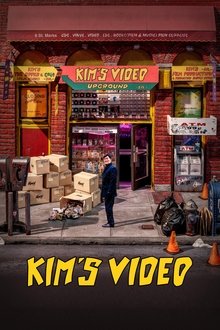
Kim's Video (2023)
Since 1987, and for almost three decades, New York cinephiles had access to a vast treasure trove of rare films thanks to Kim's Video, a small empire run by Yongman Kim, an enigmatic character who amassed more than fifty thousand VHS tapes.
Kokomo City (2023)
Four Black transgender sex workers in Atlanta and New York City break down the walls of their profession.

An hour with Carlo Scarpa (1971)
A documentary with and about the legendary Italian Architect Carlo Scarpa.
Earth Under Water (2010)
Miami, New Orleans and New York City completely under water it’s a very real possibility if sea levels continue to rise. In Earth Under Water we’ll see these events unfold as leading experts forecast how mankind will be impacted if global warming continues. They’ll break down the science behind these predictions and explore ways humanity could adapt, including engineering vast dams near San Francisco, or building floating cities outside of New York.