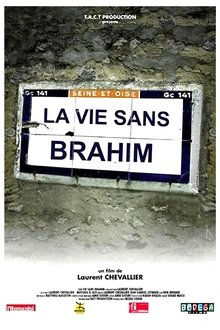
A small village high up in the mountains of Ketama, Northern Morocco. The life of the people here has been shaped by the drug hashish for centuries. Hashish as daily work, hash as exchange currency, hashish as business, hashish as basis and philosophy of a social system, hashish as medium for dreams and hashish as reason for stagnation.
Related Movies
WEED (1971)
This 1971 color anti-drug use and abuse film was produced by Concept Films and directed by Brian Kellman for Encyclopedia Britannica. “Weed: The Story of Marijuana” combines time-lapse, montage, illustrations, animation (by Paul Fierlinger and emigre Pavel Vošický) and dramatized, documentary-style interviews to survey the evolving role of cannabis in U.S. society, with emphasis on the legal risks faced by young people. A unique score of experimental synthesizer music is provided by Tony Luisi on an EMS VCS 3 “Putney”

Love Will Come Later (2021)
Samir longs for love and struggles to find prospects in a land of limited opportunities. He believes in a better future far away.

Break the Silence (2013)
Following the death of Amina Filali, a 16 year-old girl who killed herself after she was allegedly forced to marry the man who raped her, a young woman carries a personal investigation into the representation and perception of rape in Morocco. Here rapists are offered to marry their victims as a means to save the "honour" of the family. By liberating the voices of these victims, 475 : Break the Silence gives an unprecedented view of family, the deceit of love, relationships, marriage and honour in urban deprived areas of a country seeking to find its identity between modernity and tradition.
Aan ons den arbeid (2007)
Documentary that shows the changing attitude towards immigrant labor in The Netherlands. The documentary follows three immigrants that arrived in Holland 30 years ago to work in a bakery.
Romancero marroquí (1939)
The young farmer Aalami leaves his family to find work elsewhere. He gets to know the country and its people, customs and traditions at Küste in North Africa: Market life in Tetuan, the art of craftsmanship, the life of the Moors, dances and festivities in honour of the caliph, white mosques, the call of the muezzin of the minaret and the music of the shepherd flutes. Aalami also follows Franco's call and flies from Morocco to Spain to fight at Bürgerkrieg. In the end Aalami comes back to his wife and children.
El canto de los dioses (2020)
Road documentary that delves into the musical and religious expressions of sub-Saharan Africa. Through Mauritania and Mali, the film documents the lives of Dogon, griots, musicians and instrument makers who, through oral accounts, explain why music plays a fundamental role in the socio-religious organization of peoples. The film culminates its search with the recording of the performance of the traditional Dogon mask dance, in Begnematou, a small village lost in the desert.
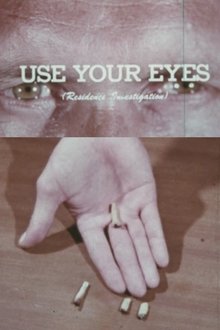
Use Your Eyes (1970)
“Use Your Eyes” is a police training film produced by the Alhambra Police Department, California, in 1970. It is intended to demonstrate to police officers how to search a residence for evidence of marijuana use, and what rights they have to search the property once certain prima facia evidence is established.
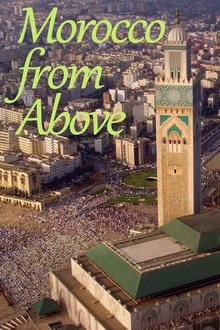
Morocco from Above (2017)
Yann Arthus-Bertrand flew over Morocco with his cameras and asked the journalist Ali Baddou to write and record the comment.
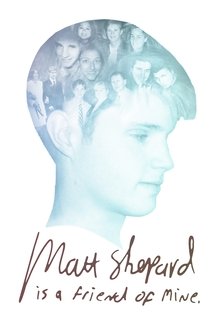
Matt Shepard Is a Friend of Mine (2014)
An intimate portrait of Matthew Shepard, the gay young man murdered in one of the most notorious hate crimes in U.S. history. Framed through a personal lens, it's the story of loss, love, and courage in the face of unspeakable tragedy.
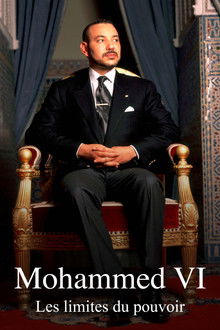
Mohammed VI - The Limits of Power (2022)
Twenty-third sovereign of the Alawite dynasty established in Morocco since the seventeenth century, Mohammed VI took over from his father Hassan II in 1999, and from the moment of his coronation, he positioned himself as a "king of the poor", close to the people. Naturally shy, he prefers to act rather than speak, defining a modern style of governance that has earned him great popularity from the start. Married to a young computer engineer, he asserted a policy of liberalization of morals and even made a critical review of the period of repression led by his father during the years of lead. However, he faces opposition from conservatives, which leads to the election of the Islamist PJD (Party of Justice and Development) as head of government, following the Arab Spring of 2011.
Southern Border (2003)
On the border, the line as principle of property and belonging reaches an extreme dimension where it physically defines the sphere of its relations. Those who transgress it reconstruct these imaginary lines on a daily basis, redefining the traditional geography and occupying the non-spaces where others live in a temporary form of existence. These others, the non-citizens, are phantasmtic, exchangeable parts of a flexible market. Made invisible, they are permanently controlled persons. Under the pretext of a greater civilian security, they are kept clear from the public spaces reserved for the citizens with rights and pushed into non-public spaces, which are run by state and military surveillance, multinational operations servicing a European market and non-governmental organisations.
Crossroads at the Edge of Worlds (2005)
This video research is based on a trip to Morocco in July 2005, during which the director documented irregular migration transiting through Morocco, as well as their control. This geographical project focuses on the main migratory axes: Oujda, entry point for migrants in Morocco; Tangier, from where migrants can try to cross the strait or the fences of Ceuta; Rabat, organization space; and Laayoune, the closest point to the Canaries. The video questions the nature and meaning of these extraterritorial enclaves that structure the Moroccan territory.
No Other Choice (2012)
An undercover documentary film produced and directed by British filmmaker Dominic Brown, about the struggle of the indigenous Sahrawi people of Western Sahara. The documentary covers the current human rights and political situation of the Sahrawi. There are several interviews recorded with human rights victims including an elderly lady who had been attacked in her home the previous day by Moroccan security forces. There is also a focus given to the alleged vested interests of countries in the region, particularly France. The film states that the French Government's close relationship with Morocco, their trade deals and their use of veto over the terms of the UN mission in Western Sahara are major factors.
About Some Meaningless Events (1974)
In search of a subject for their film, a group of directors ask passers-by about their expectations of Moroccan cinema in the streets and bars of Casablanca.
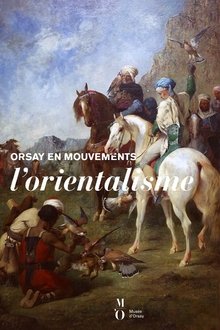
L'Orientalisme (2019)
Orientalism is a literary and artistic movement born in Western Europe in the 18th century. Through its scale and popularity, throughout the 19th century, it marked the interest and curiosity of artists and writers for the countries of the West (the Maghreb) or the Levant (the Middle East). Orientalism was born from the fascination of the Ottoman Empire and followed its slow disintegration and the progression of European colonizations. This exotic trend is associated with all the artistic movements of the 19th century, academic, romantic, realistic or even impressionist. It is present in architecture, music, painting, literature, poetry... Picturesque aesthetics, confusing styles, civilizations and eras, orientalism has created numerous clichés and clichés that we still find today in literature or cinema.

The Hole’s Journey (2021)
A worn-out floor, the hole underneath, a political activist, and the Ouled Sbita tribe are the protagonists in this political satire. For 23 years, the director’s chair at an international art institute scratched the wooden floor. This 102cm x 120cm floor section is cut out and sent to an expropriated piece of land in Morocco. In The Hole’s Journey, Ghita Skali uses sharp wit, personal stories and playful editing to touch on specific power dynamics and freedom of choice.