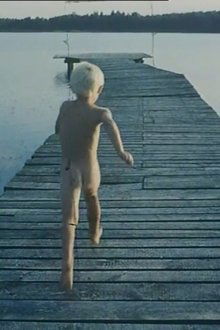
Dos Islas is a poetic story about old age, family and the bond between a granddaughter and a grandmother. The woman, who just turned 102, tells stories about her past and childhood. In a literary and visual way she describes the most minute details. The film dazzles the viewer with love and optimism, the time passes slowly between the two islands, which might be real people, real places or the products of the main character’s imagination.
Related Movies
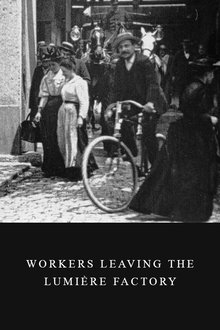
Workers Leaving the Lumière Factory (1895)
Working men and women leave through the main gate of the Lumière factory in Lyon, France. Filmed on 22 March 1895, it is often referred to as the first real motion picture ever made, although Louis Le Prince's 1888 Roundhay Garden Scene pre-dated it by seven years. Three separate versions of this film exist, which differ from one another in numerous ways. The first version features a carriage drawn by one horse, while in the second version the carriage is drawn by two horses, and there is no carriage at all in the third version. The clothing style is also different between the three versions, demonstrating the different seasons in which each was filmed. This film was made in the 35 mm format with an aspect ratio of 1.33:1, and at a speed of 16 frames per second. At that rate, the 17 meters of film length provided a duration of 46 seconds, holding a total of 800 frames.
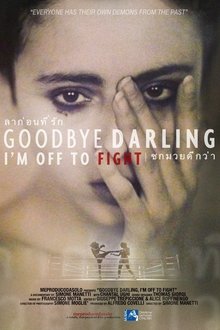

Anonymous (2017)
A short film about the changing face of London Soho and the implications of gentrification on Mimi, an aging transvestite.
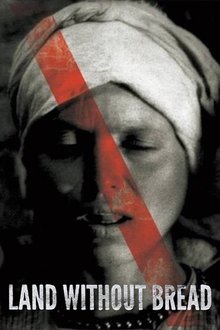
Land Without Bread (1933)
An exploration —manipulated and staged— of life in Las Hurdes, in the province of Cáceres, in Extremadura, Spain, as it was in 1932. Insalubrity, misery and lack of opportunities provoke the emigration of young people and the solitude of those who remain in the desolation of one of the poorest and least developed Spanish regions at that time.
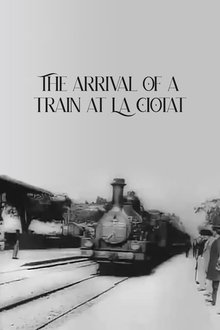
The Arrival of a Train at La Ciotat (1896)
A group of people are standing along the platform of a railway station in La Ciotat, waiting for a train. One is seen coming, at some distance, and eventually stops at the platform. Doors of the railway-cars open and attendants help passengers off and on. Popular legend has it that, when this film was shown, the first-night audience fled the café in terror, fearing being run over by the "approaching" train. This legend has since been identified as promotional embellishment, though there is evidence to suggest that people were astounded at the capabilities of the Lumières' cinématographe.
Captain Blood: A Swashbuckler Is Born (2005)
This documentary is featured on the DVD for Captain Blood (1935), released in 2005.
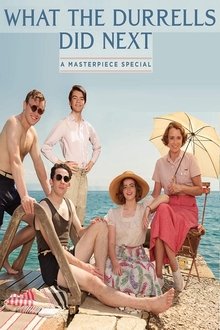
What The Durrells Did Next (2019)
Hosted by Keeley Hawes, star of the popular television series The Durrells, this documentary reveals the adventures of the eccentric Durrell family once they left Corfu, Greece.
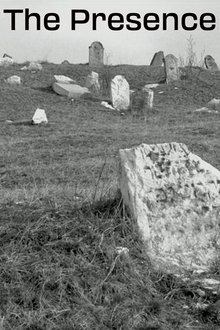
The Presence (1965)
Two old men enter an abandoned synagogue, look at the decay around them, and pray.

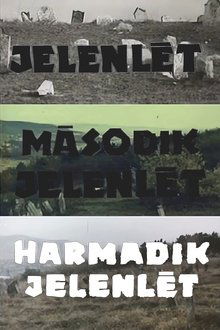
The Presence III (1986)
Two rabbis show the ruins of an abandoned synagogue to a group of primary school-age Jewish children, and stand by as the children dip bread in honey, drink wine, pray, and sing.

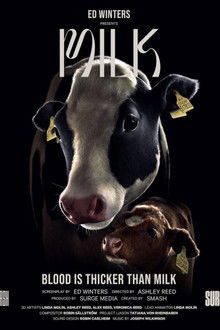
Milk (2022)
What we show in Milk is literally the best of the best when it comes to dairy farming, yet, as soon we view what happens from the perspective of the mother cow, it becomes clear that this is an industry that runs on the exploitation and suffering of animals. By using animation, we are able to show a unique perspective and tell the story of the mother cow in a way that cannot be done from investigative footage alone. Milk centres the cow as the protagonist of her own story and allows us to view what is happening to her from an up close and personal perspective. Organic, free-range, high-welfare, humanely raised. It doesn’t matter what label we put on dairy products, all dairy cows are victims of an industry that forcibly impregnates them, takes their babies from them, exploits their bodies and then sends them to a slaughterhouse to cut their throats. It's time to end the dairy industry.
ADMA for Short (1958)
This film describes the building of the drilling platform ADMA Enterprise in a shipyard on the Kiel Canal, from where it was rowed to the Arabian Gulf.
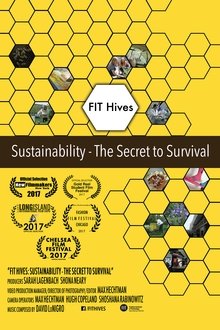
FIT Hives: Sustainability - The Secret to Survival (2017)
A documentary that introduces FIT Hives, a student-run organization whose mission is to educate the FIT community about the importance of bees to the environment, the use of bee-derived resources in the industries related to the majors at FIT and its goal to put a beehive on the roof. FIT Hives is a recipient of an FIT Innovation Grant which also supported the making of this documentary.
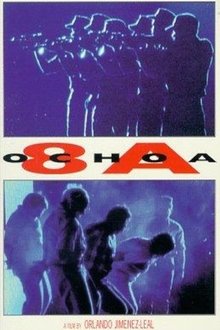
8A (1993)
The Kafkaesque world of Cuba under Castro's rule is brought to light in this reconstruction of the 1989 trial and execution of General Arnaldo Ochoa Sanchez, the highest-ranking general and hero of the revolution, and commander of the Angolan and Ethiopian campaigns.
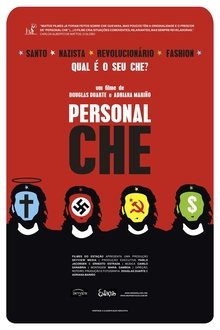
Personal Che (2007)
A documentary that explores the myth behind the truth. Different people around the globe reinterpret the legend of Che Guevara at will: from the rebel living in Hong Kong fighting Chinese domination, to the German neonazi preaching revolution and the Castro-hating Cuban. Their testimonies prove that the Argentinian revolutionary's historical impact reverberates still. But like with all legends, each sees what he will, in often contradictory perspectives.
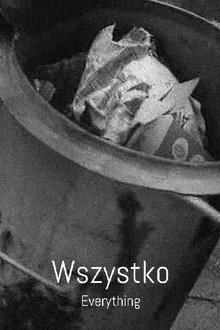
Everything (1972)
Here's a strange one. First, a song on a blackboard: a Polish translation of “I love my little rooster” by American folk writer Almeda Riddle. Then, two men roll around trash bins and lift them to the garbage truck. They do it several times. A woman shouts in the distance. At the end, the picture stops, and the woman sings the song. An early short by Piotr Szulkin.