How young people took to social media sites like Facebook, Instagram and Twitter to record Superstorm Sandy, from first dark warnings to devastating reality and chaotic aftermath. The first great natural disaster documented and shared on the social network, we speak to those who captured history with mobile phones and mini-cameras.
Related Movies

Forgotten on the Bayou: Rockey’s Mission to the Whitehouse (2007)
On August 29, 2005, Rockey Vaccarella rode out Hurricane Katrina on his roof by holding on to a rope for 4 hours. Rockey and his family lost everything but he refused to give up. Nearly one year after surviving the worst natural disaster in the history of America, Rockey set out on a mission to deliver a message to the President of the United States. Even when most people thought he was crazy, Rockey hooked up his FEMA trailer and journeyed from Louisiana to the White House. By the time he arrived in the nation's capitol, Rockey had captured the attention of America and much of the world. FORGOTTEN ON THE BAYOU is the true story of an unforgettable man who believes that anything is possible.
Landfall (2020)
Hurricane María abated, the news crews packed up and left Puerto Rico, and the interest of the international community turned elsewhere. What happened next?
The Hurricane of '38 (1993)
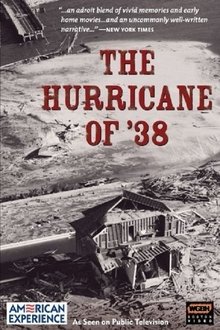
In September of 1938, a great storm rose up on the coast of West Africa and began making its way across the Atlantic Ocean. The National Weather Bureau learned about it from merchant ships at sea and predicted it would blow itself out at Cape Hatteras, North Carolina, as such storms usually did. Within 24 hours, the storm ripped into the New England shore with enough fury to set off seismographs in Sitka, Alaska. Traveling at a shocking 60 miles per hour -- three times faster than most tropical storms -- it was astonishingly swift and powerful, with peak wind gusts up to 186 mph. Over 600 people were killed, most by drowning. Another hundred were never found. Property damage was estimated at $400 million -- over 8,000 homes were destroyed, 6,000 boats wrecked or damaged.
A Global Warning? (2007)
Global warming in context. What the climate of the past tells us about the climate of the future.
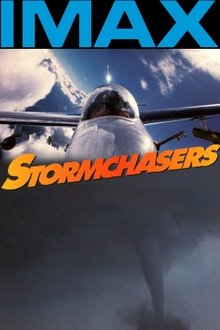
Stormchasers (1995)
Track monsoons, hurricanes, blizzards, and tornadoes. Take a journey around the planet to experience our most extreme storms and to witness the dramatic--and often perilous--efforts of scientists in the pursuit of understanding weather.Join meteorologists in the cockpit of a P-3 weather plane as they penetrate the eye of a hurricane; and in the tense, decisive moments on the road as they focus their radar on an approaching tornado, traveling to the heart of severe storms to learn what makes weather systems tick. Experience the bumpy ride into the sudden and spectacular calm of a hurricane’s eye, or the commando-like raid to the very brink of a killer tornado, and experience one of the elemental joys of doing science: that of confronting nature head-on to divine its awesome secrets.
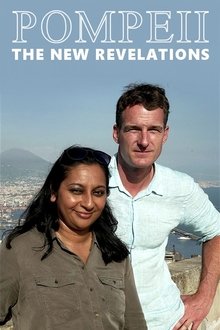
Pompeii: The New Revelations (2020)
Archaeologist Raksha Dave and historian Dan Snow return to Pompeii to gain special access to a variety of new excavations, including two never-before-seen discoveries.
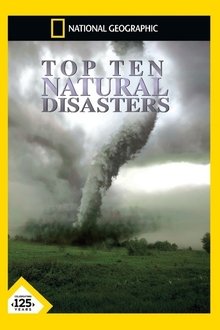
Top Ten Natural Disasters (2013)
National Geographic gets 10 experts to pick the most significant natural disasters ever, adding eyewitness accounts and CGI to flesh out the stories.
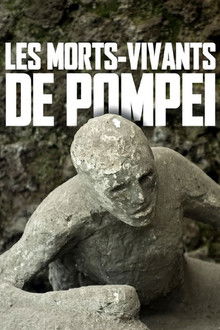
Pompeii's Living Dead (2018)
Restoration expert Giancarlo Napoli takes on the important task of saving 86 plaster casts of Pompeii citizens that were created by archaeologist Carlo Fiorelli in the 1860s.
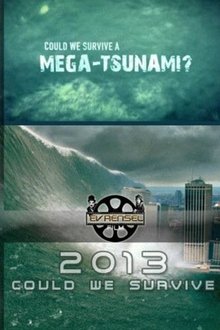
Could We Survive a Mega-Tsunami? (2013)
Starting off a kilometre high, travelling at the speed of a jet aircraft, and heading for us. It doesn't make for a good outcome. Hollywood-style graphics and real-life archive bring home an imagined near-future scenario, all based on cutting-edge science. —Trevor
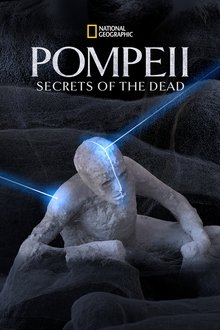
Pompeii: Secrets of the Dead (2019)
Forensic experts scan Pompeii’s victims to investigate why they didn’t escape the eruption.
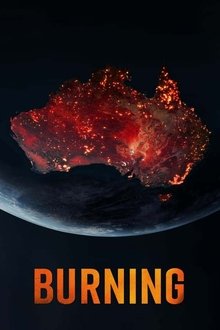
Burning (2021)
Follows the deadly Australian bushfires of 2019-2020, known as ‘Black Summer’. Burning is an exploration of what happened as told from the perspective of victims of the fires, activists and scientists.
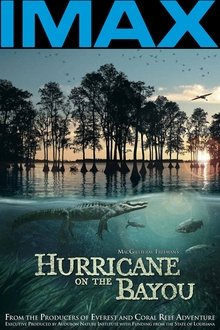
Hurricane on the Bayou (2006)
The film "Hurricane on the Bayou" is about the wetlands of Louisiana before and after Hurricane Katrina.

This Time Next Year (2014)
A poetic documentation of the Long Beach Island, NJ community as they battle local politics, cope with personal tragedy, and band together after Hurricane Sandy.
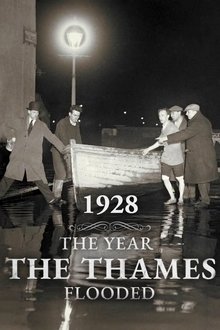
1928: The Year the Thames Flooded (2024)
Exploring one of the most devastating but little-known disasters in London's history, this documentary reveals the shocking events that unfolded during the fateful Thames Flood of 1928.
The Great Global Warming Swindle (2007)
This film tries to blow the whistle on what it calls the biggest swindle in modern history: 'Man Made Global Warming'. Watch this film and make up your own mind.
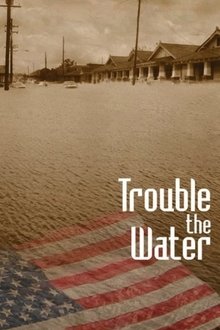
Trouble the Water (2008)
"Trouble the Water" takes you inside Hurricane Katrina in a way never before seen on screen. The film opens the day before the storm makes landfall--just blocks away from the French Quarter but far from the New Orleans that most tourists knew. Kimberly Rivers Roberts, an aspiring rap artist, is turning her new video camera on herself and her Ninth Ward neighbors trapped in the city. Weaving an insider's view of Katrina with a mix of verité and in-your-face filmmaking, it is a redemptive tale of self-described street hustlers who become heroes--two unforgettable people who survive the storm and then seize a chance for a new beginning.
Earth 2100 (2009)
Experts say over the next hundred years the "perfect storm" of population growth, resource depletion and climate change could converge with catastrophic results. The scenarios in Earth 2100 are not a prediction of what will happen but rather a warning about what might happen.

The Ups and Downs of the Great Flood of 2016 (2022)
IN LOVING MEMORY OF MARY ELLEN PAYNE. Following the events of the Great Flood of 2016 that wreaked havoc on southern Louisiana, the late Mary Payne takes a moment to talk about her experiences during and after the destruction.
Surviving Cyclones (1973)
Using film footage shot by the Genevese film director, Fernand Reymond, in Bangladesh in 1972, this documentary film describes the cyclone prevention programme drawn up by the governmental authorities and the League of Red Cross Societies. It particularly depicts the cyclone warning system set up to protect the population. (League Film Library Catalogue Supplement No. 2, p. 39)