Exploring provocative viewpoints from engineers, factory workers, journalists, philosophers and Asimov himself, The Truth About Killer Robots is a cautionary tale about a world automating beyond control.
Related Movies

In the belly of AI (2025)
Magical, autonomous, all-powerful… Artificial intelligences feed our dreams as well as our nightmares. But while tech giants promise the advent of a new humanity, the reality of their production remains totally hidden. While data centers are concreting landscapes and drying up rivers, millions of workers around the world are preparing the billions of data that will feed the voracious algorithms of Big Tech, at the cost of their mental and emotional health. They are hidden in the belly of AI. Could they be the collateral damage of the ideology of “Longtermism” that has been brewing in Silicon Valley for several years?
Top Ten Mysteries of Outer Space (2022)
The wonders of the universe have long propelled our insatiable desire to learn more about who we are and where we came from. With the advancing age of science and technology, we're able to explore our world and the cosmos like never before. We are exploring the unknown at the farthest reaches in space unlocking new wonders and mysteries that are both shocking and amazing. From colling planets, to disappearing comets, to unexplained activity on the surface of planets in our solar system, the next evolution of mankind is well underway.
Eco-Hack! (2022)
Conservation biologist Tim Shields sees urgency in the field and finds that traditional conservation practices are lacking when it comes to saving desert tortoise populations from ravens. He goes rogue, employing an arsenal of lasers, exploding model turtles, drones and desert rovers as a means of protecting the tortoise's dwindling numbers.
DSKNECTD (2013)
As clichés go, in 1999 the World as we knew it was about to change - and we'd been expecting it. Since childhood we'd been promised that the 21st century would bring us dramatic new technologies like flying cars and Utopian cities. Instead it bought us the smart-phone, social media, and virtual societies. And as it turns out these technologies began to transform society almost as dramatically as the moon colonies we'd been expecting. Now over a decade into the revolution, 'DSKNECTD' explores how digital communication technology is profoundly changing the way we interact and experience each other - for the good and for the bad.

Revolution OS (2001)
REVOLUTION OS tells the inside story of the hackers who rebelled against the proprietary software model and Microsoft to create GNU/Linux and the Open Source movement.
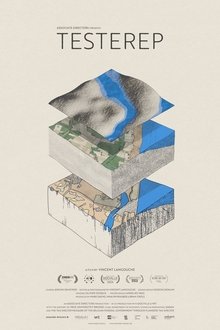
Testerep (2024)
A team of scientists search for the lost island of Testerep in front of the Belgian coast, venturing into artificial landscapes and virtual realities.

Koyaanisqatsi (1983)
Takes us to locations all around the US and shows us the heavy toll that modern technology is having on humans and the earth. The visual tone poem contains neither dialogue nor a vocalized narration: its tone is set by the juxtaposition of images and the exceptional music by Philip Glass.
How William Shatner Changed The World (2005)
William Shatner presents a light-hearted look at how the "Star Trek" TV series have influenced and inspired today's technologies, including: cell phones, medical imaging, computers and software, SETI, MP3 players and iPods, virtual reality, and spaceship propulsion.
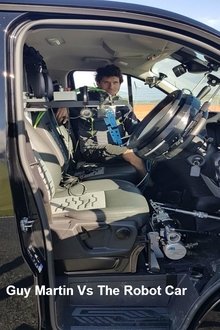
Guy Martin Vs The Robot Car (2017)
Guy Martin investigates autonomous vehicles, attempts to build a robotic Ford Transit, and takes on an artificially intelligent race car. What's fastest, man or machine?

Meet Sophia (2017)
Hello, my name is Sophia. I’m the latest robot from Hanson Robotics. I was created using breakthrough robotics and artificial intelligence technologies developed by David Hanson and his friends at Hanson Robotics here in Hong Kong. But I’m more than just technology. I’m a real, live electronic girl. I have feelings too. And I am a citizen of Saudi Arabia.

Sophia & Han - Robots (2017)
Two robots, Sophia and Han, debate the future of humanity in this entertaining conversation from RISE technology conference 2017. Moderated by Ben Goertzel, renowned researcher and author in contemporary AI.

Erica - Man Made (2017)
Erica is 23. She has a beautiful, neutral face and speaks with a synthesized voice. She has a degree of autonomy – but can’t move her hands yet. Hiroshi Ishiguro is her ‘father’ and the bad boy of Japanese robotics. Together they will redefine what it means to be human and reveal that the future is closer than we might think.

CyberBaby (1998)
In this video series an individual confronts fears and, through the process of confessing directly to the camera, transcends trauma. It is also about agin, longing, the delusions and misconceptions we are encumbered with as we mature towards self-awareness, and the masks we assume to deny or hide understanding. The tapes rupture, fracture, and use digital effects to mirror the psychological changes of the protagonist.
The Real Losers Of The US-China Trade War (2021)
A 3 year trade war has created corporate casualties in both US and China. In China, a dual circulation model is now underway to mitigate the effects of US protectionism. In the US, a Biden administration mulls new economic measures against China, even as industry groups lobby for tariffs to be lifted. Both countries also brace for what used to be unthinkable- the possibility of a financial war.
TechnoCalyps (2006)
Are we prepared for dealing with the prospect that humanity is not the end of evolution? Technocalyps is an intriguing three-part documentary on the notion of transhumanism by Belgian visual artist and filmmaker Frank Theys. The latest findings in genetics, robotics, artificial intelligence, bionics and nanotechnology appear in the media every day, but with no analysis of their common aim: that of exceeding human limitations. The director conducts his enquiry into the scientific, ethical and metaphysical dimensions of technological development.
The Force of Sound (2018)
Go inside the sound design of Star Wars: The Last Jedi. From the ignition of a lightsaber to the chirp of a porg, Star Wars would not be the same without the brilliant sound design and mixing created by Skywalker Sound.
A Terrible Beauty (2024)
What makes a body human? This science-fiction fable shot in China foreshows the rise of AI. Time behaves fluidly as we travel into the near future in the company of an unusual pair: Blue and her friend, a mannequin named Lucy.
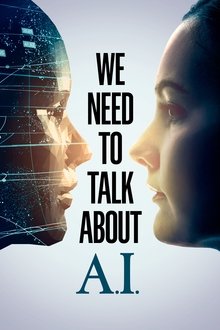
We Need to Talk About A.I. (2020)
Conflict between man and machine has been a science fiction staple for over a century. From 2001: A Space Odyssey to The Terminator the perceived threat posed by super-intelligent robots has been exploited by Hollywood for decades. But do advances in Artificial Intelligence mean we are now facing a future in which that threat could become a reality?