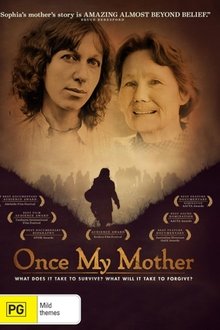
The first film to fully expose the humanitarian crisis of North Korea, this stylish, deeply moving documentary is centered around astonishing interviews with survivors of North Korea's vast and largely hidden prison camps, and interspersed with archival footage of North Korean propoganda films and original art performances.
Related Movies
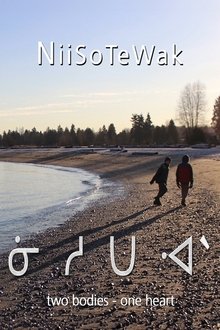
NiiSoTeWak: Two Bodies, One Heart (2017)
NiiSoTeWak means “walking the path together.” Tapwewin and Pawaken are 10-year-old brothers trying to make sense of the world, their family and each other. They’re already grappling with some heady questions about identity. What does it mean to be a twin? What does it mean to be Cree? How do you define yourself when you’re forever linked to someone else? The twins discuss these questions with their two elder brothers — 22-year-old actor Asivak and 20-year-old basketball player Mahiigan — and their parents, Jules and Jake.

Declutter (2017)
One Saturday morning, filmmaker Madison Thomas has a revelation: she’s just like her mother. As she thinks about a friend going through tough times, she feels the sudden urge to clean. Through the scrubbing and wiping and rinsing, Madison's thoughts drift to her mother — and her obsessive need to tidy. Madison’s mother survived a traumatic childhood: her own mother never reconciled what she went through at residential school. Cleaning offers moments of control that she didn’t have as a child. She’s fought hard, against all odds, to become a strong woman. They say trauma is in the genes, that it’s passed from one generation to the next. But strength is inherited too. Through rituals as simple as spending time together and smudging, Madison and her mother are beginning to mend the cycle of pain in their family. Declutter is an intimate look into a private moment between mother and daughter and the strength that carries them both.
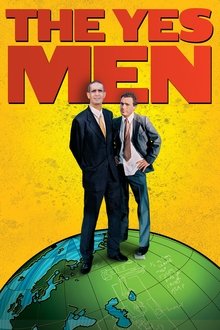
The Yes Men (2003)
A comic, biting and revelatory documentary following a small group of prankster activists as they gain worldwide notoriety for impersonating the World Trade Organization (WTO) on television and at business conferences around the world.
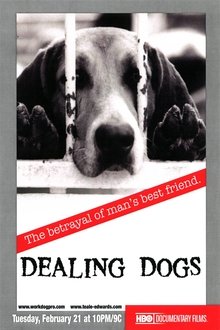
Dealing Dogs (2006)
An undercover investigation of Martin Creek Kennel is carried out by the animal rights group Last Chance for Animals. The film documents the efforts of a young animal rights activist named "Pete" to both get hired by the Martin Creek Kennel and secure enough evidence to shut down owner C.C. Baird's violation-filled kennel.
Komm! Ins Offene, Freund! oder Gegen die Dummheit in der Musik (1989)
Two young singers rehearse Eisler's "Ernste Gesänge", his last work, in which the prompt for the film's title can also be found. What is decisive in this film is the encounter with Eisler and his music, the consistency with which he thought about art and people. You can hear tape recordings of Hans Bunge in conversation with Hanns Eisler.
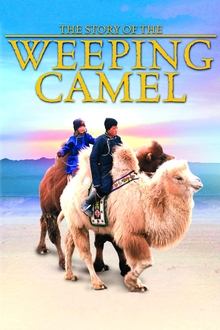
The Story of the Weeping Camel (2004)
When a Mongolian nomadic family's newest camel colt is rejected by its mother, a musician is needed for a ritual to change her mind.
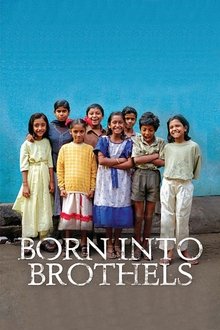
Born Into Brothels: Calcutta's Red Light Kids (2004)
Documentary depicting the lives of child prostitutes in the red light district of Songachi, Calcutta. Director Zana Briski went to photograph the prostitutes when she met and became friends with their children. Briski began giving photography lessons to the children and became aware that their photography might be a way for them to lead better lives.
God's Ways (2006)
A dual portrait of young drifters on the streets of Odessa, where every day seems the same and the future keeps getting further away.
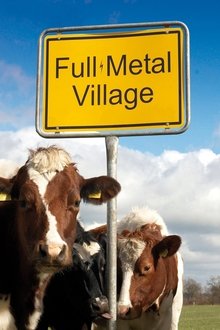
Full Metal Village (2007)
The film describes the microcosmos of the small village Wacken and shows the clash of the cultures, before and during the biggest heavy metal festival in Europe.
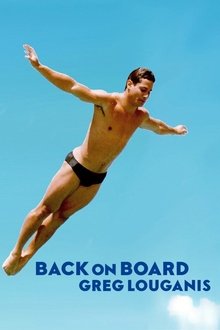
Back on Board: Greg Louganis (2014)
Feature-length documentary about the greatest diver of all time. Four-time Olympic champion Greg Louganis has faced more than his share of challenges. In 2011, he is far from the public eye and struggling to pay his mortgage. Now, the openly gay, HIV+ world-class athlete returns to diving to mentor the USA Olympic hopefuls. This may be his best chance to regain the notoriety -- and financial stability -- he enjoyed at the height of his career.
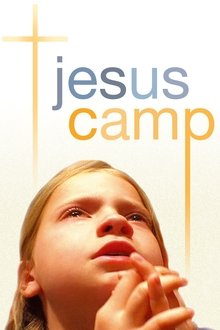
Jesus Camp (2006)
Jesus Camp is a Christian summer camp where children hone their "prophetic gifts" and are schooled in how to "take back America for Christ". The film is a first-ever look into an intense training ground that recruits born-again Christian children to become an active part of America's political future.
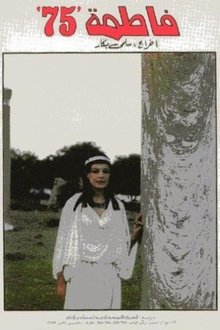
Fatma 75 (1975)
A pioneering film from Tunisia, Fatma 75 is the first non-fiction film by a Tunisian woman, a feminist essay film, and the first in a series of powerful films about strong female figures in the country. The film was made in the UN International Women's Year 1975, and has long been recognised as one of the most important films from North Africa, but has never officially been seen before due to censorship.

Dig! (2004)
A documentary on the once promising American rock bands The Brian Jonestown Massacre and The Dandy Warhols. The friendship between respective founders, Anton Newcombe and Courtney Taylor, escalated into bitter rivalry as the Dandy Warhols garnered major international success while the Brian Jonestown Massacre imploded in a haze of drugs.
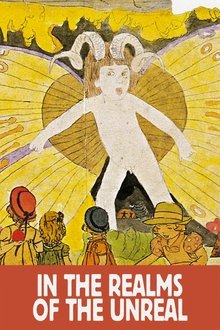
In the Realms of the Unreal (2004)
In the Realms of the Unreal is a documentary about the reclusive Chicago-based artist Henry Darger. Henry Darger was so reclusive that when he died his neighbors were surprised to find a 15,145-page manuscript along with hundreds of paintings depicting The Story of the Vivian Girls, in What is Known as the Realms of the Unreal, of the Glodeco-Angelinnian War Storm, Cased by the Child Slave Rebellion.
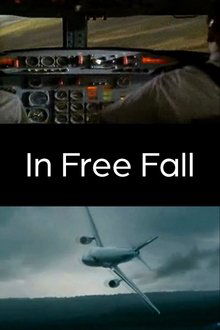
In Free Fall (2010)
The space of the junkyard allows various ‘crash’ narratives to unfold, with the stories of actual crashes and the remnants and afterlife of these machines becoming metaphors for economic decline. This is an investigation of planes as they are parked during the economic downturn, stored and recycled, revealing unexpected connections between economy, violence and spectacle, finding perfect example in the form of the Boeing 4X-JYI, an aircraft first acquired by film director Howard Hughes for TWA, which was subsequently flown by the Israeli Airforce before finding its way to the Californian desert to be blown up for the Hollywood blockbuster Speed. Through intertwined narratives of people, planes and places Steyerl reveals cycles of capitalism incorporating and adapting to the changing status of the commodity, but also points at a horizon beyond this endless repetition.
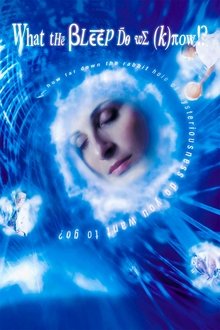
What the #$*! Do We (K)now!? (2004)
Amanda is a divorced woman who makes a living as a photographer. During the Fall of the year Amanda begins to see the world in new and different ways when she begins to question her role in life, her relationships with her career and men and what it all means. As the layers to her everyday experiences fall away insertions in the story with scientists, and philosophers and religious leaders impart information directly to an off-screen interviewer about academic issues, and Amanda begins to understand the basis to the quantum world beneath. During her epiphany as she considers the Great Questions raised by the host of inserted thinkers, she slowly comprehends the various inspirations and begins to see the world in a new way.
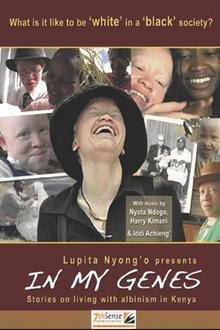
In My Genes (2009)
Agnes may not seem like someone with much to laugh about. For one thing, she has albinism - a lack of pigment in the skin, hair and eyes - and her appearance has provoked prejudice from family, friends and strangers since she was born. But despite all odds, Agnes refuses to lead a life of sorrow. This fascinating and inspiring documentary also shares the stories of seven other people's individual experiences of living their lives with albinism in Kenya, a predominantly black society. While each person's story is unique, they all have one thing in common: they know what it is like to stand out uncomfortably from the crowd.
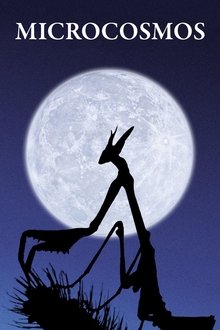
Microcosmos (1996)
A documentary of insect life in meadows and ponds, using incredible close-ups, slow motion, and time-lapse photography. It includes bees collecting nectar, ladybugs eating mites, snails mating, spiders wrapping their catch, a scarab beetle relentlessly pushing its ball of dung uphill, endless lines of caterpillars, an underwater spider creating an air bubble to live in, and a mosquito hatching.